Why Cold Weather Is Your Garage Door’s Biggest Enemy
Do garage doors need more maintenance in colder regions? The short answer is yes. If you’re a Twin Cities homeowner, you know Minnesota winters don’t mess around. Cold weather creates unique challenges that can turn minor issues into major problems overnight, making proactive care essential. For reliable garage door services in the Twin Cities, understanding these challenges is the first step to avoiding a winter emergency.
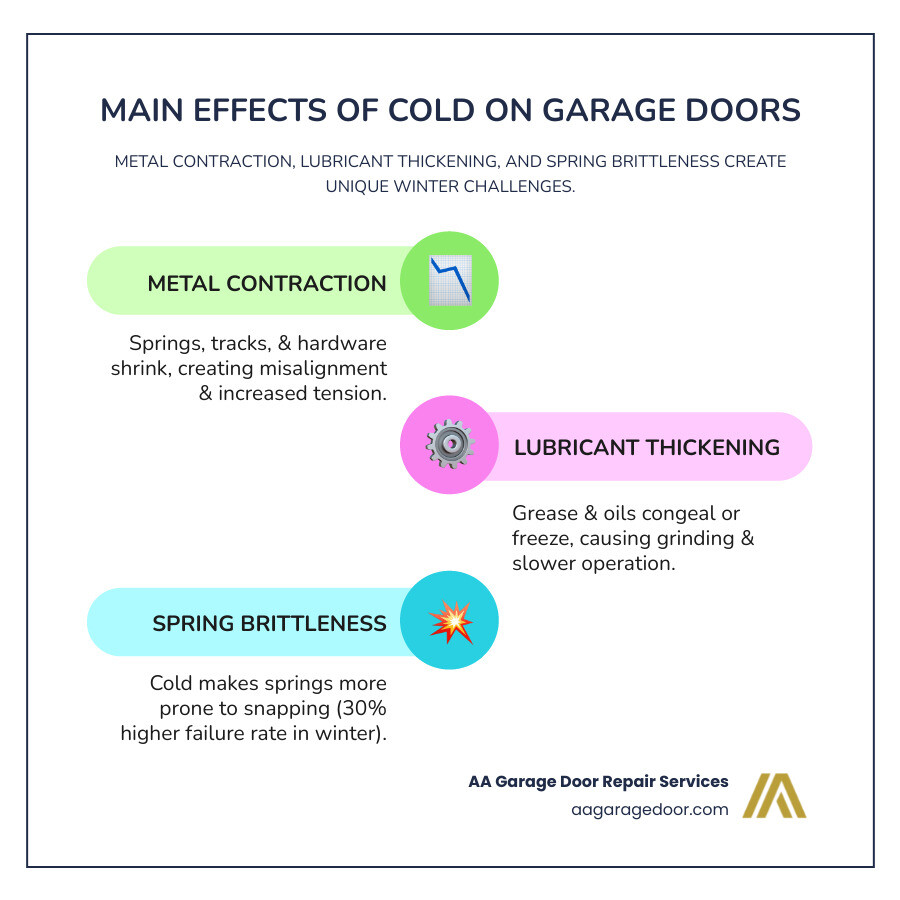
Cold weather’s main effects include metal contraction, where springs and tracks shrink, causing misalignment and tension. Lubricants also break down, as grease thickens or freezes, leading to grinding and slower operation. Metal springs become brittle and are 30% more likely to snap, and ice can freeze the door shut, damaging seals when forced open. Finally, rubber weather seals crack and lose flexibility, failing to keep the cold out.
The good news? Most cold-weather garage door problems are preventable. This guide will show you exactly what to do.
I’m David Sands, owner of AA Garage Door LLC, and I’ve been helping Twin Cities homeowners with these challenges for over 23 years. From frozen doors in Stillwater to snapped springs in Apple Valley, I’ve seen how proper winter prep can save thousands in emergency repairs.
Do garage doors need more maintenance in colder regions further reading:
Why Do Garage Doors Need More Maintenance in Colder Regions?

The science behind why garage doors need more maintenance in colder regions is a matter of basic physics. When winter hits Minnesota, every metal component in your garage door—from bolts to torsion springs—shrinks. This metal contraction creates a domino effect. Springs become brittle and prone to snapping (we see 30% more broken springs in winter), and tracks can warp slightly, disrupting the door’s alignment.
It’s not just the cold, but the temperature fluctuation. As temperatures swing between day and night, thermal expansion causes components to constantly expand and contract. This creates increased friction, making every operation harder on your opener motor. The lubricants meant to help instead thicken into a gunky mess, creating increased strain on your opener motor as it works overtime.
The Science of Cold and Lubrication Breakdown
Think of your garage door as a precision instrument. When cold weather throws its tight tolerances out of whack, problems arise. Metal parts shrink at different rates, causing tracks to bind and screws to loosen. Warped tracks are a major issue, as even a slight bend can cause the door to stick or jump off its rollers, creating a safety hazard.
Your springs face the biggest challenge. Increased tension on springs from contraction, combined with cold-induced brittleness, is a recipe for failure. A snapping torsion spring is loud and dangerous. Furthermore, high humidity in a garage can worsen things by freezing around moving parts, essentially gluing them in place.
Standard lubricants congeal in the cold, changing from helpful aids to sticky obstacles. This increased friction on rollers and hinges creates grinding noises and slower, jerky movements. The real victim is your opener, which can burn out from the extra workload. Using a quality silicone-based spray that stays fluid in subzero temperatures is key. For tips on keeping things running smoothly, see our guide on How to Make Your Garage Door Quieter.
Winter’s Biggest Threats: Ice, Snow, and Drafts

Winter doesn’t just make your garage door work harder—it actively attacks from the outside. Ice accumulation, snow weight, and cold air infiltration create a perfect storm of problems. Your garage door’s weather seals take a beating, energy pours out through damaged barriers, and what should be a simple operation becomes a daily battle against the elements.
The Frozen Shut Scenario: Prevention and Safe Thawing
It’s a common Minnesota problem: your door is frozen solid to the concrete. This happens when moisture from melting snow or rain seeps around the bottom weather seal and freezes. The door becomes bonded to the ground.
Here’s where many homeowners make a costly mistake: never force a frozen door open. You risk damaging the bottom seal, bending panels, or burning out the opener motor. The bottom weather seal is crucial for keeping out drafts and moisture.
Safe thawing methods are your best friend. Gently pour warm (not boiling) water along the bottom edge where the door meets the concrete. A hair dryer or heat gun on a low setting also works well. Patience is key. For more winter troubleshooting, check this guide on Fixing Garage Door Problems from Cold Weather.
Weather Stripping and Seals: Your First Line of Defense
Your garage door’s weather stripping is its winter coat. When it fails, your garage becomes an expensive refrigerator. Cold temperatures make rubber and vinyl seals brittle, causing them to crack or tear. Inspect your seals every fall for damage.
To check for drafts, stand in your closed garage on a windy day and feel for cold air around the door’s edges. At night, shine a flashlight from inside; if light is visible from the outside, you have energy-leaking gaps.
Replacing worn weather stripping is a cost-effective improvement. New seals create a tight barrier that keeps cold air out and warm air in, preventing heat loss and protecting items stored inside from extreme temperatures and moisture. For more tips, read our guide on 5 Ways to Keep Your Garage Warm.
Your Essential Winter Garage Door Maintenance Checklist

When it comes to whether do garage doors need more maintenance in colder regions, proactive care is essential. A seasonal tune-up combining safety checks with simple DIY tasks can save you from emergency repair calls. Most tasks are straightforward and don’t require special tools, giving your door the TLC it needs to handle months of freezing temperatures, ice, and snow.
Lubrication Best Practices for Frigid Temperatures
Proper lubrication can make or break your door’s winter performance. Choose a silicone or lithium-based spray lubricant designed for cold weather, as these resist freezing. Avoid oil-based products or WD-40, which is a degreaser that can attract dirt and make problems worse.
Before applying, wipe away old, gunky lubricant with a clean cloth. Then, spray the key spots: hinges at each pivot point, metal roller bearings (skip nylon rollers), and the entire length of the springs. Also, lubricate the bearing plates at the ends of the torsion tube. Keep tracks clean so rollers can glide smoothly. In our Minnesota climate, lubricating every three months is ideal.
Inspection and Upkeep: Key Tasks for Winter Readiness
A comprehensive winter prep routine goes beyond lubrication. Start with a visual inspection of cables and springs for fraying or rust. If you spot anything concerning, call a professional. Tighten loose nuts and bolts on hinges and brackets, which can loosen due to temperature fluctuations.
Clean tracks and sensors by wiping tracks with a damp cloth and ensuring safety sensors are spotless and unobstructed. Test the auto-reverse safety feature by placing a 2×4 on the ground in the door’s path; it should reverse upon contact. If it doesn’t, you need professional garage door maintenance to adjust the safety mechanism. Finally, check your door’s balance by opening it halfway. A balanced door stays put; an unbalanced one puts extra strain on your opener. For a complete year-round guide, see our 10 Garage Door Maintenance Tips.
Choosing the Right Gear: Cold-Weather Resilient Doors and Insulation

Sometimes the best answer to “do garage doors need more maintenance in colder regions” is to start with the right door. A quality garage door with good insulation acts like armor against Minnesota’s winters. It not only keeps your garage warmer but also reduces stress on metal components by minimizing thermal shock, leading to fewer broken springs and smoother operation.
The Role of Insulation and Material Choice
Insulation doesn’t just keep your garage warmer—it protects your door’s components. A consistent garage temperature means metal springs and tracks aren’t constantly expanding and contracting. The result is less stress and fewer breakdowns.
R-value is your friend in cold climates. This number measures insulation’s resistance to heat flow; the higher the R-value, the better. For Twin Cities winters, look for doors with an R-value of 12 or higher. The energy savings can be substantial, as a well-insulated door creates a real barrier against heat loss from your home.
When it comes to materials, steel and fiberglass doors are smart choices for harsh winters. Steel doors are durable and offer excellent thermal performance when injected with polyurethane foam insulation. Fiberglass is naturally resistant to moisture and won’t dent like steel. While beautiful, wood doors are not ideal for Minnesota, as they absorb moisture and can warp or rot. For the look of wood without the maintenance, consider steel doors with a wood-grain finish. Steel or fiberglass doors with high R-value insulation offer the best combination of durability, energy efficiency, and low maintenance for cold climates.
When to Call a Pro: Recognizing Winter Garage Door Emergencies
Even with diligent maintenance, winter can cause garage door emergencies. The cold makes problems escalate quickly, turning a minor issue into a safety hazard. This is especially true when considering if do garage doors need more maintenance in colder regions—the answer becomes clear on a -15°F morning with a broken door. Some problems simply can’t wait and require professional Garage Door Maintenance to avoid danger and serious property damage.
Signs You Need Immediate Professional Help
Know the difference between a DIY fix and a real emergency. Call a pro immediately if you notice these red flags:
- A loud popping or banging noise: This usually means a spring has snapped. Do not attempt to open the door or replace the spring yourself, as they are under dangerous tension.
- A crooked or off-track door: A lopsided door is unstable and dangerous. Using it can cause thousands in additional damage.
- The door feels impossibly heavy: If you can’t lift the door manually, you likely have broken springs. This is a common winter failure as cold makes the wire brittle.
- The opener motor strains but the door won’t move: Turn the opener off immediately to avoid burning out the motor. The door may be frozen shut or have a broken part.
- Visible damage to cables or springs: Frayed cables or rusted springs are signs of imminent failure. These parts are under extreme tension and can fail catastrophically.
If you’re facing an emergency in areas like Apple Valley, MN, immediate professional service is crucial.
The Consequences of Neglecting Winter Maintenance
Ignoring warning signs leads to bigger problems. Catastrophic spring failure can cause a domino effect, breaking other components. You can cause permanent damage to door panels and tracks by operating a misaligned door. A burnt-out opener motor is the inevitable result of forcing a door to work against an obstruction. This all leads to costly emergency repairs and, most importantly, creates serious safety hazards for your family and property.
Frequently Asked Questions about Winter Garage Door Care
After 23 years of helping Twin Cities homeowners, I’ve heard the same questions every fall. Here are the most common concerns and their practical solutions.
How do I stop my garage door from freezing to the ground?
Prevention is key. The culprit is water or melted snow pooling at the door’s base and freezing overnight. Before closing your door, especially after snow or rain, clear away any moisture from the concrete threshold. Also, check your bottom weather seal. If it’s cracked or torn, it can trap water, making freezing more likely. Replacing a worn seal is a great investment. For extra protection, a garage door threshold seal glued to the floor creates a raised barrier against water.
What kind of lubricant is best for a garage door in winter?
Not all lubricants are created equal for Minnesota winters. Your best bet is a silicone or white lithium grease spray lubricant designed for cold weather. These products resist freezing and won’t thicken like oil-based lubricants. Avoid WD-40; it’s a solvent, not a long-term lubricant, and can attract dirt that gums up the works.
Can the cold weather drain my garage door opener remote’s battery?
Yes, this is very common. Cold weather is tough on all batteries, causing them to lose power faster. If your remote or keypad only works intermittently or from a close distance, the battery is likely weak from the cold. Before assuming a bigger problem, try replacing the battery with a fresh, high-quality alkaline or lithium one, as they perform better in cold conditions.
Stay Warm and Worry-Free This Winter
Winter doesn’t have to be your garage door’s nemesis. We’ve answered the crucial question: do garage doors need more maintenance in colder regions? The answer is a definitive yes, but with the right knowledge, you can manage the season effectively.
The science is clear—cold temperatures cause metal to contract, lubricants to thicken, and springs to become brittle. Ice and failing seals add to the challenge. However, most winter garage door disasters are preventable. A few minutes spent lubricating with the right products and inspecting seals can save you from a major headache.
Proactive care saves both money and stress. An hour of your time is a small price to pay to avoid an emergency repair in the middle of February. Investing in quality components, like a well-insulated door with a high R-value, pays dividends in performance, energy savings, and peace of mind.
For residents throughout St. Paul, the Twin Cities, and Western Wisconsin, you don’t have to face winter challenges alone. At AA Garage Door Repair Services, we’ve helped neighbors like you since 2001. Whether you need a preventive tune-up or are dealing with an emergency, we’re here with fast, reliable service.
Don’t let winter catch you off guard. Schedule your professional garage door maintenance online or call us at 651-702-1420 today. Being proactive beats being sorry every single time.