Why Garage Door Maintenance Matters for Twin Cities Homeowners
Garage door maintenance is the routine inspection and care of your garage door system to ensure safe, reliable operation. For homeowners in the Twin Cities, where brutal winters and humid summers take their toll, proactive care is essential. A well-maintained garage door can last 15-30 years, but neglect often leads to unexpected breakdowns and replacement costs of $1,000-$3,000. When you need reliable garage door services, a seasonal maintenance routine protects your family and prevents the inconvenience of a broken door during a Minnesota blizzard.
Here are the essential tasks for your checklist:
- Inspect twice a year (spring and fall)
- Lubricate moving parts every 6 months with silicone-based or lithium grease
- Test safety features monthly (auto-reverse and photo-eye sensors)
- Check door balance every 6 months by manually lifting halfway
- Tighten hardware quarterly (bolts, brackets, hinges)
- Schedule professional service annually
For over 23 years, our team at AA Garage Door LLC has helped Twin Cities homeowners with garage door maintenance across harsh Minnesota and Wisconsin weather. We believe proactive care is the best way to avoid emergency calls and keep your garage door running smoothly year-round.
Garage door maintenance helpful reading:
Why Regular Garage Door Maintenance is Crucial for Twin Cities Homes
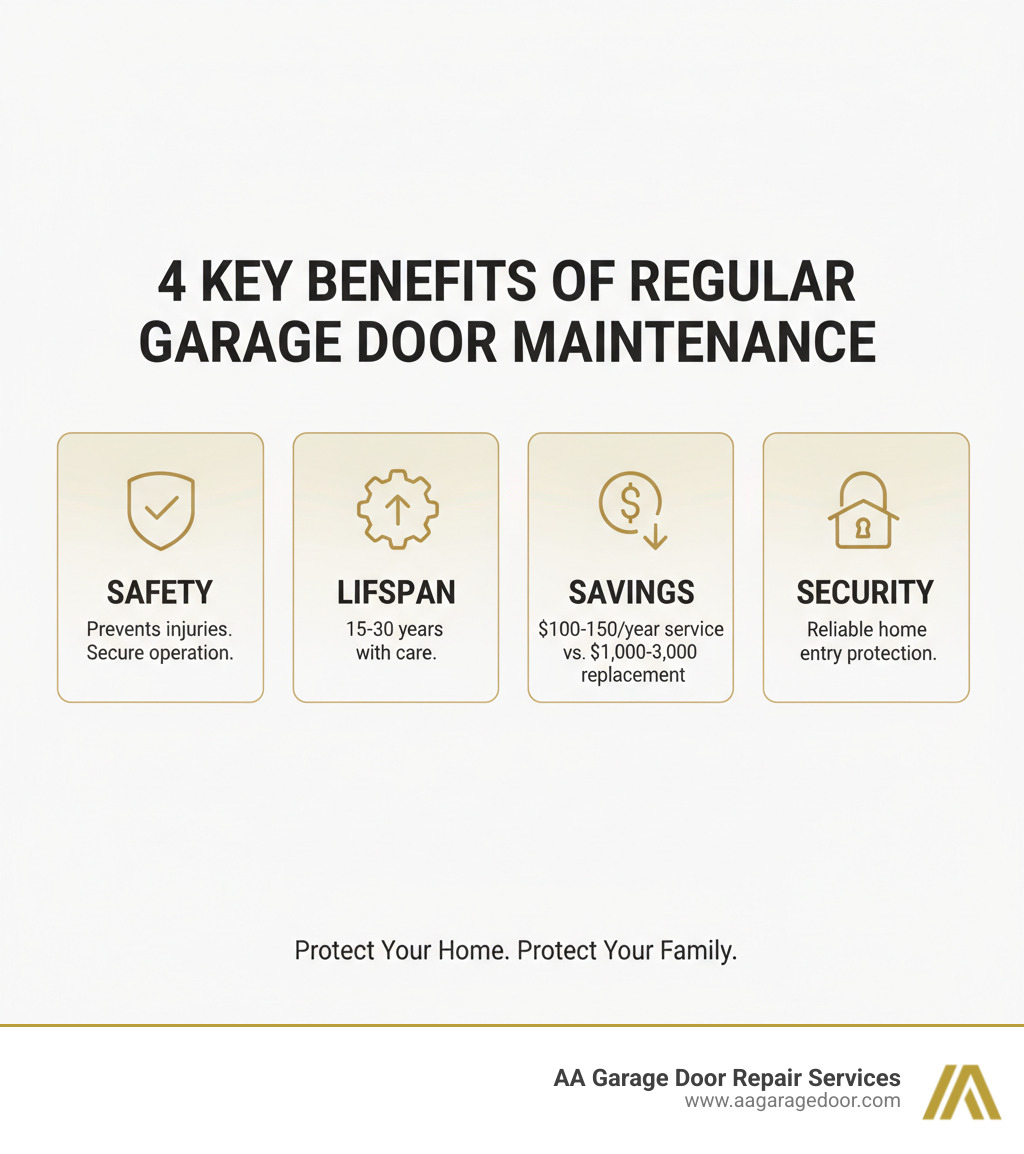
Your garage door opens and closes around 1,500 times a year, facing unpredictable Twin Cities weather. This constant use requires regular attention to prevent costly failures. A complete garage door replacement can cost $1,000 to $3,000, whereas an annual professional garage door maintenance service is typically just $100 to $150. This small investment extends your door’s lifespan from a potential 15 years to as long as 30 years, saving you thousands in the long run.
Beyond savings, routine maintenance is critical for safety. Garage door accidents cause thousands of preventable injuries each year. The two most important safety features are the auto-reverse mechanism and photoelectric sensors, which are designed to stop the door if an obstruction is detected. A closing garage door can exert hundreds of pounds of force, making regular testing of these features essential to protect children, pets, and adults from serious harm.
Security is another key benefit. A door that doesn’t close properly is an invitation to intruders. Proper maintenance ensures all components are tight and the door closes securely, protecting your home. Furthermore, a well-maintained door with intact weatherstripping improves energy efficiency by sealing out cold winter air and keeping your garage cooler in the summer, potentially lowering your utility bills. For more tips, see our 10 Garage Door Maintenance Tips.
Your Bi-Annual DIY Garage Door Maintenance Checklist
In the Twin Cities, your garage door endures extreme seasonal shifts. A bi-annual garage door maintenance routine in the spring and fall is the best way to prepare for harsh weather and prevent expensive repairs. Most of these tasks can be done in under an hour with basic tools.
Step 1: Look and Listen (Visual & Auditory Inspection)
Start by simply watching and listening to your door operate.
- Watch for: Jerky movements or uneven travel. The door should glide smoothly.
- Listen for: Unusual sounds. Squeaking often means parts need lubrication. Grinding or scraping could indicate misaligned tracks or worn rollers.
- Inspect Visually:
- Tracks: Check for dents, bends, and debris. They should be perfectly straight.
- Rollers: Look for cracks or wear. Plan to replace them every 5-7 years.
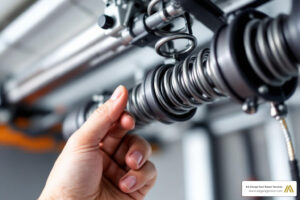
- Cables & Springs: Look for fraying, rust, or gaps. Warning: Do not touch or attempt to adjust cables or springs yourself. They are under extreme tension.
- Hardware: Check for loose nuts and bolts on hinges and brackets.
- Weatherstripping: Ensure the seal at the bottom is intact and not brittle.
Catching unusual squeaking noises early can prevent major issues.
Step 2: Lubricate All Moving Parts
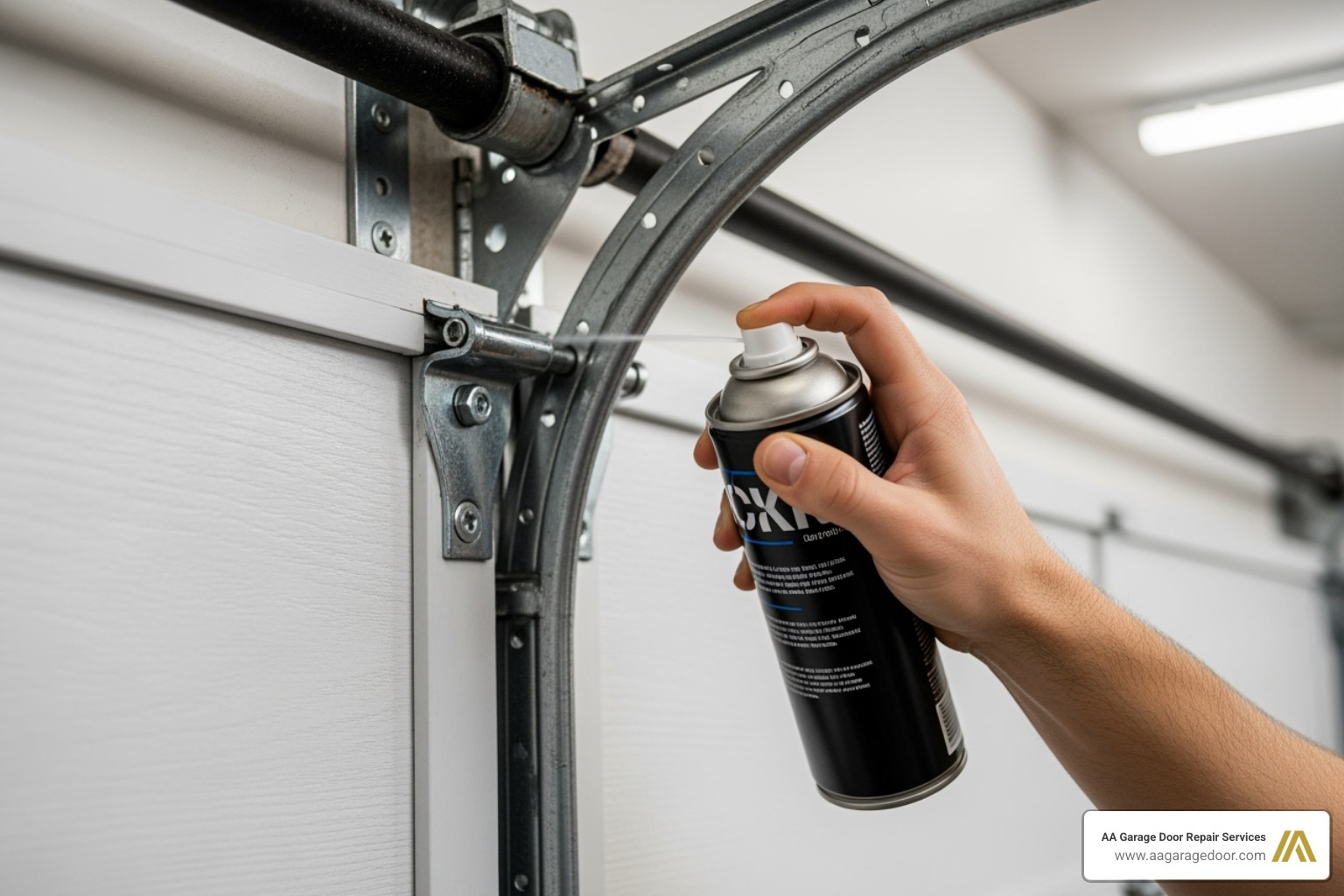
Proper lubrication reduces friction and extends the life of your door’s components. This should be done twice a year.
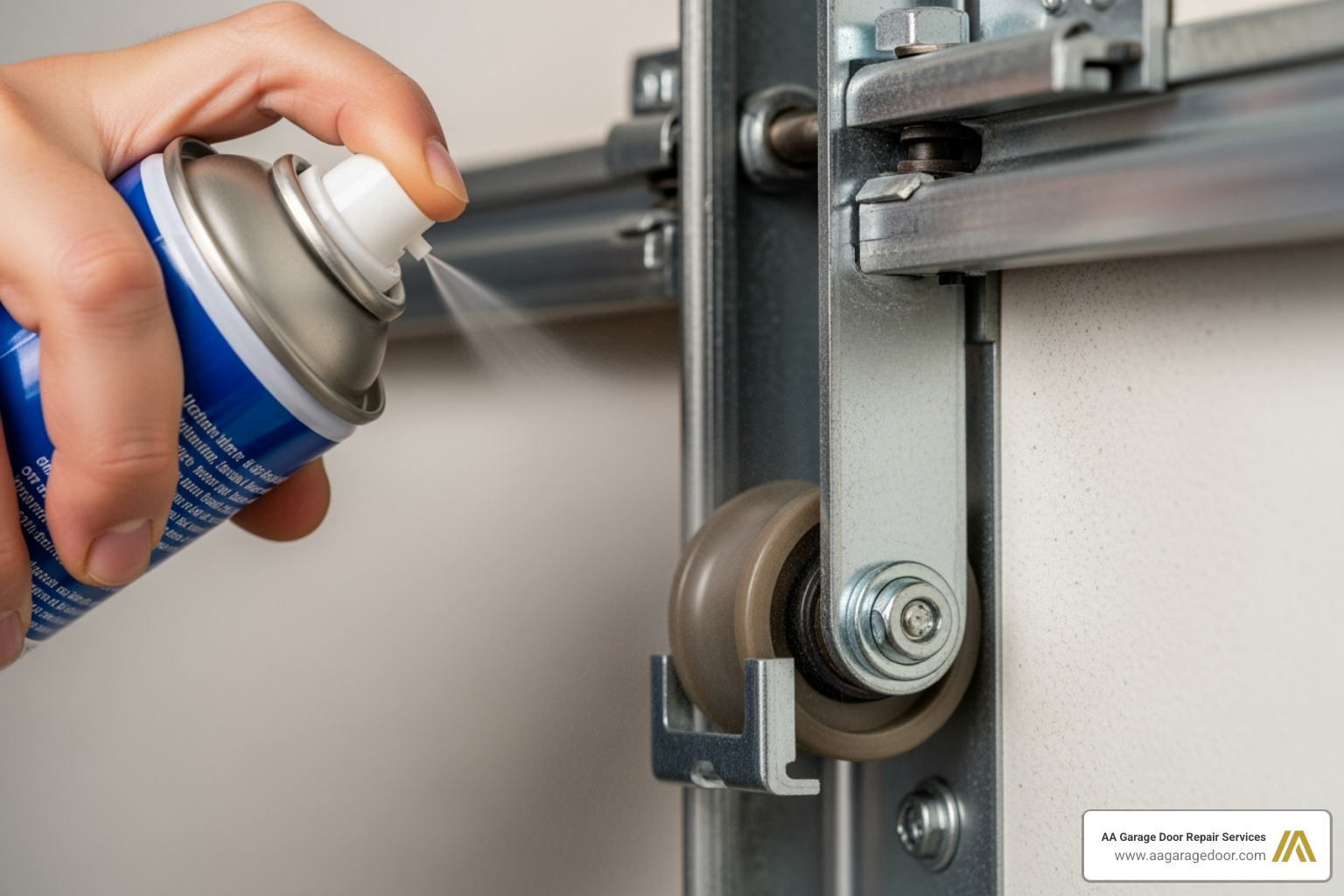
Use a silicone-based spray or white lithium grease specifically designed for garage doors. Crucially, do not use WD-40. It is a solvent, not a long-term lubricant, and will attract dirt, causing more wear.
Apply lubricant to:
- Hinges: At all pivot points.
- Rollers: Directly on the bearings.
- Springs: A light coat on torsion or extension springs prevents rust and ensures smooth operation.
Important: Do not lubricate the tracks. This causes rollers to slip and attracts grime. A quality garage door lubricant will keep your door operating quietly.
Step 3: Test Critical Safety Features
Your garage door weighs hundreds of pounds, making its safety features non-negotiable. Test them monthly.
- Auto-Reverse Test: Place a 2×4 board flat on the ground in the door’s path. When the closing door touches the wood, it must immediately reverse to the open position. If it doesn’t, it needs immediate professional adjustment.
- Photo-Eye Sensor Test: Start closing the door, then wave an object through the invisible beam created by the sensors (located 4-6 inches off the floor). The door must immediately stop and reverse.
If your door fails either test, clean the sensor lenses and check their alignment. If the problem persists, call a professional. These features are life-saving. For more tips, see our 6 Tips to Maintain Your Garage Door.
Step 4: Check the Door Balance
An unbalanced door puts immense strain on the opener motor, shortening its life. Check the balance every six months.
- Close the door and pull the red emergency release cord to disconnect the opener.
- Manually lift the door to about halfway open and let go.
- A properly balanced door will stay in place. If it drifts up or slams down, the springs are unbalanced.
Warning: Adjusting garage door springs is extremely dangerous. If your door is unbalanced, call a professional for service. This is not a DIY task.
Step 5: Tighten Hardware and Clean Tracks
Vibration from daily use loosens hardware over time.
- Tighten Hardware: Use a socket wrench to tighten any loose nuts and bolts on the roller brackets and hinges. Be firm but do not overtighten.
- Clean Tracks: Use a damp cloth to wipe out any dirt, debris, or grime from the inside of the tracks. Clean tracks ensure your rollers move freely and reduce wear.
Regular cleaning and tightening make a significant difference in the smooth and quiet operation of your door.
When to Call a Professional for Garage Door Maintenance in the Twin Cities
While DIY maintenance is beneficial, some tasks are too dangerous for homeowners and require professional expertise. Your garage door system includes parts under extreme tension, and attempting repairs without proper training and tools can lead to serious injury. Knowing when to call a professional is critical for your safety.
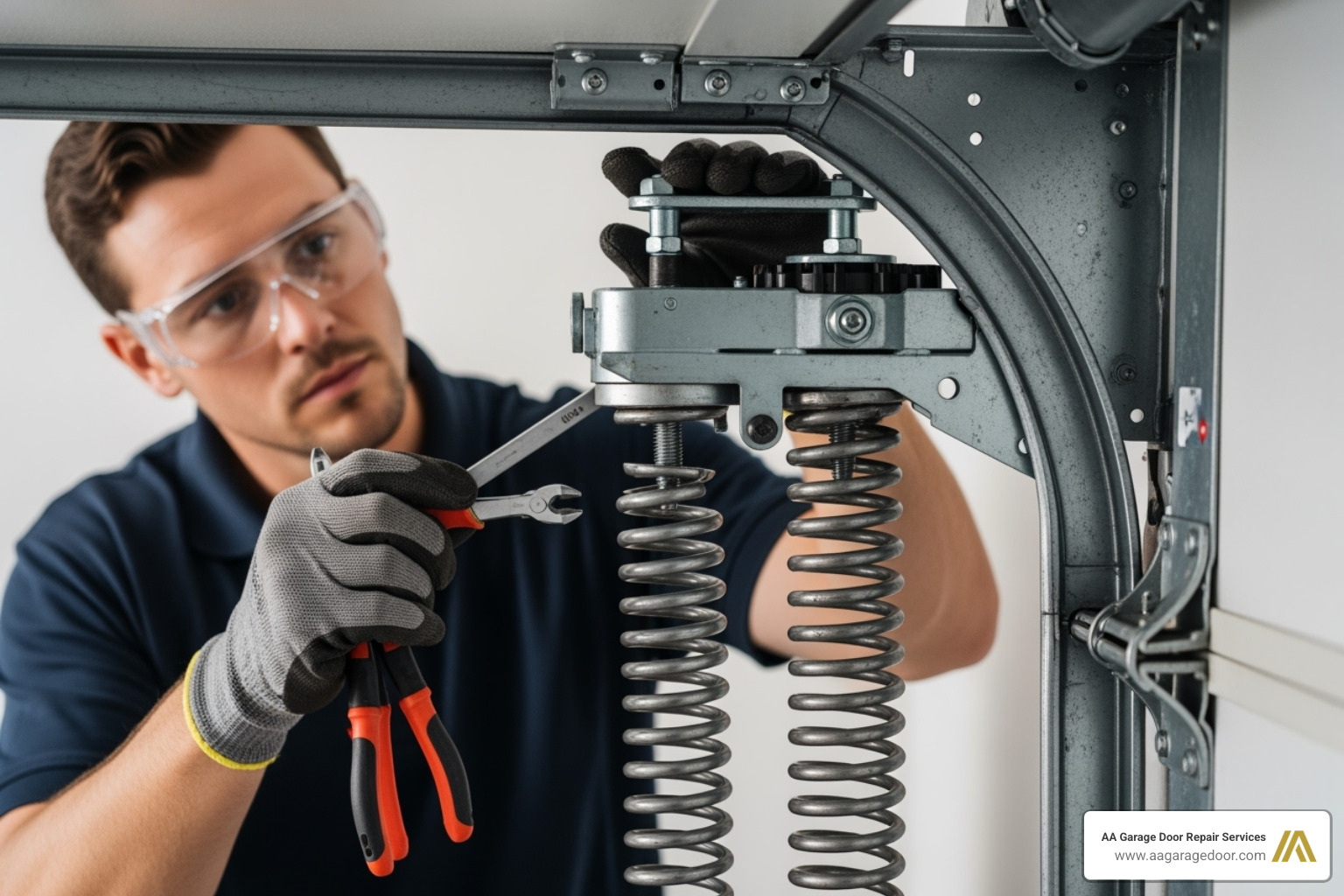
Signs You Need an Expert Immediately
If you notice any of the following, stop using the door and call a professional right away at (651) 702-1420:
- Broken Springs or Cables: A visible gap in a spring or a snapped/frayed cable is an emergency.
- Loud Banging Noise: This often signals a spring has broken.
- Door Off-Track: If rollers have popped out of the tracks, do not try to force the door.
- Sagging or Uneven Door: This indicates a structural or balance problem.
- Door Won’t Open or Close: If the door is stuck or struggles to move, it points to a complex issue.
For more detail, review our 10 Signs Its Time to Get Your Garage Door Serviced.
The Dangers of High-Tension Springs and Cables
Garage door springs and cables are never a DIY project. This is a critical safety warning. The garage door springs counterbalance the door’s weight (150-400 lbs) by storing immense potential energy. If a spring breaks or is handled improperly, this energy releases violently, capable of causing severe or fatal injuries. The cables are under similar tension and are equally dangerous. Professional technicians have the specialized training and tools to handle these components safely. For more insights, see our Pro Tips for Maintaining and Repairing Your Garage Door.
What’s Included in a Professional Garage Door Inspection?
An annual professional garage door maintenance service provides a deep inspection that goes beyond DIY checks. Our comprehensive inspection includes:
- Spring Tension Adjustment: We safely calibrate springs for perfect balance, protecting your opener.
- Cable and Hardware Inspection: We check for wear on cables and tighten all nuts and bolts.
- Opener and Safety Feature Calibration: We test and adjust force settings and safety sensors to manufacturer specifications.
- Detailed Lubrication: We apply professional-grade lubricants to all moving parts.
- Roller and Track Evaluation: We inspect rollers for wear and ensure tracks are perfectly aligned.
- Weather Seal and Panel Check: We examine seals for gaps and panels for damage or rust.
This proactive service catches small issues before they become costly, dangerous emergencies.
Frequently Asked Questions about Garage Door Care
Here are clear, concise answers to common questions about garage door maintenance.
How often should a garage door be serviced?
A homeowner should perform a visual inspection and basic maintenance twice a year (spring and fall). We recommend scheduling a professional service annually for a comprehensive tune-up, which includes adjusting high-tension springs and calibrating safety features.
What is the best lubricant for a garage door?
The best lubricants are silicone-based sprays or white lithium grease specifically made for garage doors. These products resist dust and do not break down over time. Avoid using WD-40, as it is a solvent that strips away grease and attracts dirt, increasing friction and wear.
How long do garage door parts last?
With proper garage door maintenance, a system can last 15 to 30 years. Individual component lifespans vary:
- Springs: Torsion springs are rated for 10,000-20,000 cycles, or about 7-14 years of average use.
- Rollers: Nylon or steel rollers should be replaced every 5-7 years, or sooner if they show wear.
- Garage Door Openers: A well-maintained opener typically lasts 10-15 years.
- Weather Seals: Expect to replace these every 5-10 years, depending on weather exposure.
Keep Your Garage Door Running Smoothly Year-Round
Consistent garage door maintenance is a vital practice for Twin Cities homeowners. It ensures your family’s safety, secures your home, extends your door’s lifespan, and saves you money. While our DIY checklist helps with routine tasks, high-tension components and complex diagnostics are jobs for experts.
At AA Garage Door Repair Services, we are dedicated to keeping your garage door in peak condition. We offer comprehensive maintenance, expert repairs, and reliable installations throughout the Twin Cities, MN, and Western WI, including St. Paul, Woodbury, Baldwin, and Hudson. We are here for you 24/7 with emergency service, transparent pricing, and a satisfaction guarantee, backed by local expertise since 2001.
For comprehensive support, explore our professional garage door maintenance services page. Let us help you keep your garage door running safely and smoothly, year after year.