Your Guide to Garage Door Spring Repair Costs
Garage door spring replacement cost typically ranges from $150 to $450 for most residential homes in 2025, with the national average landing around $250. This essential repair is one of the most common garage door issues homeowners face, as springs handle hundreds of pounds of tension with every use and eventually wear out after 7-15 years of service.
Quick Cost Breakdown:
| Spring Type | Parts Cost | Labor Cost | Total Average |
|---|---|---|---|
| Extension Springs | $20-$100 | $75-$150 | $120-$200 |
| Torsion Springs | $30-$150 | $75-$150 | $150-$350 |
| Emergency Service | – | +$50-$100 | +$50-$100 |
| Both Springs | $60-$300 | $75-$150 | $200-$450 |
A broken garage door spring isn’t just an inconvenience—it’s a safety hazard that makes your door inoperable. When springs fail, they release extreme tension that can cause serious injury if mishandled. That’s why understanding the true costs involved, from parts and labor to emergency fees, helps you budget appropriately and avoid surprises when calling for professional garage door repair services.
Several factors influence the final price you’ll pay. The type of spring (torsion or extension), your door’s size and weight, whether you need emergency service, and regional labor rates all play a role. Most professionals recommend replacing both springs simultaneously, even if only one breaks, to ensure balanced operation and prevent another failure shortly after.
I’m David Sands, owner of AA Garage Door LLC, and I’ve been helping homeowners across Wisconsin and Minnesota with garage door spring replacement cost questions and professional repairs since 2001. Our team has replaced thousands of springs and can provide transparent pricing and same-day service for most repairs.
Understanding the Garage Door Spring Replacement Cost
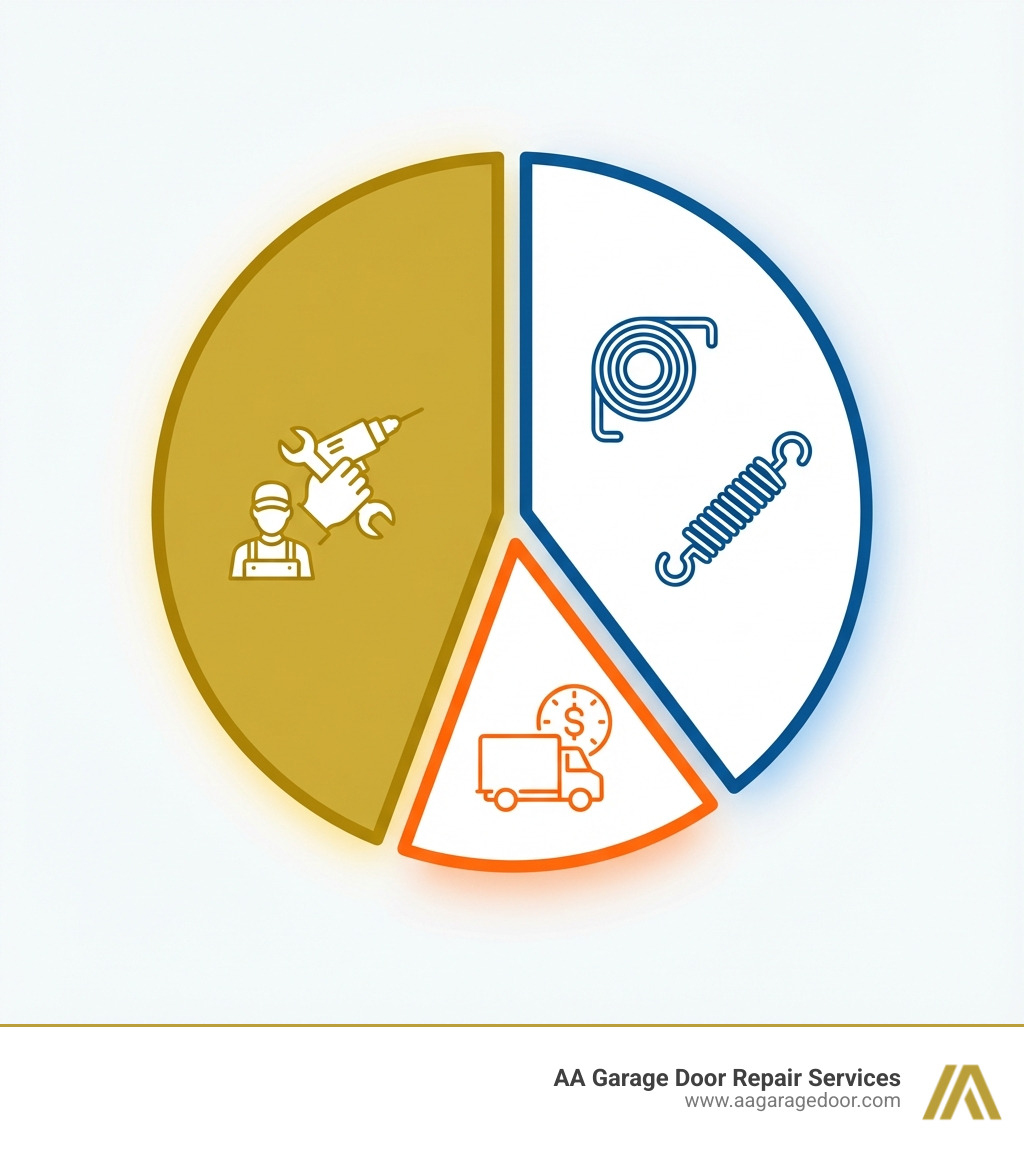
The total price for replacing garage door springs is influenced by the type of spring, the door itself, and labor rates. On average, homeowners can expect to pay between $200 and $700 for a complete spring replacement service. This range accounts for various scenarios, from replacing a single extension spring on a light door to handling multiple torsion springs on a heavy, insulated double door.
Breaking Down the Garage Door Spring Replacement Cost by Type
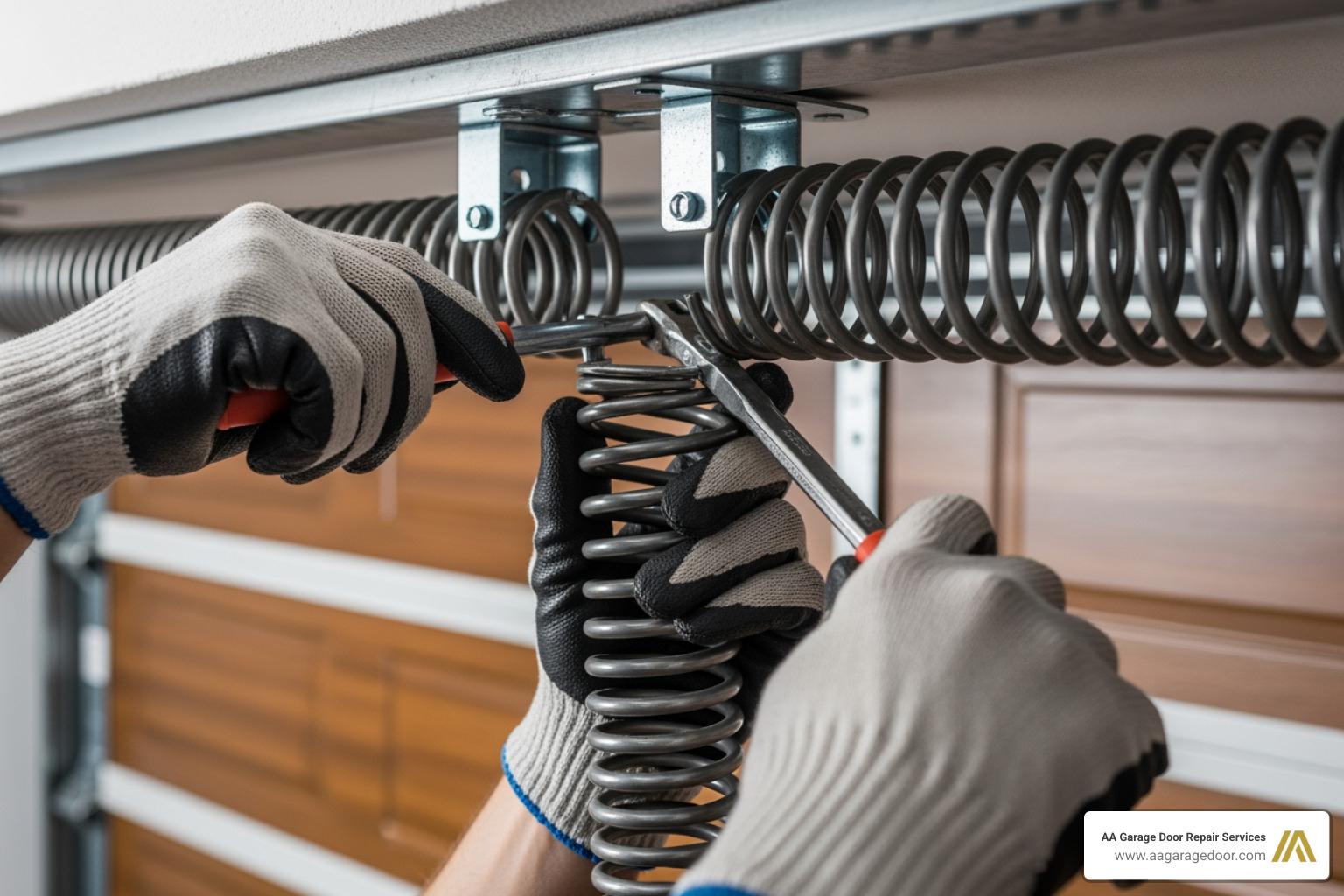
The type of spring your garage door uses is a major determinant of the overall replacement cost. There are two primary types: torsion springs and extension springs. Torsion springs are mounted horizontally above the garage door opening, coiling around a metal shaft. They operate by twisting to generate tension, which helps lift the door. Extension springs, on the other hand, run along the sides of the garage door tracks and stretch to store energy as the door closes.
Torsion springs are generally considered more durable and safer. They are known for providing smoother and quieter operation because the force is applied more evenly. Replacing a torsion spring typically costs between $250 and $450, depending on the door size and spring type. The material cost for torsion springs alone can range from $30 to $150.
Extension springs are often found on lighter or older garage doors. While they are usually less expensive to replace, with costs typically starting around $200 (material costs of $20-$100), they are considered less safe. When an extension spring breaks, it can snap with significant force. For this reason, many professionals recommend installing safety cables alongside extension springs to contain them if they fail.
Here’s a comparison to help illustrate the differences and cost implications:
| Metric | Torsion Springs | Extension Springs |
|---|---|---|
| Average Replacement Cost (Installed) | $250 – $450 | $120 – $200 |
| Lifespan (Cycles/Years) | 10,000 – 30,000 cycles (8-15 years) | 5,000 – 10,000 cycles (7-12 years) |
| Safety | Generally safer; contained on a shaft | Can snap forcefully; safety cables recommended |
| Common Door Type | Roll-up sectional doors, heavier doors | Single-panel tilt-up doors, lighter doors |
Understanding the mechanics and differences between these spring types is crucial for proper maintenance and replacement. You can learn more about garage door springs and their unique characteristics.
Cost of Related Garage Door Repairs
Sometimes, a broken spring isn’t the only issue, or its failure has led to other problems. When we assess your garage door, we look for any related damage that might have occurred. Addressing these issues alongside spring replacement can often save you money in the long run by preventing future service calls.
- Cables: Garage door cables work in tandem with springs, helping to lift and lower the door smoothly. If a spring breaks violently, it can damage the cables. Replacing cables simultaneously with a broken spring will likely cost an additional $175 to $450. The cost for spring and cable replacement together can range from $200 to $500.
- Rollers: Worn or damaged rollers can make your garage door noisy or cause it to get stuck. While not directly caused by spring failure, they are often checked during a spring replacement service.
- Tracks: A broken spring can cause the door to operate unevenly, putting stress on the tracks and potentially bending or misaligning them. Track repair or replacement can add $125 to $300 to the total cost.
- Garage Door Opener: If you’ve tried to open your garage door with a broken spring, you might have strained or even burned out the opener’s motor. Opener repair costs can range from $75 to $300, while a full opener replacement might be $300 to $900.
- Weather Stripping: In addition to springs, we often identify worn weather stripping during inspections. Replacing it costs between $50 and $150 and helps improve energy efficiency.
For a more comprehensive overview of various repair costs, you can check our details on garage door repair costs. Our goal is always to provide transparent pricing and effective solutions for all your garage door needs.
Key Factors That Influence Repair Pricing
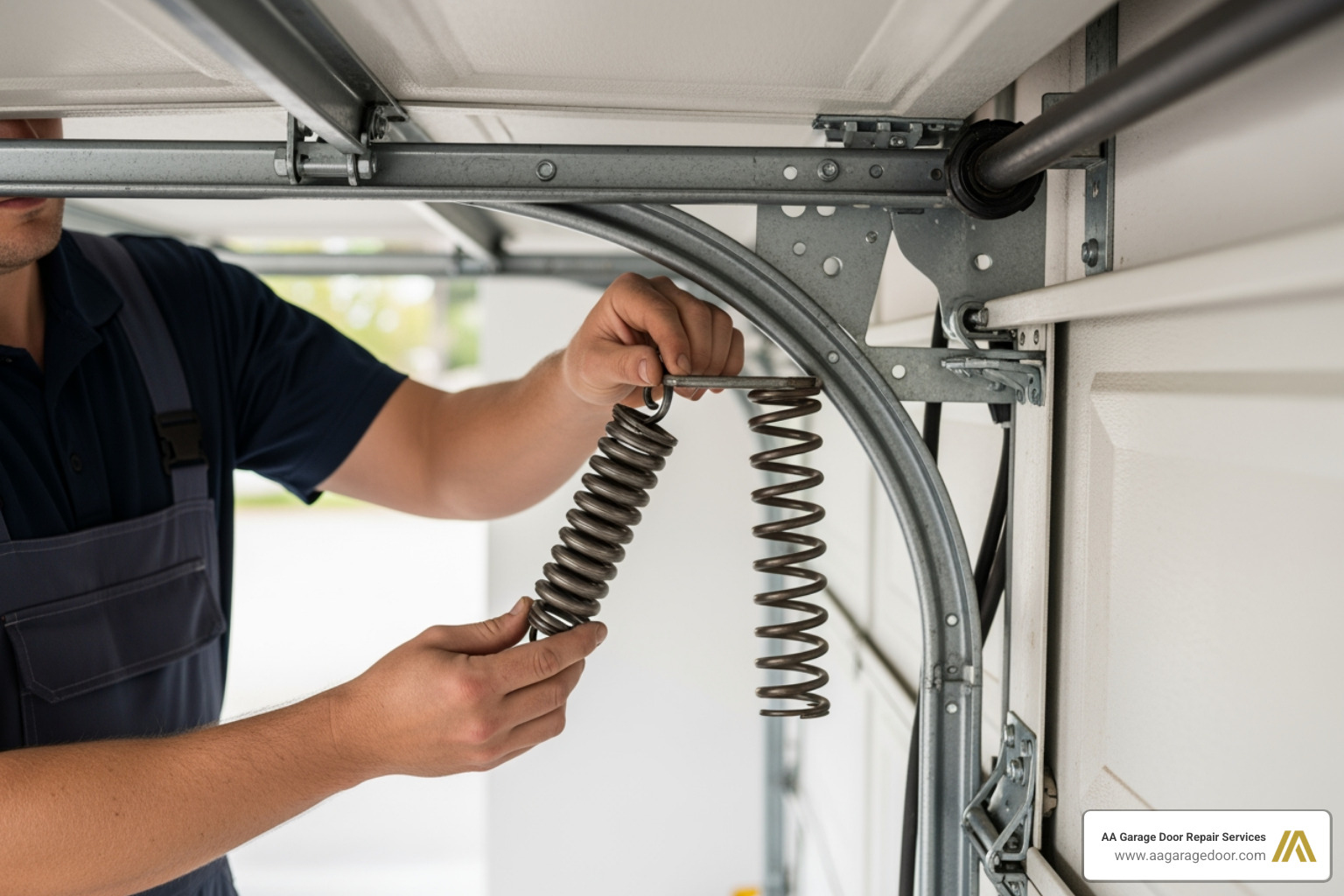
Several variables determine the final bill for a spring replacement. The size and weight of your garage door are primary factors, as heavier doors require stronger, more expensive springs. Labor costs and regional price differences also play a significant role. Let’s dig into these factors to give you a clearer picture.
Labor, Location, and Emergency Fees
Labor is a significant component of the total garage door spring replacement cost. For residential door spring replacement, labor fees typically range from $75 to $150 per hour, and a spring replacement usually takes a professional technician 30 minutes to 1.5 hours. However, for commercial door spring replacement, labor costs can be higher, ranging from $100 to $300 per hour, due to the larger size and complexity of commercial systems.
Regional price differences also impact the cost. In areas with a higher cost of living or increased demand for services, labor rates might be at the higher end of the spectrum. While we focus on serving communities like St. Paul, MN, Baldwin, WI, Woodbury, MN, and Hudson, WI, we ensure our pricing remains competitive and fair within these communities.
Sometimes, a spring breaks at the most inconvenient time. If you need immediate service, emergency repairs for garage door springs can add an extra $50 to $100 to your bill. This covers the cost of after-hours service or expedited response. We offer emergency repair services 24/7 because we understand that a broken garage door can’t always wait until morning.
Garage Door and Spring Specifications
The physical characteristics of your garage door directly influence the type and cost of springs needed.
- Door size and weight: Larger and heavier garage doors require more robust springs with higher weight capacities. For instance, insulated garage doors are heavier than non-insulated ones and thus need heavier-duty springs, which can increase replacement costs to $250-$400.
- Single vs. double door: While a single garage door spring replacement might cost $150-$350, replacing springs for a double garage door (which often uses two sets of springs or heavier springs) can range from $275 to $700. The price per spring can increase by $15 to $30 each for a double garage door.
- High-cycle springs: If you use your garage door frequently, investing in high-cycle springs (designed for 20,000+ cycles) can extend their lifespan, although they come at a higher upfront cost.
- Replacing one vs. both springs: Even if only one spring breaks, we strongly recommend replacing both springs at once. This ensures balanced tension across the door and prevents the older, weaker spring from breaking shortly after the new one is installed. It’s more cost-effective to pay for one labor visit to replace both than two separate visits. We’ve compiled more reasons why you should replace both garage springs to help you make an informed decision.
Is It More Cost-Effective to Replace Both Springs at Once?
Absolutely! This is one of the most common questions we get, and our answer is always a resounding yes. Here’s why replacing both springs, even if only one is broken, is the smart choice:
- Balanced Tension: Garage door springs are designed to work together, providing balanced tension to lift and lower the door smoothly. When one spring breaks, the remaining spring is under increased stress, leading to uneven operation and premature wear. Replacing both ensures that your door operates with optimal balance.
- Prevents Premature Wear: If one spring has broken due to wear and tear, its partner is likely nearing the end of its lifespan as well. Replacing both prevents the “domino effect” of the second spring failing shortly after the first, saving you from another inconvenient breakdown and repair cost.
- Labor Savings: When we visit your home to replace a broken spring, the labor involved in replacing the second, still-functional spring is minimal. Doing them both at once means you’re paying for a single service call and a single labor charge, rather than potentially paying for two separate visits if the second spring breaks later.
- Safety: A balanced door is a safer door. Uneven tension can cause the door to move erratically, increasing the risk of accidents or further damage to other components like cables or tracks.
- Longevity: Replacing both springs ensures that your entire spring system has a fresh start, maximizing the lifespan of your garage door’s lifting mechanism. An International Door Association survey in 2023 highlighted that replacing both springs can extend the garage door mechanism lifespan by up to 40%.
DIY vs. Professional Installation: Risks and Rewards
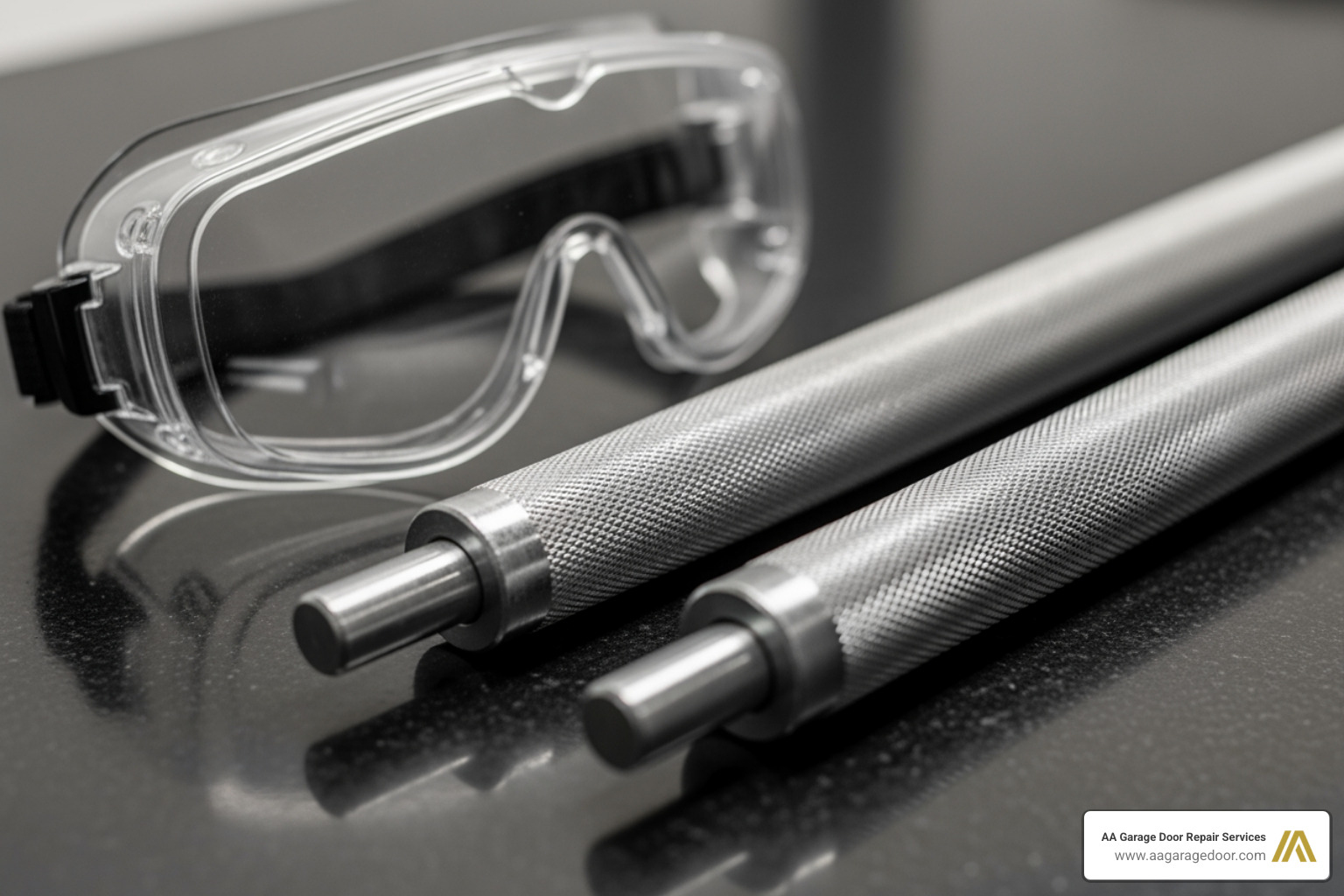
While the idea of saving money by doing it yourself is tempting, garage door spring replacement is not your average DIY project. These springs are under immense tension, and mishandling them can lead to severe consequences. We strongly advise against attempting to replace torsion springs yourself.
DIY vs. Professional Garage Door Spring Replacement Cost
Let’s look at the financial comparison:
- DIY Parts Cost: For extension springs, you might find parts for $30-$90. Torsion spring materials can range from $60-$200. However, this doesn’t account for specialized tools you’ll need, which can be an additional expense.
- Professional Labor Cost: As mentioned, labor typically ranges from $75-$150. When you factor in the cost of parts and labor, professional replacement for extension springs is $150-$200, and for torsion springs, it’s $200-$350.
- Specialized Tools: Torsion spring replacement requires specific winding bars and expertise to safely adjust tension. These tools aren’t commonly found in a homeowner’s toolbox.
- Time Investment: A professional can complete the job in 30 minutes to 1.5 hours. For an inexperienced DIYer, this could take much longer, with the added stress of potential hazards.
- Warranty Coverage: Professionals typically offer warranties on both parts and labor, providing peace of mind. DIY repairs void these warranties and offer no recourse if something goes wrong.
Angi highlights that you can save around 3% in repair costs in the long run by hiring licensed professionals, as they have the expertise and experience in proper alignment and installation. This long-term saving comes from preventing further damage and ensuring correct installation.
The Dangers of DIY Spring Replacement
The primary reason we emphasize professional installation is safety. Garage door springs are designed to counterbalance hundreds of pounds of door weight. This means they are under extreme tension, and if mishandled, they can release that energy violently.
- High Tension Risks: A spring snapping back can cause severe injuries, including broken bones, lacerations, or even death. The Consumer Affairs website has documented cases of serious injury from mishandled garage door springs.
- Improper Installation: Incorrect spring selection or installation can lead to an unbalanced door, causing it to crash down or get stuck, damaging the door, opener, or even vehicles. It can also overstrain your garage door opener, leading to premature failure.
- Further Damage: An improperly installed spring can cause a cascade of problems, leading to damage to cables, tracks, rollers, or the garage door itself, resulting in more expensive repairs down the line.
- Voided Warranties: Attempting DIY repairs on your garage door can void existing manufacturer warranties on the door or its components.
For these reasons, highly complex or dangerous repairs like spring replacement are always best left to the experts. We’ve outlined more about why some repairs are best for pros to help you understand the value of professional service. Our technicians have the specialized training, tools, and experience to perform these replacements safely and efficiently.
Signs of a Failing Spring and How to Extend Lifespan
A loud “bang” from the garage is the most obvious sign of a broken spring, indicating that the spring has snapped and released its tension. However, there are other, more subtle indicators that your garage door springs are on their way out. Recognizing these early can prevent a complete system failure, a potential emergency, and possibly additional damage to your garage door system.
Symptoms of a Worn-Out Garage Door Spring
Catching these signs early can save you from a major headache and potentially a higher garage door spring replacement cost.
- A visible gap in the spring: This is the most definitive sign of a broken spring. For torsion springs, you’ll see a gap in the coiled spring above the door. For extension springs, you might see a break in the coil or the spring hanging loose.
- The door feels heavy when lifted manually: If you disconnect your garage door opener (only attempt this if the door is fully closed and secured) and try to lift the door by hand, it should feel relatively light. If it feels extremely heavy, your springs are likely not providing enough assistance.
- The door opens crookedly or at an angle: This often indicates that one of the two springs has broken or lost tension, causing an imbalance. The door will struggle to lift evenly.
- The opener strains to lift the door: If your garage door opener sounds like it’s working harder than usual, or if it stops halfway up, it’s a strong sign that the springs are no longer doing their job effectively. The opener is designed to assist the springs, not lift the entire weight of the door.
- The door slams shut instead of closing smoothly: A door that crashes down rather than lowering gently is a clear indicator of insufficient spring tension or a broken spring. This can be dangerous and damage the door or anything underneath it.
- Loud noises during operation: Squeaking, grinding, or excessive noise during opening and closing can indicate worn-out springs, rollers, or other components. While not always a broken spring, it’s a sign that something needs attention.
- Slow operation: If your garage door is opening or closing much slower than usual, it could be due to weakened springs struggling to support the door’s weight.
If you notice any of these symptoms, it’s time to call a professional. Ignoring these warning signs can lead to more extensive and costly repairs. We’ve detailed more about these indicators in our article on 10 signs you need a replacement garage door.
Extending the Life of Your Garage Door Springs
While springs are designed to wear out, there are steps you can take to maximize their lifespan and delay the inevitable garage door spring replacement cost.
- Regular lubrication: Springs, like any metal component, benefit from lubrication. Applying a silicone-based lubricant or WD-40 White Lithium Grease every three to six months can prevent rust and corrosion, which weaken the spring coils. This helps them operate smoothly and reduces friction.
- Annual professional inspection: Scheduling an annual or biannual inspection with a professional garage door technician allows them to identify minor issues before they become major problems. During an inspection, we check the springs for wear, adjust tension if needed, and lubricate all moving parts. This proactive approach can significantly extend the life of your springs and the entire garage door system.
- Door balance test: You can periodically test your door’s balance. With the door fully closed, pull the emergency release cord to disconnect the opener. Manually lift the door halfway. If it stays in place, the springs are properly balanced. If it falls or shoots up, the springs need adjustment or replacement. Do not attempt this if you suspect a broken spring.
- Avoiding manual strain: While springs are robust, consistently adding manual strain to them, such as forcing a partially stuck door, can shorten their life. Always ensure your tracks are clear and your door is operating freely.
Most garage door springs are rated for 10,000 cycles, which translates to about 7-10 years of use for an average household. High-cycle springs can last up to 20,000 or even 30,000 cycles. Regular maintenance, as outlined above, can help your springs reach the upper end of their expected lifespan. For more insights into spring longevity, refer to our guide on how long springs should last.
Frequently Asked Questions about Garage Door Spring Replacement
We often receive many questions from homeowners about their garage door springs. Here are some of the most common inquiries, along with our expert answers.
How long does it take to replace a garage door spring?
A professional technician can typically replace a set of garage door springs in 30 to 60 minutes. This timeframe includes releasing the tension from the old springs, removing them, installing the new springs, and carefully re-tensioning them correctly to balance the door. While the process might seem quick, it requires specialized tools, training, and experience to be done safely and effectively. DIY attempts can take significantly longer and carry substantial risks.
Should I open my garage door if the spring is broken?
No, you should not attempt to open a garage door with a broken spring using the automatic opener. The opener is not designed to lift the full weight of the door; its function is to assist the springs. Trying to operate the door with a broken spring can severely damage the opener’s motor, gears, or other components, leading to a much more expensive repair or replacement. Manually lifting the door with a broken spring is also extremely difficult and dangerous due to the door’s immense weight. If you absolutely must open it manually, ensure you have at least two strong people and use extreme caution, securing the door in the open position with clamps or vice grips to prevent it from crashing down. However, we always recommend waiting for professional assistance.
Do warranties cover garage door spring replacement?
The coverage for garage door spring replacement varies. Most manufacturer warranties on new garage doors cover springs for a limited period, often 1-5 years, depending on the quality of the original springs. However, these warranties typically only cover defects, not wear and tear. Home warranties, which cover various home systems and appliances, may cover the garage door opener but generally exclude components like springs and tracks.
When you hire a professional service like AA Garage Door Repair Services for a spring replacement, we typically offer a warranty on both the new parts and our labor. This provides an added layer of protection and peace of mind, ensuring that if there’s an issue with the new springs or the installation within the warranty period, we’ll address it. Always ask about warranty specifics when comparing quotes from different service providers.
Secure Your Home with Professional Spring Replacement
Understanding the costs and risks associated with garage door spring replacement empowers you to make the best decision for your home’s safety and security. While costs can range from $250 to $450, investing in a professional repair is crucial for ensuring proper function and preventing dangerous accidents. The average cost for a single spring replacement (parts and labor) is around $250, but this can fluctuate based on spring type, door size, and specific labor rates in your area.
For homeowners in St. Paul, MN, and Western WI, AA Garage Door Repair Services has provided fast, reliable service since 2001. We are committed to transparent pricing, quality parts, and ensuring your garage door operates safely and efficiently. If you’re facing a broken spring, don’t wait. A broken spring means your garage door is a heavy, dangerous slab of metal that needs immediate attention. Schedule a professional garage door maintenance check or call for 24/7 emergency repair at (651) 702-1420 to ensure your door is safe and operational. Our expert team is ready to help you with any garage door repair, guaranteeing your satisfaction and the longevity of your door system.