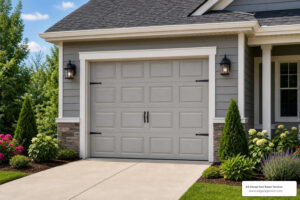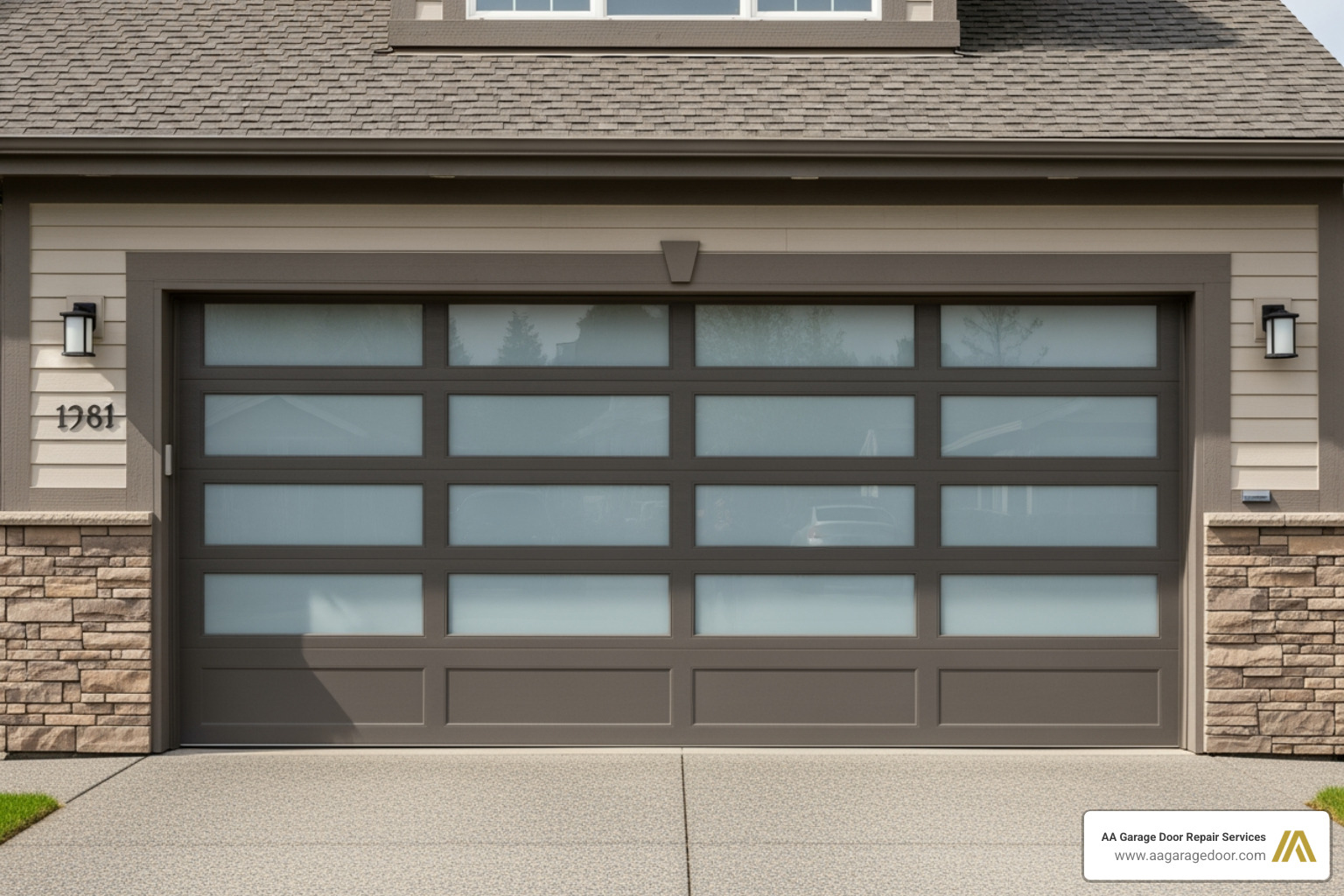
Why an 8×8 Insulated Garage Door Matters for Your Home
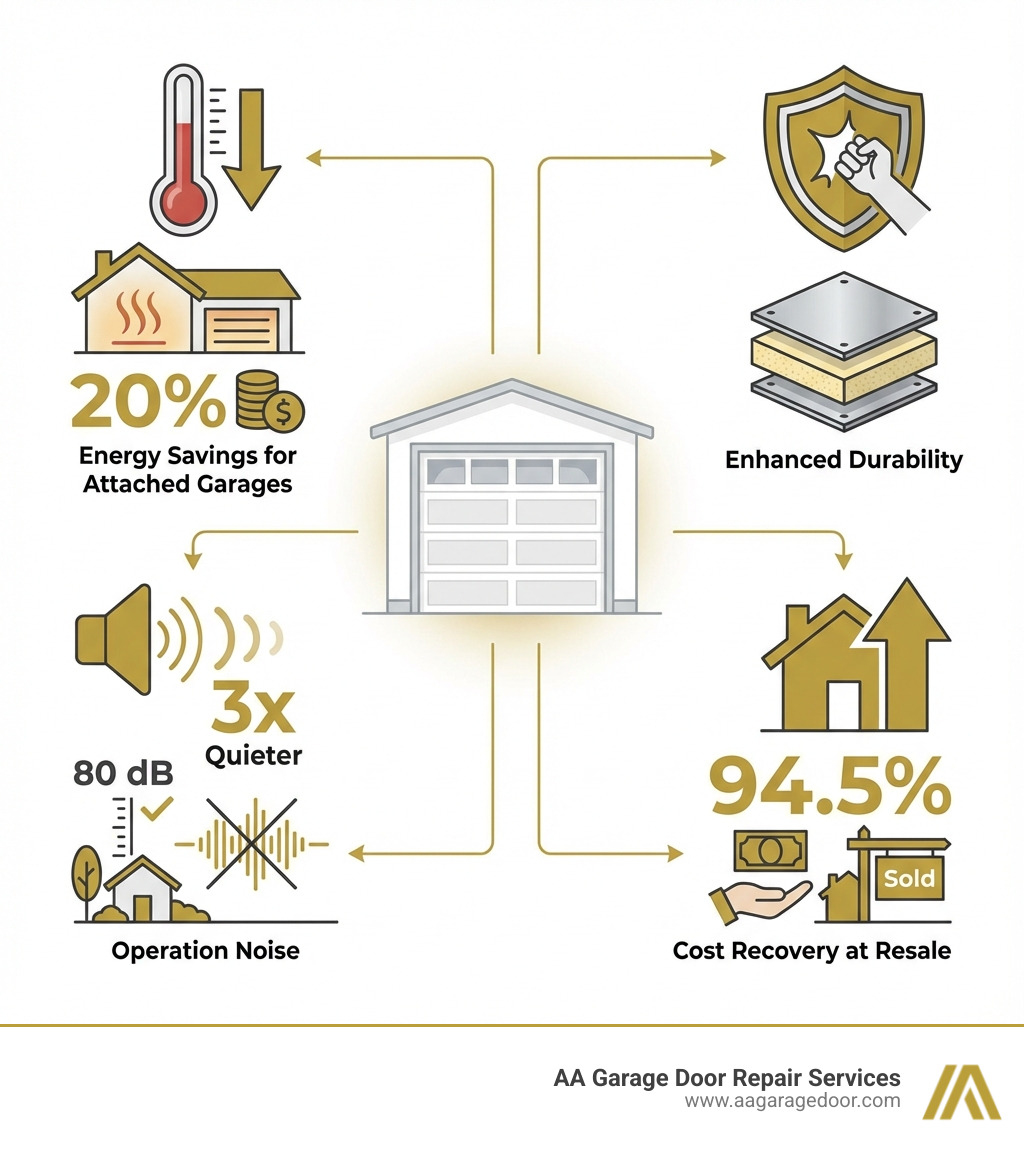
An 8×8 garage door insulated provides four key advantages that directly impact your home’s comfort and value:
- Energy Efficiency: Reduces heat transfer, lowering utility bills by up to 20% for attached garages
- Improved Durability: Multi-layer construction resists dents and weather damage
- Noise Reduction: Operates up to 3 times quieter than uninsulated doors (80 dB vs. 96 dB)
- Increased Home Value: Homeowners recoup an average of 94.5% of installation costs at resale
Your garage door represents as much as 30% of your home’s front façade. If it’s uninsulated, you’re essentially leaving a giant opening for temperature loss, noise intrusion, and structural vulnerability—especially in climates with harsh winters like Minnesota.
Think of an uninsulated garage door like leaving your front door open. The garage becomes a thermal liability instead of a buffer zone, forcing your HVAC system to work harder and making attached living spaces uncomfortable. An insulated 8×8 door transforms this weak point into an asset.
The 8×8 size is the standard dimension for single-car garages, making it one of the most common residential garage door sizes. This means you’ll have access to a wide range of styles, colors, and insulation options at competitive prices. Looking to upgrade your garage door for better comfort and efficiency? Visit AA Garage Door for expert solutions custom to your needs.
I’m David Sands, owner of AA Garage Door LLC, and I’ve spent over 23 years helping homeowners in Wisconsin and Minnesota choose the right garage doors for their needs. Throughout my career, I’ve seen how an 8×8 garage door insulated with quality materials transforms both the functionality and energy efficiency of a home, particularly in our challenging climate.
8×8 garage door insulated terms at a glance:
The Surprising Advantages of Insulating Your 8×8 Garage Door
An insulated garage door does more than regulate temperature; it improves your home’s comfort, strength, and quietness. Homeowners often recoup up to 94.5% of their garage door’s value at resale, making it a wise investment. This high return on investment underscores that an 8×8 garage door insulated is not just an expense, but a significant improvement to your property.
Improved Energy Efficiency and Comfort
One of the primary drivers for choosing an 8×8 garage door insulated is the undeniable boost in energy efficiency and overall home comfort. Your garage, especially if it’s attached to your home, acts as a significant thermal bridge. An uninsulated garage door allows heat to escape in winter and seep in during summer, forcing your home’s HVAC system to work overtime and driving up your utility bills.
An insulated door creates a more stable garage temperature, reducing the strain on your heating and cooling systems. For instance, in our challenging Minnesota winters, where temperatures can plummet to as low as 7 degrees Fahrenheit and even lower, a well-insulated garage is crucial. A warmer garage in winter makes everyday tasks like unloading groceries, getting kids into car seats, or working on projects significantly more comfortable. It also protects items stored in your garage from extreme temperature fluctuations, which can be detrimental to things like paint, motor oil, and even your vehicle’s battery life.
Even if your garage isn’t directly heated, an insulated door helps maintain a more moderate temperature, acting as a buffer zone between the harsh outdoors and your living space. This means less cold air seeping into your home’s interior rooms during winter and less heat radiating into your home during summer. We’ve seen many homeowners in St. Paul, Baldwin, Woodbury, and Hudson WI experience noticeable differences in their energy bills after upgrading to an insulated garage door.
Want to keep your garage toasty? Check out our guide on 5 Ways Keep Garage Warm for more tips!
Superior Durability and Strength
An often-overlooked benefit of an 8×8 garage door insulated is its improved durability and structural strength. Unlike single-layer “pan doors,” which are typically uninsulated and more prone to dents and warping, insulated doors boast a multi-layer construction.
The most common and effective construction involves a steel-polyurethane-steel sandwich design. Here, a core of insulation (often polyurethane or polystyrene) is injected or fitted between two layers of heavy-duty steel. This layered approach creates a highly rigid and robust panel that can better withstand impacts from balls, vehicles, or even harsh weather conditions. This construction also helps the door resist bowing or warping over time, which can be a common issue with lighter, uninsulated doors.
This increased structural integrity means your garage door will not only look better for longer but will also provide superior protection against the elements and potential intruders. In regions like ours, where garage doors face everything from heavy snow and ice to strong winds, this added resilience is invaluable.
Significant Noise Reduction
Few things are as jarring as the loud rumble of an uninsulated garage door operating early in the morning or late at night. An 8×8 garage door insulated can dramatically reduce this noise, offering a more peaceful home environment. The insulation material, particularly dense polyurethane, acts as a sound dampener, absorbing vibrations and muffling external noises.
Consider this: an uninsulated garage door can produce sounds measuring around 96 decibels (dB). In contrast, an insulated door featuring advanced technologies like Intellicore® can operate at just 80 decibels (dB). While that might not seem like a huge difference numerically, the decibel scale is logarithmic. This means an Intellicore® insulated door is perceived as three times quieter to the human ear than a traditional uninsulated door.
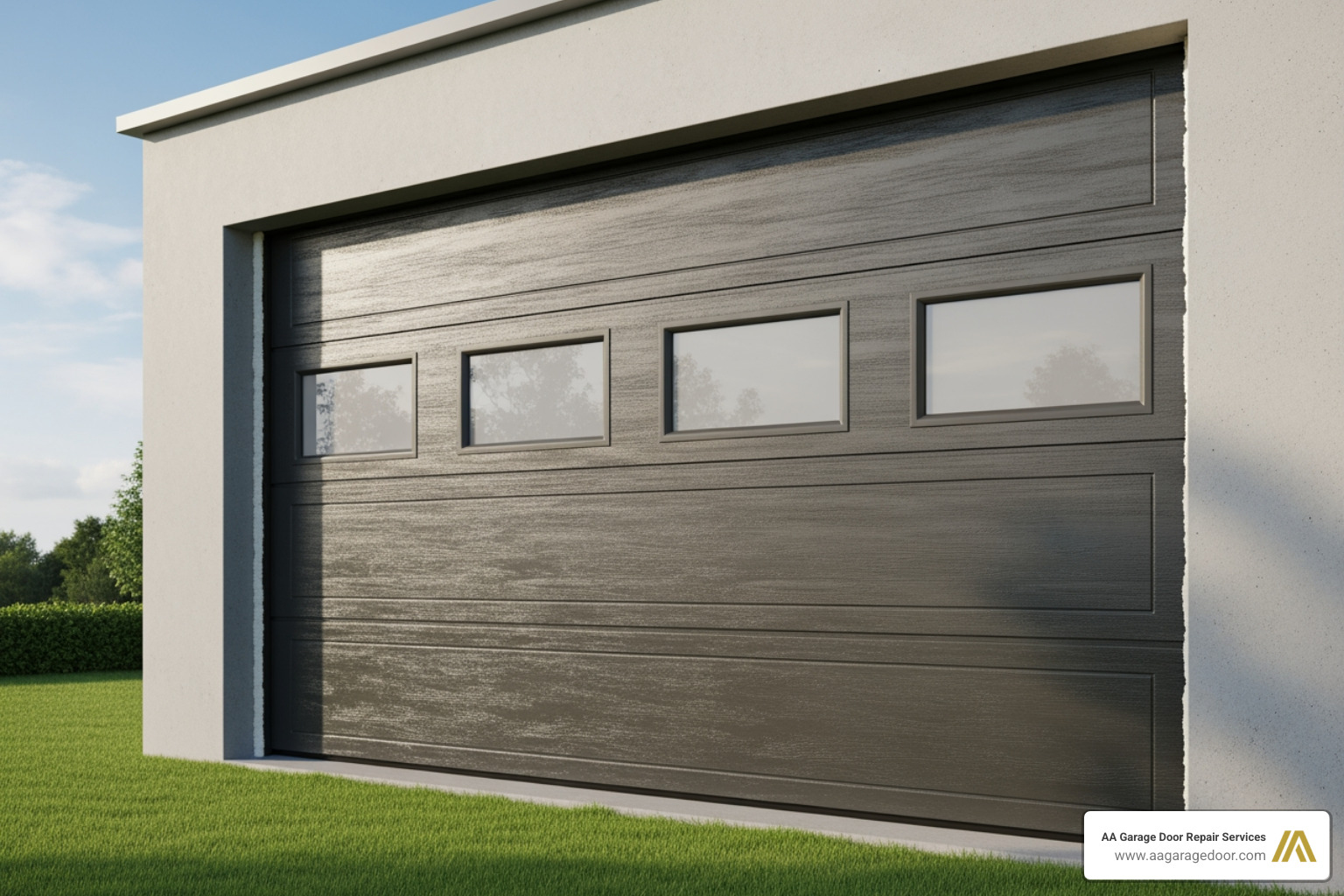
Beyond just the operating noise, insulation also helps reduce sound transmission from outside your garage. This means less street noise, barking dogs, or neighborhood activity disturbing your home’s interior, especially if your garage is attached to living spaces or used as a workshop. Many insulated models also include smooth, quiet nylon rollers and heavy-duty steel hinges, further contributing to a smooth and virtually silent operation.
If you’re tired of a noisy garage door, we’ve got tips to help! Read our article on How to Make Your Garage Door Quieter.
Decoding Insulation: Materials and R-Value for an 8×8 Garage Door Insulated
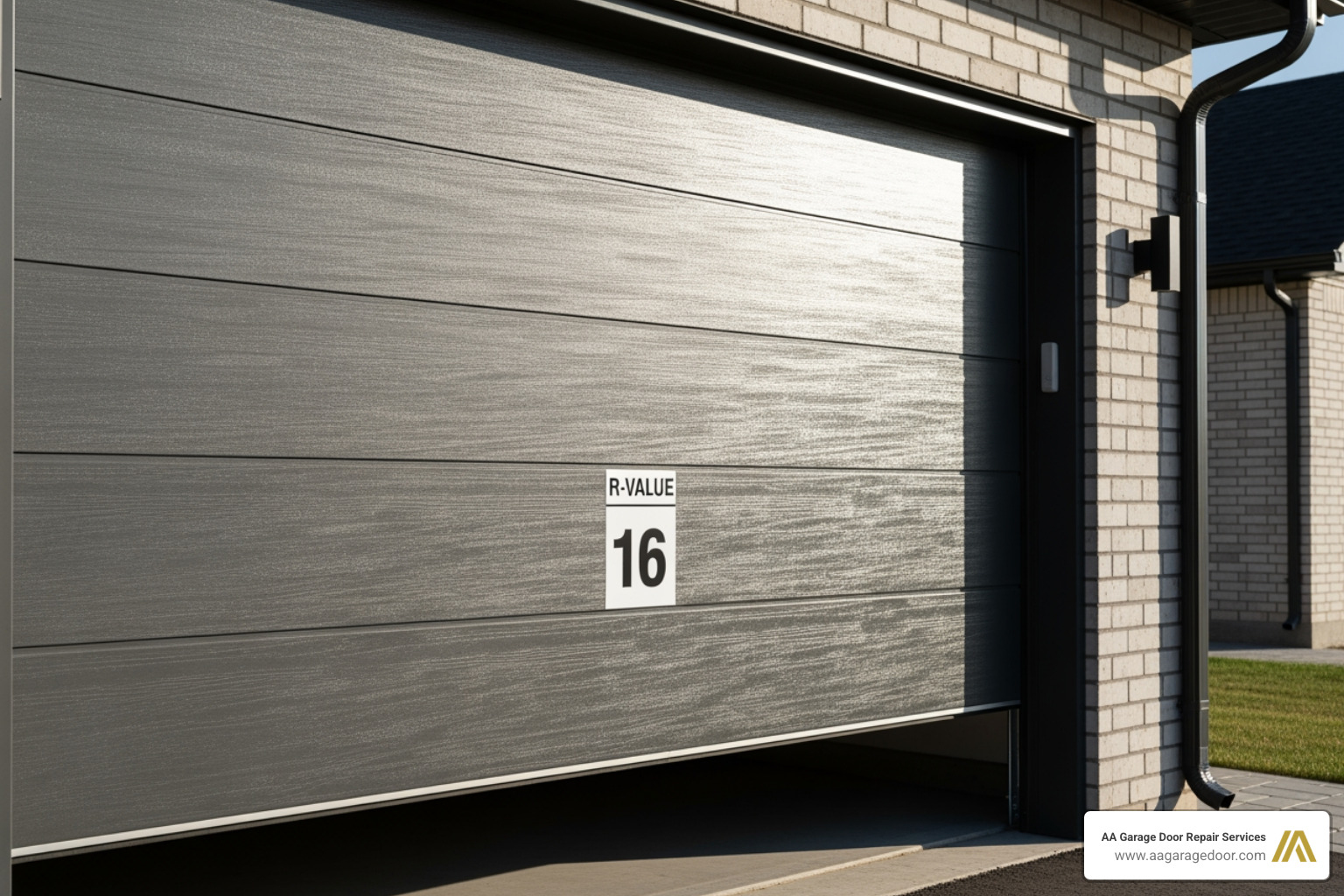
The effectiveness of garage door insulation is measured by its R-value, which indicates its resistance to heat flow. A higher R-value signifies better insulating performance. When choosing an 8×8 garage door insulated, understanding these technical terms and material differences is key to making an informed decision.
Understanding R-Value and U-Factor
The R-value is the most commonly cited metric for insulation performance. It quantifies a material’s thermal resistance, or its ability to resist the conductive flow of heat. Simply put, the higher the R-value, the better the insulation’s ability to prevent heat from passing through it. For garage doors, R-values typically range from 0 (uninsulated) to over 18.
The U-factor, on the other hand, measures the rate of heat transfer through a material. It’s the inverse of the R-value. A lower U-factor indicates better insulation and less heat transfer. While R-value is more frequently used in residential garage door discussions, both metrics are important for a comprehensive understanding of thermal performance. You can find detailed information on R-value from the U.S. Department of Energy.
For an 8×8 garage door insulated in colder climates like ours in St. Paul, Baldwin, Woodbury, and Hudson WI, we generally recommend an R-value of 12 or higher. This ensures optimal thermal performance, keeping your garage warmer in winter and cooler in summer, and significantly contributing to your home’s overall energy efficiency.
Common Insulation Materials
When it comes to insulating an 8×8 garage door insulated, two primary materials dominate the market: polystyrene and polyurethane. Each offers distinct advantages in terms of R-value, durability, and cost.
| Insulation Type | Description | R-Value Range (approx.) | Benefits | Drawbacks |
|---|---|---|---|---|
| Polystyrene | Rigid foam boards cut to fit within the garage door’s steel frame. | R-4 to R-10 | Cost-effective, lightweight, offers moderate insulation. | Can leave small air gaps, generally lower R-value per inch. |
| Polyurethane | Foam injected into the door panels, expanding to fill the entire cavity. | R-12 to R-18.4 | Superior thermal resistance, adds structural strength, excellent sound dampening. | Generally more expensive. |
Polystyrene insulation is a cost-effective choice that provides good thermal performance. It’s lightweight and often found in more basic insulated garage door models. Clopay’s Value Plus models, for example, offer 1-5/16″ polystyrene insulation, yielding moderate R-values.
Polyurethane insulation, often referred to by brand names like Intellicore® (Clopay) or Thermacore® (Overhead Door), is considered a premium option. This foam is injected between the door’s steel layers, expanding to fill every void. This creates a dense, uniform insulation barrier that not only provides higher R-values (up to 18.4 for Intellicore® or 17.5 for Thermacore® Model 5760) but also significantly improves the door’s structural integrity and sound-dampening properties. For homes in our cold climate, polyurethane offers maximum energy savings and a more durable, quieter door.
Types of Insulated Door Construction
The way insulation is integrated into a garage door also varies, leading to different levels of performance and durability.
- Single-layer doors (often called “pan doors”): These are typically uninsulated, made from a single sheet of steel. They offer minimal thermal resistance and are prone to dents.
- Double-layer doors: These usually feature a steel exterior with an insulation layer (often polystyrene) bonded to the interior side. While offering better thermal performance than single-layer doors, they might not have the same structural rigidity as triple-layer options.
- Triple-layer doors: This construction, typically steel-insulation-steel, offers the best combination of durability, energy efficiency, and noise reduction. The insulation (often polyurethane) is sandwiched between two steel skins, creating a robust, rigid panel. Thermacore® and Clopay’s Premium Intellicore® doors are excellent examples of this high-performance construction.
A triple-layer construction with high-density polyurethane insulation is the gold standard for an 8×8 garage door insulated, providing maximum benefits in terms of energy savings, durability, and quiet operation.
Learn more about different types of garage doors to understand how construction impacts performance.
Customizing Your 8×8 Insulated Garage Door: Style Meets Function
An 8×8 garage door insulated doesn’t mean sacrificing style for efficiency. Modern garage doors offer an extensive array of customization options, allowing you to improve your home’s curb appeal while reaping the benefits of insulation. Given that your garage door can make up a significant portion of your home’s facade, its appearance is paramount.
Panel Designs and Finishes
The style of your garage door panels plays a huge role in its overall aesthetic. Whether your home is traditional, modern, or somewhere in between, there’s a panel design to complement it.
Common panel designs include:
- Traditional Raised Panels: The classic look, featuring rectangular sections that are slightly raised, adding depth and shadow.
- Carriage House Style: Designed to mimic the look of old-world swing-out carriage doors, these often feature decorative hardware and can be made from steel with a faux wood finish for low maintenance.
- Flush Panels: Offering a sleek, minimalist appearance, these panels are smooth and flat, ideal for contemporary and modern homes.
- Modern Microgroove: Characterized by narrow, horizontal grooves that create a subtle texture, these panels also lend themselves well to modern architectural styles.
Beyond the panel design, the finish and color options are virtually endless. Steel doors can be painted in a wide array of colors, from classic whites and browns to dramatic blacks. Brands like Clopay offer a ColorBlast® custom paint program with over 1,500 options, ensuring you can perfectly match or contrast your home’s exterior.
For those who love the look of wood but prefer the durability and low maintenance of steel, wood-grain finishes like Clopay’s Ultra-Grain® are an excellent choice. These finishes deliver the realistic look of natural wood without the fading, rot, or splitting associated with real wood. If you’re considering this option, you might find our article Should You Choose Faux Wood Garage Door helpful.
Windows and Decorative Hardware
Adding windows to your 8×8 garage door insulated can transform its appearance and significantly improve the functionality of your garage space. Windows allow natural light to filter in, making your garage a brighter and more inviting area for hobbies, storage, or even a home gym.
Window options are diverse, including:
- Placement: Windows can be placed in the top section, or even in multiple sections, depending on the door’s design and your preference.
- Glass Types: Choose from clear glass for maximum light, frosted or obscure glass for privacy, or seeded and rain glass for a unique textural effect.
- Grille Patterns: Decorative grilles can be added to create different visual styles, such as colonial, prairie, or arched designs.
Beyond windows, decorative hardware like handles and hinges can complete the look, adding a touch of elegance or rustic charm. These elements are purely aesthetic but can dramatically impact your door’s curb appeal.
If you’re thinking of changing your garage into a more functional living area, adding windows to your insulated door is a great first step. Learn more about how to make the most of your garage space in our guide: What to Know About Garage to Home Gym Conversion.
Long-Term Value: Maintenance, Warranty, and Installation
Investing in an 8×8 garage door insulated is a decision that pays off for years, but maximizing its lifespan and performance requires understanding its long-term care and installation requirements.
Lifespan and Warranty
A high-quality 8×8 garage door insulated, properly installed and maintained, can have a typical lifespan of 20 to 30 years, if not longer. This longevity is a testament to the robust construction and durable materials used in insulated doors.
Manufacturers often back their insulated doors with impressive warranties. For example, Overhead Door’s Thermacore® Collection offers a 20-year limited warranty on Model 5720 and a limited lifetime warranty on Models 5740 and 5760. These warranties typically cover the door sections against defects in material and workmanship. For complete details, always refer to the specific product’s warranty document, such as the Thermacore® Collection Limited Warranty.
Beyond the manufacturer’s product warranty, it’s crucial to consider the installation warranty. Here at AA Garage Door, we stand by our work, offering robust installation warranties to ensure your peace of mind. Proper maintenance, as we’ll discuss next, is key to keeping your warranty valid and your door performing optimally.
Maintenance for an 8×8 Garage Door Insulated
While an 8×8 garage door insulated is built for durability, regular maintenance is essential to ensure its smooth operation, extend its lifespan, and keep it performing efficiently. Neglecting maintenance can lead to premature wear, costly repairs, and even void your warranty.
Essential maintenance tasks for your insulated garage door include:
- Visual Inspection: Regularly check for any signs of wear and tear, rust, or damage to panels, tracks, rollers, and cables. Pay attention to the weather stripping around the door’s perimeter and bottom seal for cracks or gaps.
- Lubricating Moving Parts: Apply a silicone-based lubricant to rollers, hinges, and springs every few months to reduce friction and ensure quiet operation.
- Checking Weather Seals: Inspect the bottom seal and perimeter weather stripping for damage. These seals are crucial for preventing air infiltration and moisture entry, which directly impacts your door’s insulation effectiveness. Replace worn-out seals promptly.
- Testing Safety Features: Periodically test the auto-reverse mechanism and photoelectric eyes to ensure they are functioning correctly, protecting your family and property.
- Professional Tune-ups: We recommend scheduling a professional inspection and tune-up annually, especially in our region’s harsh climate. Our technicians can identify potential issues before they become major problems, adjust tension, and ensure all components are working harmoniously.
For a comprehensive guide on keeping your garage door in top shape, explore our Complete Garage Door Maintenance article.
Installation and Cost Factors
The installation of an 8×8 garage door insulated is a critical step that directly impacts its performance, safety, and longevity. We strongly recommend professional installation to ensure everything is set up correctly. Garage doors are heavy, complex systems with high-tension springs that can be dangerous if mishandled.
The 8×8 size is standard for single doors, which can make installation more straightforward and potentially more cost-effective than highly customized or oversized doors. Standard sizing often means readily available parts and established installation procedures. However, the overall cost of an insulated 8×8 garage door can vary significantly based on several factors:
- Material: Steel is generally more affordable than composite or faux wood options.
- Insulation Type & R-value: Doors with polyurethane insulation and higher R-values will typically cost more than those with polystyrene and lower R-values.
- Design & Customization: Elaborate panel designs, custom colors, windows, and decorative hardware will increase the price.
- Brand: Different manufacturers offer varying price points for similar products.
- Professional Installation: While an added cost upfront, professional installation ensures safety, proper function, and often includes an installation warranty.
For a detailed breakdown of what influences garage door pricing, read our Garage Door Installation Cost guide. For homeowners in St. Paul, Baldwin, Woodbury, and Hudson WI, a professional installation ensures safety and optimal performance, especially given our unique climate challenges. We pride ourselves on transparent pricing and expert service. If you’re in the St. Paul area, our Garage Door Repair St. Paul Guide offers local insights into trusted services.
Frequently Asked Questions about 8×8 Insulated Garage Doors
We often get questions from homeowners considering an 8×8 garage door insulated. Here are some of the most common inquiries, answered by our experts.
Is a higher R-value always better for an 8×8 garage door insulated?
A higher R-value indicates better insulation and provides superior resistance to heat flow. So, yes, in terms of thermal performance, a higher R-value is generally better. However, the “best” R-value for your specific 8×8 garage door insulated depends on several factors:
- Climate: In cold climates like Minnesota and Western Wisconsin, a high R-value (R-12 to R-18) is highly beneficial, especially for attached garages, as it significantly reduces heat loss and keeps your garage and adjacent living spaces warmer.
- Garage Usage: If your garage is heated, used as a workshop, home gym, or an extension of your living space, a higher R-value is crucial for maintaining comfort and energy efficiency. For a detached, unheated garage used solely for parking, a moderate R-value might be sufficient.
- Budget: Higher R-values typically come with a higher price tag. It’s about finding the optimal balance between performance and investment for your needs.
For most homeowners with attached garages in our service areas (St. Paul, Baldwin, Woodbury, Hudson WI), we recommend an R-value of at least 12, and often suggest 16 or 18 for maximum benefits.
How much does an 8×8 insulated garage door cost?
The cost of an 8×8 garage door insulated varies widely, making it difficult to give an exact figure without specific details. Several factors influence the price:
- Material: Steel doors are generally the most affordable, while composite, wood, or faux wood options tend to be more expensive.
- Insulation Type: Doors with polystyrene insulation are typically less expensive than those with high-density polyurethane foam.
- R-value: Higher R-values (more insulation) will increase the cost.
- Design and Features: Custom panel designs, specific colors (especially custom paint jobs), windows, decorative hardware, and advanced features (like WindCode® reinforcement) will add to the price.
- Brand: Different manufacturers offer various price points.
- Installation: Professional installation is an additional cost but ensures safety and proper function.
A basic insulated steel 8×8 garage door insulated might start in the low thousands, while a highly customized door with premium insulation, windows, and decorative elements could be significantly more. For a precise quote custom to your specific preferences and home in St. Paul, Baldwin, Woodbury, or Hudson WI, we always recommend contacting a professional garage door company for a free, no-obligation estimate.
Can I add insulation to my existing 8×8 garage door?
Yes, it is possible to add insulation to an existing non-insulated 8×8 garage door. DIY insulation kits, typically made of rigid foam panels (like polystyrene) or reflective foil, are available. These kits can provide some improvement in thermal performance and noise reduction.
However, it’s important to manage expectations. While adding a DIY insulation kit can offer some benefits, it will not match the performance, durability, or aesthetic appeal of a professionally installed, factory-insulated garage door. Factory-insulated doors are designed with multi-layer construction where insulation is precisely fitted or injected, often enhancing the door’s structural integrity. Retrofitting insulation might not provide the same level of thermal break, can affect the door’s balance (requiring spring adjustments), and may not seal as effectively against air infiltration.
If your current door is old, damaged, or uninsulated, we generally recommend considering a full replacement with a new, factory-insulated 8×8 garage door insulated. This ensures optimal energy efficiency, durability, safety, and a fresh look for your home’s exterior.
Upgrade Your Home with a High-Performance Insulated Garage Door
An 8×8 garage door insulated is a powerful upgrade that delivers daily returns in comfort, energy savings, and quiet operation. It strengthens your home’s thermal envelope, improves curb appeal, and increases property value. For homeowners in St. Paul and the Twin Cities, investing in a quality insulated door is a practical solution for Minnesota’s demanding climate. AA Garage Door offers expert installation and a wide selection of high-performance doors to fit your needs and budget. Ready to experience the difference? Explore our selection of insulated garage doors and request your free estimate today.