Why Your Garage Door Needs Regular TLC
Your garage door opens and closes approximately 1,500 times each year, making it the largest and most frequently used moving part of your home. Yet, most homeowners don’t think about maintenance until something breaks. Understanding what maintenance does a garage door require is crucial for any homeowner looking to protect their investment. At AA Garage Door Repair Services, we know that proactive care is key. Neglecting simple tasks is a risk to your safety, security, and budget. A broken spring can cause a door to crash down, and emergency repairs cost far more than preventative maintenance.
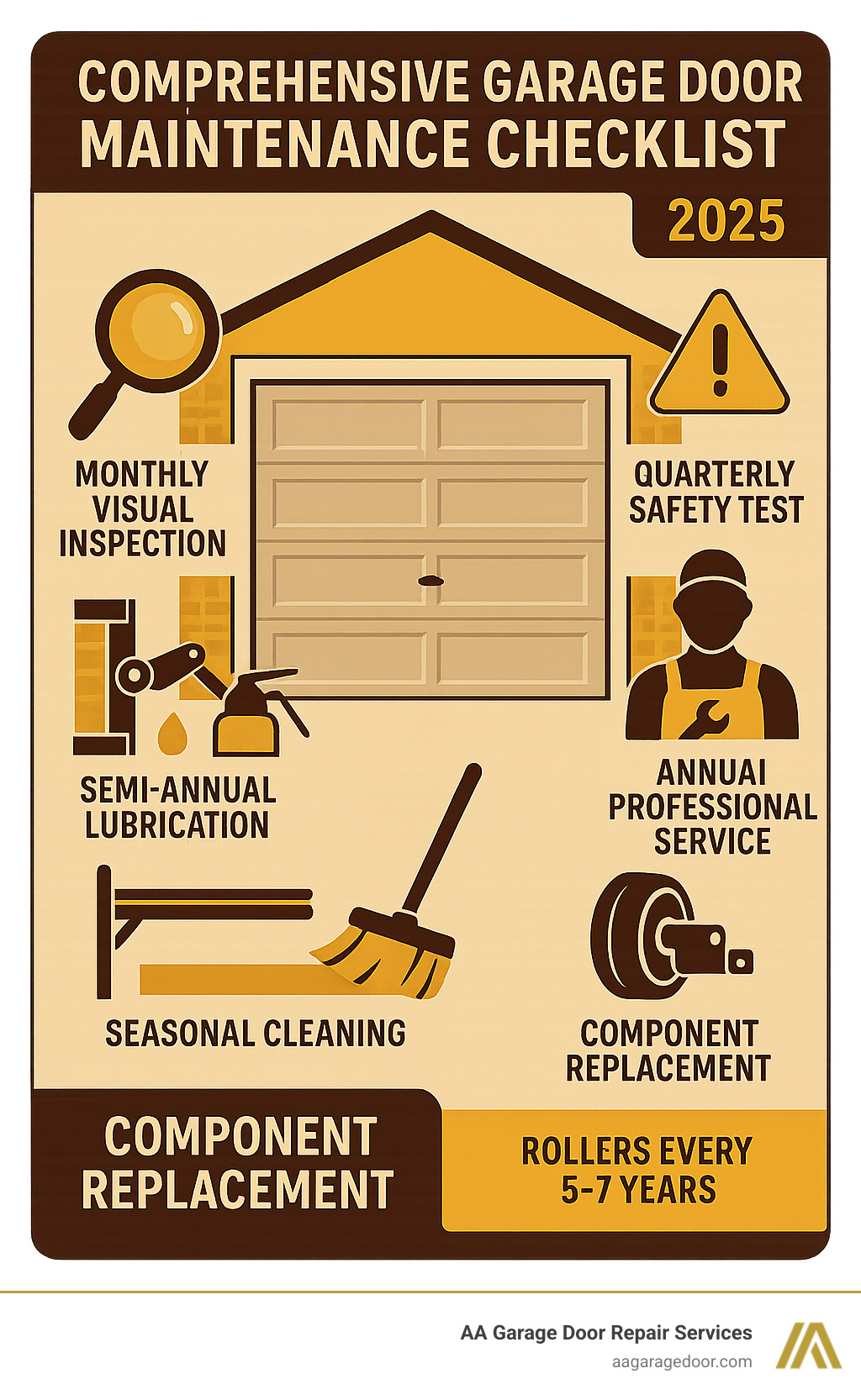
Essential garage door maintenance includes:
- Monthly inspections – Visual checks for wear, listening for unusual noises, and testing safety features
- Quarterly safety tests – Door balance, auto-reverse mechanism, and photo-eye sensors
- Semi-annual lubrication – Hinges, rollers, springs, and opener components
- Annual professional service – Spring adjustment, cable inspection, and comprehensive tune-up
Many of these maintenance tasks are simple DIY jobs that take just minutes. Others require professional expertise to ensure safety and proper function. This guide will walk you through the essential checks you can perform yourself and clarify when it’s time to call in the experts.
The Essential Garage Door Maintenance Checklist: A Seasonal Guide
Breaking down what maintenance does a garage door require into a seasonal schedule makes the job manageable and effective. This routine helps you catch small issues before they turn into expensive headaches.
Monthly: Look, Listen, and Test
A quick monthly check takes just a few minutes but can save you hundreds in repairs.
- Visual Inspection: Walk around your garage door and look for loose bolts, bent tracks, frayed cables, or worn rollers. Check the door panels for new dents, cracks, or rust.
- Auditory Inspection: Open and close your door and listen. A healthy door operates smoothly. Grinding or scraping noises often signal worn rollers or lack of lubrication. Jerky movements may indicate balance problems or debris in the tracks.
- Track Debris Check: Clear any leaves, dirt, or small stones from the tracks with a broom or cloth.
- Safety Device Test: Test your remote, wall button, and keypad. If you notice delays, try replacing the batteries.
For more quick tips, see our guide on 10 Garage Door Maintenance Tips.
Quarterly: The 3 Critical Safety Checks
Every three months, perform the safety tests required by federal law for doors made after 1993. These checks ensure your door’s safety features are working correctly.

- Door Balance Test: With the door closed, pull the manual release cord to disconnect the opener. Lift the door halfway. It should stay in place. If it drifts up or sags down, the springs are unbalanced and need professional adjustment. Never attempt to adjust torsion springs yourself.
- Auto-Reverse Mechanism Test: Place a 2×4 board flat on the ground in the door’s path. When you close the door, it should immediately reverse upon touching the board. If it doesn’t, the mechanism needs professional service.
- Photo-Eye Sensor Test: While closing the door, wave an object through the sensor beam near the floor. The door should instantly reverse. If not, clean the sensor lenses and check their alignment.
Semi-Annually: Lubrication and Deep Cleaning
Twice a year, lubricate moving parts to reduce friction and prevent wear. Using the right product is key.
- Lubrication Points: Apply a small amount of lubricant to hinge pivot points and roller bearings (on metal rollers, lubricate the stem only, not the nylon wheel). A light coat on the springs helps prevent rust.
- Recommended Lubricants: Use white lithium grease for metal-on-metal contact and silicone-based spray for springs and general use. Avoid WD-40, as it’s a degreaser.
- Track Cleaning: Never lubricate the tracks. Instead, wipe them clean with a rag and brake cleaner to remove grime that causes friction.
- Panel Cleaning: Wash steel, aluminum, or vinyl doors with a mild detergent to prevent corrosion and spot damage early. Inspect wood doors for warping or peeling paint.
Proper maintenance can significantly reduce noise. Learn more in our guide on How to Make Your Garage Door Quieter.
What Maintenance Does a Garage Door Require? A Component-by-Component Breakdown
Understanding each part of your garage door system helps you identify specific maintenance needs. Every component, from the springs to the opener, is vital for safe operation.
Tracks, Rollers, and Hardware
Your door’s tracks and rollers guide its movement and handle its weight. They must be clean, aligned, and in good condition.

Inspect your rollers regularly. Look for cracked nylon rollers or worn steel rollers, which can cause noise and jamming. Rollers typically need replacement every 5-7 years, depending on use. It’s a gradual wear-and-tear item that can fail suddenly.
Tighten bolts and brackets with a socket wrench. The door’s daily vibration can loosen hardware over time. Snug up all mounting bolts, track brackets, and hinges to eliminate any wobbling. Pay close attention to track hangers for any signs of bending or cracking.
Springs and Cables: The High-Tension Zone
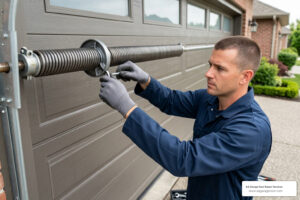
Your garage door springs and cables counterbalance hundreds of pounds of weight and are the most dangerous components.
Visually inspect these parts for trouble signs like rust, fraying cables, or gaps in the spring coils, which indicate a break. Your involvement should end with looking.
The average spring lifespan is about 10,000 cycles, or 7-10 years for most families. Spring failure is a matter of when, not if.
Never attempt DIY spring repair. These parts are under extreme tension and can cause severe injury or death if they snap. Warning stickers and red-painted bolts are there for a reason. If you notice any spring or cable issues, stop using the door and call a professional. For more guidance, see our Essential Guide to Garage Door Repair.
The Garage Door Opener System
Your opener is the system’s brain and requires some simple maintenance.
- Chain or Belt Tension: A sagging chain is noisy, while an overtight one strains the motor. Aim for about a quarter-inch of play. Most openers have adjustment mechanisms for fine-tuning.
- Remote Batteries: Before assuming your opener is broken, try replacing the batteries in your remotes.
- Light Bulbs: Use vibration-resistant bulbs designed for garage door openers, as standard bulbs burn out quickly.
- Backup Battery: If your opener has one, test it annually by unplugging the unit and operating the door.
If your opener is acting erratically, you might find answers in our article about Why Your Garage Door Opens or Closes by Itself.
Seals, Panels, and Weatherproofing
Your door is a barrier against weather and pests. Weatherstripping plays a major role in your garage’s comfort and security.
Inspect weatherstripping for cracks and brittleness. The bottom seal takes the most abuse and is critical for preventing water, pests, and energy loss. Even small gaps can be an invitation for all kinds of pests.
Clean door surfaces to protect them. Wash steel doors annually with mild detergent to prevent rust. Address rust spots by sanding, priming, and repainting. Inspect wood doors for moisture damage, and keep all six sides of each section sealed. Vinyl doors just need occasional cleaning.
Weather effects matter. In salt-air climates, metal corrodes faster. In extreme cold, seals can become brittle and lubricants less effective. Consistent maintenance prevents these small issues from becoming costly problems.
DIY vs. Professional Maintenance: Knowing Your Limits
While many maintenance tasks are perfect for a DIY weekend, some jobs carry significant risks and require specialized tools and expertise. Knowing the difference is key to keeping your garage door in shape without compromising your safety.
What maintenance does a garage door require that I can do myself?
Many routine tasks are well within the comfort zone of most homeowners. These DIY-friendly jobs save money and keep you aware of your door’s performance.
- Visual and auditory inspections to spot loose parts, rust, or unusual noises.
- Cleaning tracks and panels to ensure smooth operation and spot potential issues.
- Lubricating moving parts like hinges, rollers, and opener chains (avoiding the tracks).
- Testing safety features like the auto-reverse mechanism and photo-eye sensors.
- Replacing batteries and light bulbs in your opener system.
What maintenance does a garage door require from a professional?
Some garage door components are too dangerous for DIY maintenance, no matter how handy you are.

Spring adjustment or replacement tops the list. These springs are under extreme tension and can cause severe injury or death. The same goes for cable repair or replacement, which work with the springs under dangerous tension.
Other jobs for pros include bent or misaligned track repair, which requires precision, and opener motor repair, which involves complex electrical and mechanical systems. Significant balance issues also indicate spring problems that only a professional should address.
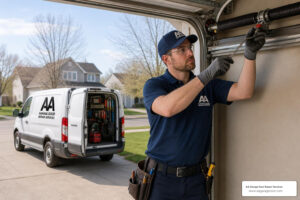
If you’re in the Twin Cities area, including Apple Valley, and need professional help, don’t hesitate to reach out. Our team at AA Garage Door Repair Services has the training and tools to handle these dangerous jobs safely.
Comparing DIY vs. Professional Garage Door Maintenance
| Task | DIY Difficulty | Professional Recommendation | Safety Risk |
|---|---|---|---|
| Visual/Auditory Inspection | Easy | Recommended | Low |
| Cleaning Tracks | Easy | Recommended | Low |
| Lubricating Hinges/Rollers/Chain | Moderate | Recommended (using correct lubricants) | Low |
| Testing Safety Features (Auto-Reverse, Photo-Eye) | Easy | Recommended | Low |
| Replacing Batteries/Light Bulbs | Easy | Recommended | Low |
| Tightening Loose Hardware | Moderate | Recommended | Low |
| Testing Door Balance | Moderate | Professional adjustment if unbalanced | Low (test only) |
| Lubricating Springs | Moderate | Professional if uncomfortable/unfamiliar | Moderate (caution advised) |
| Replacing Weatherstripping | Moderate | Professional if complex or difficult | Low |
| Adjusting Opener Chain/Belt Tension | Moderate | Professional if unsure or persistent issues | Moderate |
| Spring Adjustment/Replacement | Very High | Always Professional | Extreme |
| Cable Repair/Replacement | Very High | Always Professional | Extreme |
| Major Track Alignment/Repair | High | Always Professional | High |
| Opener Motor Repair/Replacement | High | Professional | Moderate |
When in doubt, it’s always better to call a professional than to risk injury or costly damage from a dangerous DIY attempt.
The Payoff: Why Regular Maintenance Matters
Is all this effort worth it? Absolutely. Understanding what maintenance does a garage door require is about protecting your investment, your family, and your wallet. Spending 30 minutes every few months on maintenance can save you thousands in repairs and prevent dangerous accidents.
Extend Lifespan and Boost Efficiency
With proper care, a quality garage door can last 15-20 years. Without it, you might need a replacement in half that time.
Preventing wear and tear is the goal. Lubrication reduces friction, and clean tracks allow rollers to glide smoothly. This reduces strain on the opener motor, saving electricity and extending its life. A well-balanced door is crucial; an unbalanced one forces the opener to work overtime.
Beyond mechanics, maintaining a proper seal creates an energy-efficient barrier, saving you money on utility bills. A tight seal also protects your garage from moisture and pests. For more strategies, check out our 6 Tips to Maintain Your Garage Door.
Improve Home Safety and Security
Maintenance is critical for safety. A garage door failure isn’t just inconvenient—it can be dangerous.
Preventing catastrophic failure is a real concern. Heavy doors can crash down when springs break. Regular inspections catch these weak points before they fail. Your safety features, like the auto-reverse mechanism and photo-eyes, need regular testing to protect your family from crushing injuries. Children and pets are especially vulnerable.
From a security standpoint, a well-maintained door is a strong defense. Deterring intruders starts with a door that closes and locks securely. Gaps or loose panels are an open invitation to unwanted visitors. The International Door Association provides additional safety resources that reinforce these critical points.
Avoid Costly Emergency Repairs
The math is simple: preventative care costs far less than emergency repairs. It’s the difference between an oil change and an engine rebuild.
Ignoring a squeaky roller could lead to a bent track and a several-hundred-dollar repair. The cost of neglect adds up. Broken springs require immediate service, often at emergency rates. A burnt-out opener motor can cost more than years of professional tune-ups. In some cases, neglect can lead to a full door replacement.
Emergency repairs also bring the hidden cost of inconvenience, like a trapped car or an unsecured home. To better understand the financial impact, our guide on Garage Door Repair Cost breaks down what different repairs typically cost, making routine maintenance look like the bargain it is.
Frequently Asked Questions about Garage Door Maintenance
Here are answers to the most common questions homeowners have about what maintenance does a garage door require.
How often should my garage door be professionally serviced?
Once a year is the sweet spot for professional maintenance. A trained technician can spot underlying issues, perform complex adjustments with specialized tools, and ensure all components meet safety standards. Additionally, most manufacturers require annual professional service to keep your warranty valid. The investment is a fraction of the cost of an emergency repair.
What are the most common signs my garage door needs immediate repair?
Your door will usually give warning signs before a complete failure. Look for these red flags:
- Loud, unusual noises: Grinding, banging, or rattling suggests worn or loose parts.
- Jerky or slow operation: This indicates something is obstructing movement, from dirty tracks to failing springs.
- A sagging or crooked appearance: This often signals serious spring or structural problems.
- Failure to open or close: If your door only opens halfway or won’t stay closed, something is wrong.
If you notice these symptoms, stop using the door and call a professional. Continuing to operate it can cause more damage. For guidance on when a repair isn’t enough, check out these 5 Signs You Need Garage Door Replacement.
Is it safe to adjust or replace garage door springs myself?
Absolutely not. This is the most dangerous DIY repair imaginable. Garage door springs are under immense tension and can cause severe or fatal injuries if they are mishandled. Professional technicians use specialized tools, training, and insurance to perform this work safely. If you suspect a spring issue, such as visible gaps in the coils or a door that feels extremely heavy, call a professional immediately. The cost of professional service is always worth it to avoid the extreme risk.
Conclusion
Taking care of your garage door doesn’t have to be overwhelming. Understanding what maintenance does a garage door require is a matter of breaking it down into simple, regular tasks. Most homeowners can easily handle visual inspections, cleaning, safety tests, and lubrication.
However, knowing when to call the pros is just as important. Spring adjustments, cable repairs, and major opener issues are not DIY jobs. They are dangerous tasks that require specialized training and tools for safe completion.
The payoff for this diligence is significant. You’ll extend your door’s lifespan, improve your family’s safety, and avoid costly, stressful emergency breakdowns. A well-maintained door is quieter, more energy-efficient, and a better barrier against the elements.
Regular garage door maintenance is a vital part of responsible homeownership. By following this guide, you can handle routine tasks confidently and know when to let an expert take over.
If you’re in the St. Paul, Twin Cities, or Western WI area and need professional help, our team at AA Garage Door Repair Services is here for you 24/7. We’ve been helping local homeowners since 2001. Ready to give your garage door the care it deserves? Contact us or call (651) 702-1420 for a comprehensive garage door maintenance check today. Your peace of mind will thank you for it.