Why a Bent Garage Door Track Demands Your Immediate Attention
A bent garage door track is a common but critical problem that compromises the safety and functionality of your entire garage door system. If your door is grinding, jerking, or refusing to open, a bent track is the most likely culprit. Homeowners who notice these symptoms should treat them as a structural red flag in the door’s guiding system. For a complete overview of how a professional evaluates, repairs, or replaces damaged tracks, see the expert resources on reliable garage door repair services. While some minor bends can be a DIY fix, significant damage requires professional garage door services to ensure your system operates safely and correctly. Ignoring the issue can lead to more extensive damage and serious safety hazards.
Quick Answer: What to Do About a Bent Garage Door Track
- Stop using the door immediately. Continued operation will cause further damage and can result in the door falling off the track.
- Inspect the tracks visually. Look for obvious dents, gaps between the rollers and the track, or any visible warping.
- For minor bends, you may be able to perform a DIY repair with basic tools (see our step-by-step guide below).
- For severe damage, call a professional immediately. Cracked, severely twisted, or multiple bent sections require expert repair.
Signs you need immediate help:
- The door is completely off the track
- You see cracks in the metal
- The door won’t move at all
- You hear loud popping or metal-on-metal grinding
Whether it’s from accidentally backing into the door, years of wear and tear, or a broken cable that shifted weight suddenly, bent tracks can trap your car in the garage and create serious safety hazards. The good news? Many minor bends can be straightened with the right approach and basic tools.
I’m David Sands, owner of AA Garage Door LLC, and over my 23+ years serving homeowners across the Twin Cities metro area, I’ve seen hundreds of bent garage door track situations – from quick DIY fixes to emergency replacements. If you’re facing a track issue that needs professional attention, our team offers comprehensive garage door repair services throughout St. Paul, MN, and Western WI.
Basic Bent garage door track vocab:
What Causes a Bent Garage Door Track and How to Spot It?
A bent garage door track is more than just an unsightly imperfection; it’s a critical malfunction that compromises the safety and functionality of your entire garage door system. Understanding why tracks bend and how to identify the problem early can save you from significant headaches and costly repairs down the line.
Common Causes of a Bent Garage Door Track
Garage door tracks, typically made from sturdy galvanized steel, are designed to withstand regular use. However, they’re not indestructible. We’ve seen a range of culprits behind bent tracks in homes across St. Paul, Baldwin, Woodbury, and Hudson.
Answer: Common causes of a bent garage door track include accidental impact, obstructions, worn-out rollers, improper installation, broken lift cables or springs, natural wear and tear of galvanized steel, temperature fluctuations, and lack of regular maintenance.
Here’s a closer look at what can send your tracks out of alignment:
- Accidental Impact (Vehicle Collision): This is the most common and often most dramatic cause. A moment of distraction while backing out or pulling into the garage can lead to your vehicle’s bumper or side mirror striking the track. This direct force often bends or even cracks the metal. We’ve certainly seen our share of these incidents across the Twin Cities.

Debris or Obstructions on Track: Even small items like pebbles, dirt, or stray tools can cause significant problems. If a roller encounters an obstruction, it will either jump off the track or the force of the door trying to move past it will bend or distort the track itself.
Worn-out Rollers: Rollers are the unsung heroes of your garage door system, guiding the door smoothly along the tracks. When rollers become old, cracked, or simply worn down, they don’t glide as they should. This creates friction and uneven pressure on the tracks, which over time, leads to bending or misalignment.
Poor Installation: A substandard garage door installation can be a ticking time bomb for your tracks. If the tracks aren’t perfectly aligned and securely fastened from the start, the uneven distribution of tension and stress on the system causes them to twist and bend over time. This is why professional installation is so crucial.
Broken Lift Cables or Springs: The heavy weight of a garage door is counterbalanced by its springs and cables. If a cable breaks or a spring snaps, the sudden shift in weight causes the door to drop or sag unevenly. This puts immense, unanticipated stress on the tracks, often leading to severe bending or the door coming completely off its rails.
Galvanized Steel Wear and Tear: While galvanized steel is robust and rust-resistant, years of continuous use, especially in the varied climates of Minnesota and Western Wisconsin, can take their toll. The metal fatigues, and minor impacts or stresses will lead to bending as the material weakens.
Temperature Fluctuations: Our region experiences significant temperature swings. Metal components, including your garage door tracks, expand in heat and contract in cold. Over many cycles, this constant movement puts strain on the tracks and their mounting hardware, leading to warping or bending.
Lack of Maintenance: Neglecting regular maintenance, such as cleaning and lubricating your tracks and rollers, allows dirt and rust to build up. This increases friction and resistance, forcing the door opener and other components to work harder, which ultimately stresses and bends the tracks.
Signs Your Garage Door Track is Bent
Identifying a bent garage door track early is key to preventing further damage and ensuring your garage door operates safely. Tracks don’t do subtlety when they’re bent; they’ll usually give you clear indicators that something is amiss.
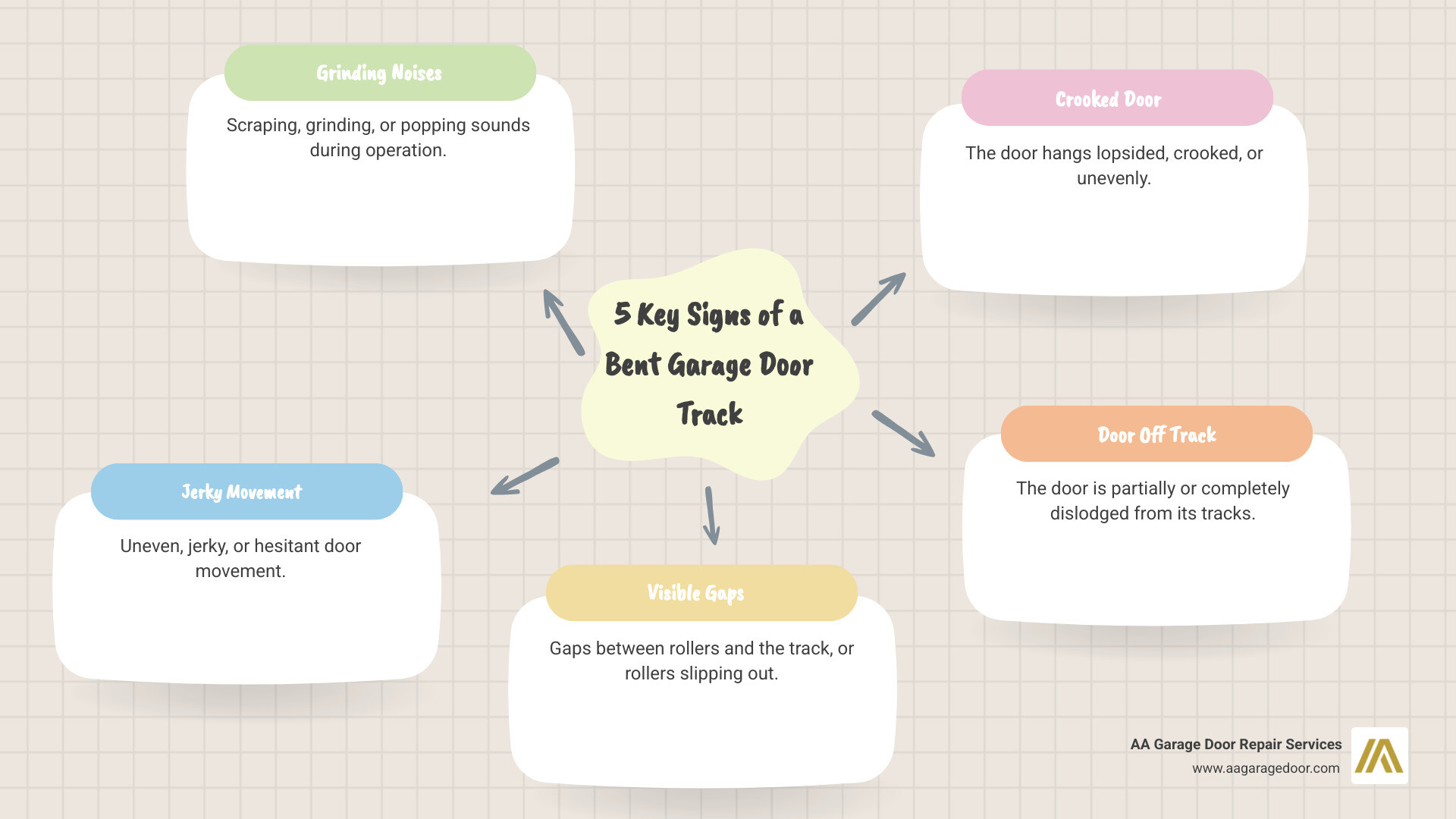
Answer: You can spot a bent garage door track by observing grinding or scraping noises, jerky or uneven door movement, a crooked or lopsided door, visible dents or warps in the track, rollers slipping out of the track, or gaps between the rollers and the track.
Here’s what to look for and listen for:
Scraping or Grinding Noises: If your garage door sounds like a symphony of metal-on-metal friction when opening or closing, it’s a huge red flag. This often means the rollers are rubbing against a bent section of the track, or the track itself is scraping against the door.
Popping Noises: While less common than grinding, popping sounds can indicate that rollers are struggling to steer a distorted section of the track or even jumping out and back in.
Uneven or Jerky Movement: A healthy garage door should glide smoothly and consistently. If your door hesitates, shakes, or moves in a jerky fashion, a bent track could be preventing the rollers from moving freely.
Door Hanging Crooked or Lopsided: This is one of the most obvious visual signs. If one side of your garage door appears lower than the other, or if the entire door looks askew, it strongly suggests that one or both tracks are bent or severely misaligned.
Visible Dents or Warps: Take a close look at the tracks themselves. Are there any visible dents, creases, or sections that appear warped? Even a slight bend can cause significant operational issues. You might need to get up close and personal to spot minor distortions.
Gaps Between Rollers and Track: The rollers should fit snugly within the track. If you observe any gaps where the rollers seem to pull away from the track, or if they appear loose, it’s a clear indication of track misalignment or bending.
Rollers Slipping Out of the Track: This is a more severe symptom. If the rollers are frequently or completely slipping out of the track, the bend is significant enough to compromise the door’s guidance system entirely. This situation is extremely dangerous.
Door Off Track: The ultimate sign of a severely compromised track. If your garage door has come partially or completely off its tracks, the problem is beyond a minor bend and requires immediate professional attention.
According to industry experts, if you detect that your garage door tracks are bent or misaligned, you should halt any use of your garage door to prevent it from falling off the tracks and causing further damage.
DIY Repair for a Minor Bent Garage Door Track: A Step-by-Step Guide
For minor bends in your garage door track, a DIY repair might be feasible. However, we cannot stress enough the importance of safety. Your garage door is a heavy piece of machinery with components under high tension. Always proceed with extreme caution. This guide is for minor bends only—those without cracks, severe twisting, or multiple affected areas.
Answer: Minor bent garage door tracks can sometimes be repaired DIY by safely securing the door, loosening track hardware, gently tapping the bent section back into alignment with a rubber mallet and wood block, and then tightening and testing.
Step 1: Safety and Preparation
Your safety is our top priority. Never attempt any garage door repair without taking these crucial steps.
- Unplug Garage Door Opener: This is non-negotiable. Unplug the opener from its power source to prevent any accidental activation of the door while you’re working on it. This simple step can prevent serious injury.
- Disengage Emergency Release: Pull the red emergency release cord to disconnect the garage door from the opener. This allows you to move the door manually if needed and ensures it won’t be affected by the opener’s mechanism during your work.
- Secure the Door: Use sturdy C-clamps or locking pliers to secure the garage door to the track just below the bent section. This prevents the door from moving or falling unexpectedly, especially if the bent track is compromised. Place a clamp on each side of the door.
- Wear Safety Gear: Always wear safety glasses to protect your eyes from debris or snapping components, and sturdy gloves to protect your hands.
Step 2: Loosen the Track and Assess
With safety measures in place, you can now begin to work on the track itself.
- Loosen Track Bolts: Using an adjustable wrench, carefully loosen the bolts and screws that secure the track to the garage wall. You don’t want to remove them entirely, just loosen them enough to give the track a little “play” – enough to slide slightly from side to side.
- Identify the Bent Section: Pinpoint the exact location and extent of the bend. Use a straight edge or a spirit level to confirm that the track is indeed out of vertical alignment. This will be your guide for straightening.
Step 3: Straighten the Bent Garage Door Track
This is where you’ll gently persuade the track back into shape.
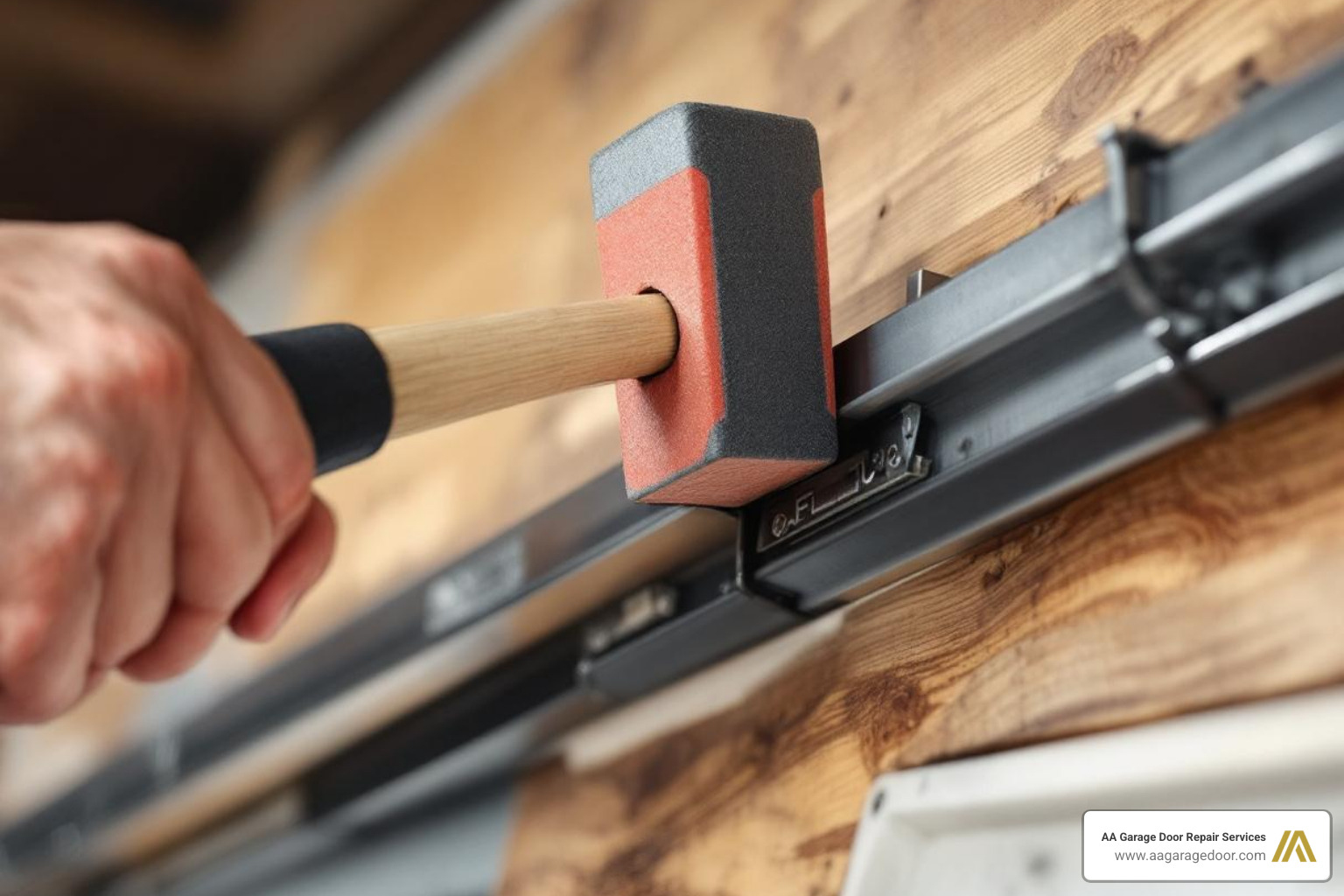
- Wood Block Placement: Place a small block of wood against the bent section of the track. The wood acts as a buffer, distributing the force and preventing further damage to the metal.
- Rubber Mallet Use: Using a rubber mallet (not a metal hammer, which can cause more damage), gently tap the wood block. Apply steady, controlled force, working the bent section back into alignment. Think “love taps,” not a WWE smackdown!
- Avoid Excessive Force: Be patient. Excessive force can worsen the bend or even crack the track, turning a minor repair into a major replacement.
- Pliers for Small Adjustments: For smaller, more precise bends or crimps, you can use a pair of vise-grip pliers. Gently apply force in the opposite direction of the bend.
- Re-check with Level: Continuously re-check your progress with your spirit level to ensure you’re achieving a perfectly vertical alignment.
Step 4: Tighten and Test
Once the track appears straight, it’s time to secure everything and test the door.
- Tighten Track Bolts: Once you’re satisfied with the alignment, carefully tighten all the track bolts and screws you loosened. Ensure they are snug, but avoid over-tightening, which can distort the track or strip the threads.
- Re-engage Opener: Remove your C-clamps, re-engage the emergency release cord, and plug your garage door opener back in.
- Test Door Operation: Slowly operate the garage door, either manually first or using the opener. Watch closely for smooth movement and listen for any grinding, scraping, or unusual noises. If you notice any issues, stop immediately and re-evaluate the track. Sometimes, small adjustments to the brackets (which might involve using a screwdriver as outlined in How to use a screwdriver) are needed to get everything just right.
The Risks of a Bent Track and When to Call a Professional
Attempting a DIY repair on a bent garage door track can be empowering, but it’s crucial to know when to call in the cavalry. Ignoring a bent track or attempting a repair beyond your skill level carries significant risks.
Answer: The risks of continuing to use a garage door with bent tracks include the door falling, causing property damage or personal injury, increased strain on the opener, broken springs, frayed cables, and further damage to the entire system. You should call a professional if the bend is severe, the track is cracked, multiple spots are bent, the door is off track, DIY repair fails, or if you are unsure about safety.
The Dangers of Ignoring a Bent Track
- Safety Hazards: This is the paramount concern. A bent track means the rollers aren’t properly guided. This can cause the garage door to become unstable, potentially falling off its tracks. Given that garage doors weigh hundreds of pounds, this poses a severe risk of personal injury to anyone nearby – you, your family, or even your pets.
- Property Damage: A falling garage door can crush anything in its path, including your vehicle, lawn equipment, or stored belongings. The impact can also severely damage the garage door itself, the door frame, and the opener unit.
- Further Damage to the System: Even a slightly bent track puts undue stress on other components.
- Opener Strain: The garage door opener has to work much harder to move a door struggling against a bent track. This increased strain can lead to premature wear and tear on the opener’s motor and gears, resulting in costly garage door opener repair bills or even full replacement.
- Broken Springs and Frayed Cables: The springs and cables are designed to counterbalance the door’s weight. When the door doesn’t move smoothly due to a bent track, these components experience abnormal stress, increasing the likelihood of them breaking or fraying. These are under immense tension and can be incredibly dangerous if they snap.
When to Call a Professional
While minor bends might be fixable with a DIY approach, knowing your limits is a sign of wisdom, not weakness. For homeowners in St. Paul, Baldwin, Woodbury, or Hudson, here’s when we strongly recommend calling AA Garage Door Repair Services:
- Severe Bends or Cracks: If the track is severely twisted, creased, or, most importantly, cracked, it’s beyond DIY repair. Cracks compromise the structural integrity of the track, making it unsafe.
- Multiple Bent Spots or Long Sections: If the bend extends over a long section of the track or if there are multiple bent areas, it’s incredibly difficult to get a uniform, straight alignment yourself.
- Door is Off Track: If your garage door has come completely off its tracks, it’s a complex and dangerous situation that requires professional expertise and specialized tools to safely re-align.
- DIY Repair Fails: If you’ve attempted a minor DIY repair and the door still isn’t moving smoothly, or if new noises or problems arise, it’s time to call in the experts.
- Unsure About Safety: If at any point you feel unsafe, uncomfortable, or unsure about the repair process, don’t hesitate to contact us. We have the experience and tools to handle the situation safely and effectively.
Industry professionals consistently advise that if you detect bent or misaligned garage door tracks, you should halt any use of your garage door. For comprehensive assistance with these issues, contact our team for professional repair services in your local area.
Cost & Prevention: Saving Money and Avoiding Future Bends
Addressing a bent garage door track quickly is always the best approach, both for safety and your wallet. Understanding the cost implications of DIY versus professional repair, and implementing preventative maintenance, can save you a lot of hassle and expense in the long run.
The Cost of Repair: DIY vs. Professional
When it comes to fixing a bent garage door track, you generally have two paths: DIY or professional service. The costs vary significantly based on the severity of the damage and your chosen method.
Answer: The costs for bent garage door track repair range from $0-$100 for DIY minor adjustments to $75-$300 for professional minor/major repairs, and $300-$600 for full track replacement by a professional.
Here’s a general breakdown of costs, based on common scenarios we see in the Twin Cities and Western WI:
| Repair Type | DIY Cost (Estimated) | Professional Cost (Estimated) | Notes |
|---|---|---|---|
| Minor Bend Repair (DIY) | $0 – $100 | N/A | Cost of tools like a rubber mallet, wood block, and C-clamps if you don’t already own them. |
| Professional Track Adjustment/Repair | N/A | $75 – $300 | This covers labor for a technician to realign and straighten a moderately bent track. Price varies by severity and location. |
| Full Track Replacement | Not Recommended | $300 – $600+ | For severely damaged, cracked, or old tracks. This includes the cost of new tracks and the extensive labor to install and align them. |
How to Prevent Your Garage Door Tracks from Bending
Prevention is always more cost-effective than repair. A little regular maintenance can go a long way in keeping your garage door system healthy and your tracks straight.
- Regular Cleaning: At least twice a year, wipe down the inside of the tracks with a cloth to remove dirt, debris, and any buildup. This ensures the rollers can move freely without obstruction.
- Lubrication: After cleaning, apply a high-quality, silicone-based garage door lubricant to the rollers and bearings. Do not lubricate the tracks themselves, as this can attract more dirt and cause the rollers to slip rather than roll.
- Routine Inspections: Make it a habit to visually inspect your tracks, rollers, cables, and springs every few months. Look for signs of wear, rust, or misalignment. Tighten any loose nuts or bolts on the track brackets.
- Be Mindful When Driving: The most common cause of severe bends is vehicle impact. Be extra cautious when entering or exiting your garage. Installing parking aids, like a hanging tennis ball or a parking sensor, can help you judge the distance accurately.
- Professional Tune-Ups: Consider an annual professional tune-up. A technician can spot and address potential issues, like worn-out rollers or slight misalignments, before they escalate into a bent track or a more serious problem.
Your Trusted Partner for Garage Door Repair
While some minor track adjustments are manageable, most bent garage door track issues require professional attention to ensure the safety and longevity of your system. At AA Garage Door, we combine decades of experience with high-quality parts to provide reliable and efficient repairs. Don’t let a bent track become a bigger problem. If you’re in the Twin Cities metro area and need expert assistance, you can learn more about scheduling fast, local service through our Apple Valley repair page or by exploring our full range of solutions on the main site. For immediate help with emergency situations, call us at (715) 265-2832 – we’re available 24/7 to get your garage door back on track.