Why Commercial Roll Up Door Insulation Matters for Your Business
A commercial roll-up door is often the single largest opening in a building envelope, and when it is uninsulated it can become one of the biggest sources of energy loss in a facility. For businesses managing operational efficiency and costs in regions like Minnesota and Western Wisconsin, turning that weak point into a high-performing barrier is essential. Partnering with a specialist in professional garage door services ensures your door, hardware, and insulation all work together as a system rather than as disconnected parts. As leading providers of garage door solutions in the Twin Cities, we’ve seen how the right insulation makes a definitive impact. Here’s what you need to know:
Top Insulation Methods:
- Factory-Insulated Doors – Pre-engineered with foam cores (R-values 8-24+)
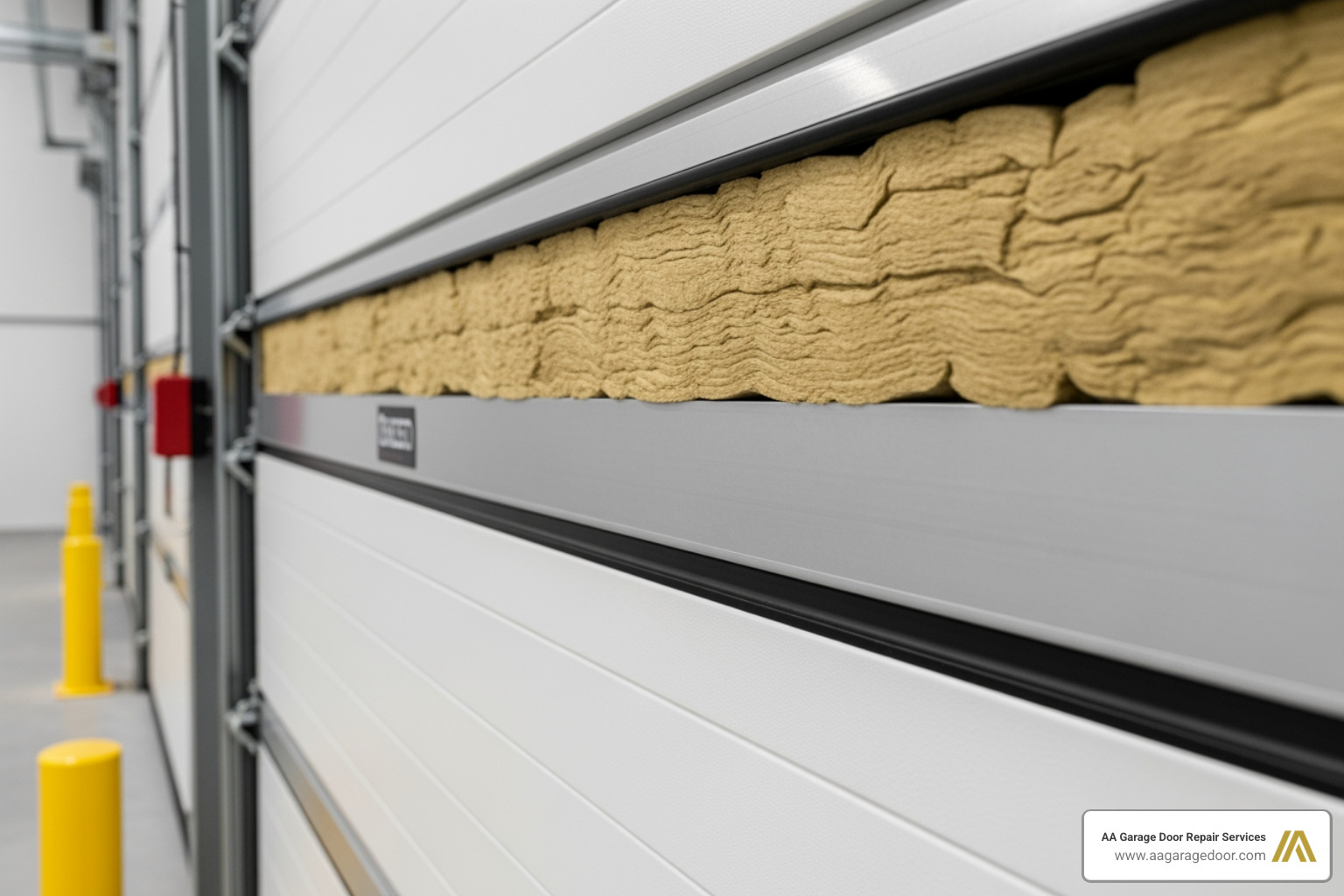
- Polyurethane Foam – Highest R-value per inch, superior air sealing
- Polystyrene Panels – Cost-effective, moderate insulation performance
- Perimeter Seals – Essential for preventing air infiltration around door edges
Key Performance Metrics:
- R-Value: Measures insulation resistance (higher = better) – look for R-8 minimum
- U-Value: Measures heat transmission (lower = better) – ideal under 0.20
- STC Rating: Measures sound reduction – ratings of 21-32 reduce noise significantly
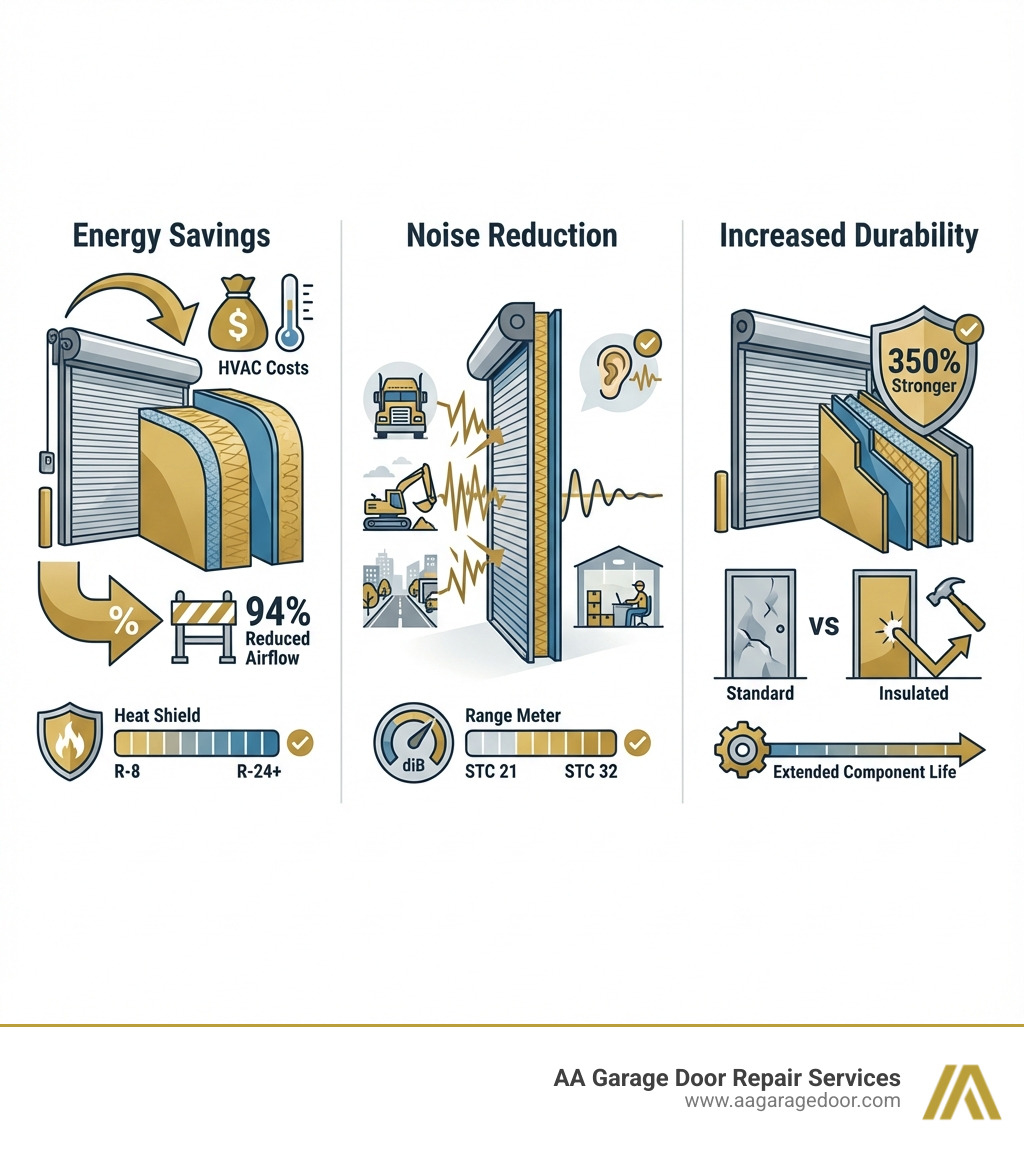
For businesses in cold climates like Minnesota and Wisconsin, an uninsulated roll-up door acts as a massive thermal leak. Tests show that properly insulated doors can decrease airflow by up to 94% and help facilities meet IECC, ASHRAE, and LEED certifications. According to the U.S. Department of Energy, air leakage through building openings can account for 25-40% of heating and cooling energy use in commercial buildings. This translates to lower utility bills, more comfortable working conditions, and extended equipment life as your HVAC system works less.
Beyond energy savings, insulation dramatically reduces noise transmission—critical for warehouses near residential areas or facilities with loud machinery. The multi-layer construction of insulated doors also creates a stronger, more durable barrier that resists damage and provides improved security against intrusion.
With over two decades of local expertise, AA Garage Door Repair Services has helped countless businesses across the Twin Cities improve their facilities through professional commercial roll up door insulation solutions. Whether you’re upgrading an existing door or planning new construction, choosing the right insulation system is one of the smartest investments you can make for your operation’s efficiency and bottom line. If you’re looking for comprehensive information on upgrading your facility, take a look at our insulated garage doors page.
Glossary for commercial roll up door insulation:
Why Insulate? The Core Benefits for Your Business
Investing in commercial roll up door insulation isn’t just about keeping the cold out; it’s a strategic decision that offers a multitude of advantages for your business operations, your employees, and your bottom line. A well-insulated door can transform a drafty, energy-hungry space into an efficient, comfortable, and secure environment. From energy efficiency to environmental sustainability, the benefits are extensive and impactful, especially in the varying climates of places like St. Paul, Minneapolis, and Western Wisconsin.
Energy Efficiency and Cost Reduction
An uninsulated commercial roll-up door is like leaving a giant hole in your building’s thermal envelope. In the harsh winters of Minnesota and Wisconsin, this means your heating system is constantly battling to maintain a comfortable temperature, and in the summer, your air conditioning works overtime. This constant struggle leads to exorbitant energy consumption and sky-high utility bills.
Commercial roll up door insulation creates a formidable thermal barrier, drastically reducing the transfer of heat or cold between your facility’s interior and the outside world. This isn’t just a small improvement; some high-performance insulated doors are tested to decrease airflow by a remarkable 94%. This significant reduction directly translates to lower energy consumption, allowing your HVAC system to operate more efficiently and leading to substantial savings on your energy bills. For businesses aiming for green building certifications, insulated doors are often a key component in meeting stringent requirements like those set by IECC, ASHRAE, and LEED. The return on investment for an insulated door can be surprisingly quick, making it a smart financial decision for any business owner.
Improved Climate Control and Noise Reduction
Maintaining a stable internal temperature is more than just a luxury; it’s a necessity for many businesses. Whether you’re storing temperature-sensitive inventory, managing production processes that require consistent conditions, or simply striving to provide a comfortable working environment for your employees and a welcoming space for your customers, insulation is key. Insulated doors minimize temperature fluctuations, ensuring your interior climate remains consistent, regardless of the weather outside. This consistency protects your products, optimizes your processes, and improves employee comfort, which in turn can boost productivity.
Beyond temperature, the dense core of an insulated door acts as a powerful sound buffer. This is particularly beneficial for businesses located in busy urban areas like St. Paul or near busy roadways in Hudson WI, where external traffic noise can be a constant distraction. Similarly, facilities with loud internal machinery, such as manufacturing plants or auto shops, can benefit from commercial roll up door insulation to contain noise within their premises, creating a quieter environment for neighboring businesses or residential areas. We’ve seen insulated doors achieve impressive Sound Transmission Class (STC) ratings of up to 30 for the curtain and even up to 32 with additional options, effectively dampening unwanted noise and fostering a more peaceful atmosphere.
Improved Durability and Security
When we talk about commercial roll up door insulation, we’re not just discussing thermal properties. The very construction that makes these doors energy-efficient also makes them incredibly robust. Insulated roll-up doors are typically built with a multi-layer design, often featuring a sandwich construction of galvanized steel skins with a foamed-in-place core of polyurethane or polystyrene. This composite structure makes the door curtain far more rigid and resistant to physical damage compared to single-skin, non-insulated doors. They stand up better to accidental impacts from forklifts, daily wear and tear, and even harsh weather conditions, extending the door’s lifespan and reducing the need for frequent repairs.
The added strength also provides a significant boost to security. A thicker, more rigid door curtain is inherently more difficult to breach, offering improved protection against potential intrusions and vandalism. This increased durability means your door maintains its structural integrity and aesthetic appeal for longer, safeguarding your assets and providing peace of mind. Some models feature heavy-duty bottom bars that are significantly stronger than traditional ones, adding another layer of resilience.
Understanding Thermal Performance: R-Value, U-Value, and STC
When evaluating commercial roll up door insulation, it is essential to understand the objective metrics used to quantify performance. R-value, U-value, and STC rating provide a standardized framework that allows facility managers and specifiers in places like Baldwin WI or Woodbury MN to compare products on equal footing.
R-Value: The Measure of Resistance
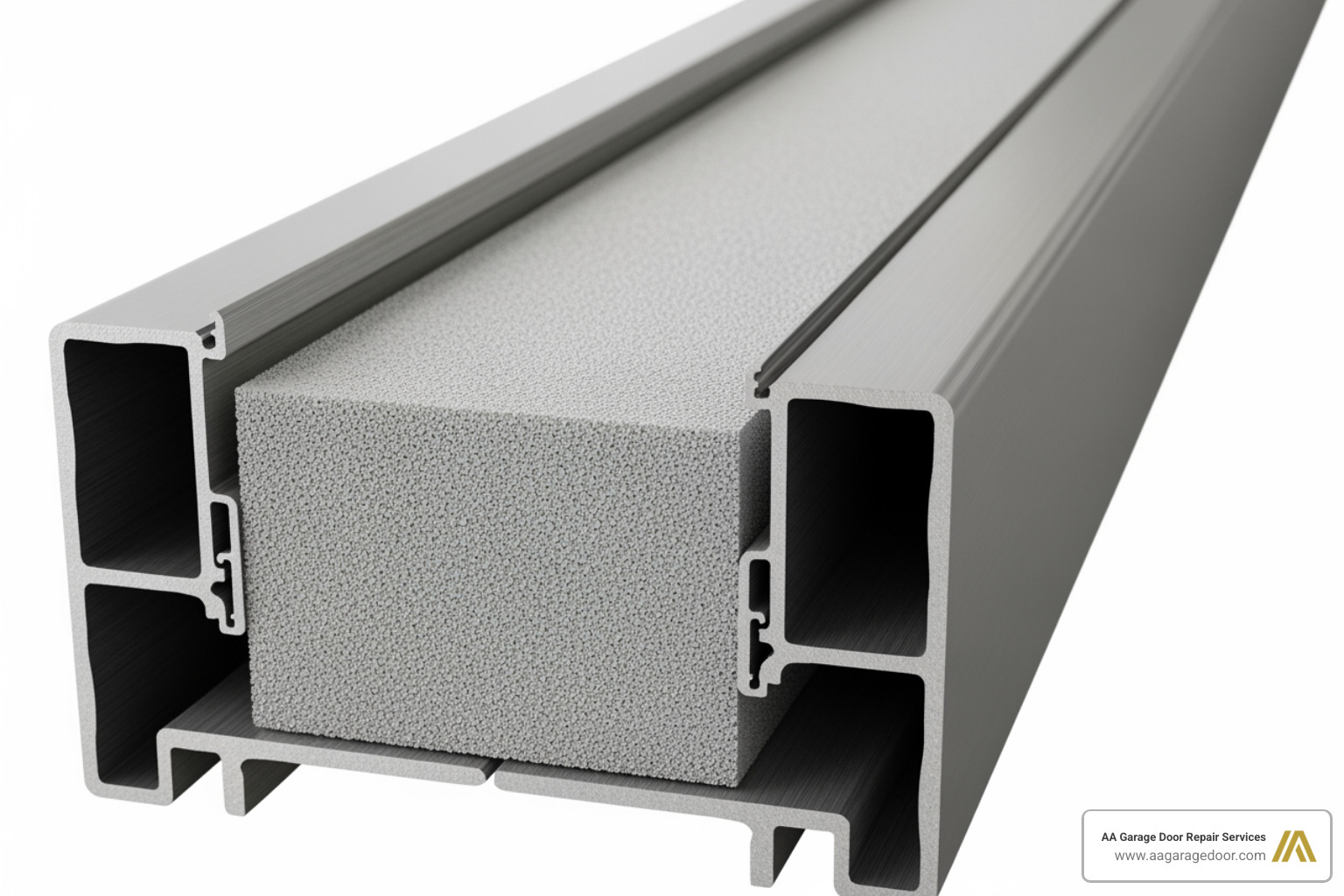
The R-value is the traditional metric for measuring an insulation material’s ability to resist the conductive flow of heat. The higher the R-value, the greater the insulating power and the more effectively the material prevents heat from passing through it. For commercial roll up door insulation, R-values can range significantly, from basic R-4 options to high-performance doors boasting R-values over 24. Some premium insulated doors offer a calculated R-value in the mid-20s, while others might provide an R-value around 8.0 for moderate thermal control.
R-value traditionally measures only the insulation material itself, not the entire system. For a comprehensive understanding, we also need to look at the U-value. Industry organizations such as DASMA provide detailed explanations of how garage door R-values are calculated in their technical data sheet on Understanding R-Value and U-Value.
U-Value: The Measure of Transmission
While R-value focuses on resistance, the U-value (or U-factor) measures the rate of heat transfer through the entire door assembly, including insulation, metal skins, joints, and seals. For U-value, a lower number indicates better thermal performance because it represents less total heat flowing through the system.
Many industry professionals now consider U-value a more accurate and reliable indicator of a door’s real-world energy efficiency because it accounts for the whole system, not just the insulation material. This holistic measurement is particularly important for meeting modern building codes and certifications. High-quality commercial doors can achieve tested U-factors around 0.19, which is excellent for exterior openings in cold climates. These values are often verified through programs like the DASMA TPV Program, ensuring adherence to rigorous testing standards and providing specifiers with defensible data for IECC and ASHRAE compliance.
STC Rating: The Measure of Sound Control
The Sound Transmission Class (STC) rating is a single-number rating that indicates how well a building element, like a door, blocks airborne sound. A higher STC rating means the door is more effective at reducing noise transmission. For businesses dealing with loud operations or located in noise-sensitive areas, the STC rating of their commercial roll up door insulation is a vital consideration.
Insulated door curtains can achieve STC ratings around 30, and with additional sound-control options, some assemblies can reach STC 32 or higher when tested to standards such as ASTM E90. This level of sound dampening can significantly improve the internal working environment by reducing external noise pollution and can prevent internal operational sounds from disturbing surrounding areas. If your facility needs a quiet zone or operates loud machinery, factoring in the STC rating of your insulated roll-up door is just as important as its thermal performance.
Choosing Your Method: Factory-Insulated Commercial Roll Up Doors
When it comes to outfitting your business with superior commercial roll up door insulation, you have options. However, for commercial applications where performance, durability, and compliance are paramount, factory-insulated doors stand out as the professional standard.
| Feature | Standard Insulated Roll-Up Door | High-Performance Insulated Roll-Up Door |
|---|---|---|
| Performance (R-Value/U-Value) | R-8 to R-12; U-Value 0.25-0.35 | R-16 to R-24+; U-Value 0.13-0.20 |
| Cost (Upfront) | Moderate | Higher |
| Cost (Long-term) | Good energy savings | Excellent energy savings & ROI |
| Durability | Good; multi-layer construction | Excellent; robust hardware, high-cycle |
| Installation Complexity | Standard professional | Specialized professional |
| Typical Cycle Life | 10,000 – 25,000 cycles | 50,000 – 1,000,000+ cycles |
Factory-Insulated Commercial Roll Up Doors: The Professional Standard
Factory-installed insulation is by far the superior choice for performance and longevity in commercial settings. These doors are carefully engineered as a complete system, ensuring that every component works together to maximize energy efficiency, structural integrity, and operational reliability. Unlike aftermarket solutions, factory-insulated doors are designed from the ground up to incorporate the insulation seamlessly, preventing issues like thermal bridging and ensuring consistent performance across the entire door surface.
Leading manufacturers often use high-quality insulation materials like foamed-in-place polyurethane. This type of insulation offers an excellent R-value per inch and superior air sealing properties, as it expands to fill all voids within the door slats. Some doors might also use polystyrene panels, which are a cost-effective option providing moderate insulation performance. Crucially, factory-insulated doors incorporate thermal breaks and robust perimeter seals, including header seals and bottom weather-stripping, to effectively minimize air infiltration around the edges, where much of the heat loss typically occurs. This comprehensive approach ensures that conditioned air stays inside and outside elements stay out.
Models like the Thermiser series or ThermaSeal doors are examples of professional-grade commercial roll up door insulation solutions. They often feature heavy-duty construction, high-cycle springs designed for tens or hundreds of thousands of operations, and advanced sealing systems, making them ideal for busy commercial environments in places like Hudson WI or St. Paul.
Note: AA Garage Door Repair Services specializes in the installation and service of factory-insulated commercial roll-up doors. For optimal results, always consult with a professional to ensure code compliance and maximum energy savings. We can help you explore professional insulated door options custom to your business needs.
Installation and Maintenance for Your Commercial Roll Up Door Insulation
Even the best commercial roll up door insulation will fall short of expectations if not installed correctly or maintained regularly. Proper installation and ongoing care are critical to open uping the full benefits of your investment and ensuring the door operates safely and efficiently for years to come.
Professional Installation for Optimal Performance
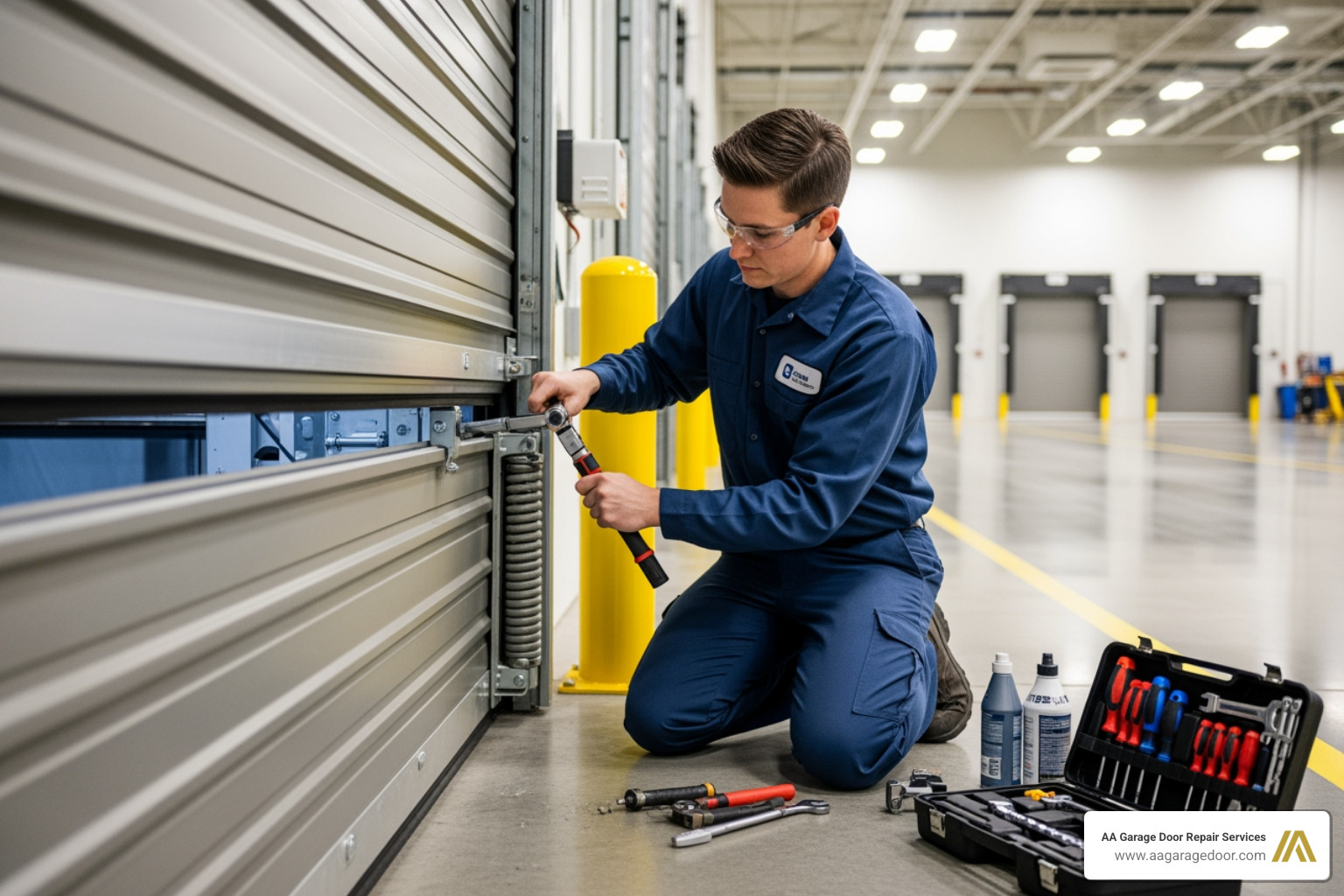
Professional installation is not just recommended; it’s essential for any commercial roll up door insulation project. Roll-up doors, especially insulated ones, are heavy and complex mechanical systems. Adding insulation increases the door’s weight, which necessitates precise adjustments to the counterbalance system (springs or motor) to ensure smooth, safe operation. An improperly balanced door can strain the motor, wear out components prematurely, or even pose a serious safety hazard.
Our experienced technicians ensure that the door’s counterbalance is perfectly adjusted for the added weight. They also carefully fit all seals – including those along the perimeter, at the header, and at the bottom – to prevent air leakage. Proper sealing is paramount for achieving the advertised R-value and U-value performance. Furthermore, professional installers verify that all safety features, such as photoelectric sensors and reversing edges, are functioning correctly after installation. Attempting a DIY installation on a commercial roll-up door can lead to compromised thermal performance, frequent breakdowns, costly repairs, and severe safety risks. We’ve seen the consequences of shortcuts, and we always advise against them.
Essential Maintenance for Longevity
Once your insulated commercial roll-up door is professionally installed, routine maintenance becomes your best friend in preserving its performance and extending its lifespan. Insulated doors, while durable, still require regular attention to ensure they continue to deliver energy savings and reliable operation.
Here’s what we typically recommend:
- Inspect Seals Regularly: Check the perimeter seals, bottom weather-stripping, and header seals for any signs of wear, tearing, or gaps. Damaged seals can negate much of the insulation’s benefits by allowing air infiltration.
- Check for Damage: Periodically inspect the door curtain for any dings, dents, or punctures that could compromise the insulation core or outer skins.
- Clean Door Surfaces: Keep the door surfaces clean, especially if they are exposed to corrosive elements or heavy dust, to prevent material degradation.
- Lubricate Moving Parts: Apply appropriate lubricants to hinges, rollers, tracks, and other moving components to ensure smooth operation and prevent premature wear.
- Schedule Professional Tune-Ups: We can’t stress this enough. Even with diligent in-house checks, professional tune-ups by experienced technicians are crucial. Our team can identify potential issues before they become major problems, adjust tension, inspect safety mechanisms, and ensure all components are operating within specifications. This proactive approach saves you money in the long run by preventing costly emergency repairs.
Frequently Asked Questions about Commercial Roll Up Door Insulation
We often get a lot of questions from business owners in St. Paul, Woodbury MN, and surrounding areas about commercial roll up door insulation. Here are some of the most common inquiries, answered directly:
Can any commercial roll-up door be insulated?
While it might seem appealing to add insulation to an existing non-insulated roll-up door, we generally advise against retrofitting for commercial applications where performance, durability, and code compliance are priorities. Most standard non-insulated corrugated roll-up doors are not designed to handle the added weight or thickness of insulation, and attempts to retrofit can lead to operational issues, accelerated wear, and compromised safety. The best approach for maximum energy efficiency and durability is to replace your existing non-insulated door with a new, factory-insulated model. These doors are engineered from the ground up to seamlessly integrate insulation, ensuring optimal thermal performance, structural integrity, and a longer lifespan.
How much does it cost to insulate a commercial roll-up door?
The cost of commercial roll up door insulation varies significantly based on several factors:
- Door Size: Larger doors naturally require more materials and labor.
- Model and Type: Basic insulated doors will be less expensive than high-performance, high-cycle models with advanced features.
- Insulation Material and R-Value: Doors with higher R-values and premium insulation (like foamed-in-place polyurethane) will have a higher upfront cost.
- Additional Features: Options like specialized seals, high-cycle springs, advanced operators, and custom finishes will influence the price.
While a new, factory-insulated commercial door represents a larger initial investment compared to a non-insulated option, it provides a substantial return through long-term energy savings, improved durability, and potentially lower maintenance costs over its lifespan. It’s an investment in your building’s efficiency and longevity. For an accurate, no-obligation estimate custom to your specific needs and facility in the Twin Cities or Western WI, we encourage you to request a free quote from us.
Are insulated roll-up doors required by building codes?
In many cases, yes. Modern building codes, particularly those focused on energy efficiency, have become increasingly stringent. Standards such as the International Energy Conservation Code (IECC) and ASHRAE 90.1 include specific requirements for the thermal performance of a building’s envelope, which directly impacts doors and windows. In colder climates like ours, an uninsulated commercial door can easily violate these energy codes.
To comply with these regulations and to qualify for certifications like LEED (Leadership in Energy and Environmental Design), an insulated door with a verified U-value is often necessary. These codes aim to reduce energy consumption in commercial buildings, and commercial roll up door insulation plays a critical role in meeting those objectives. Always check with your local building authority in areas like Baldwin WI or Woodbury MN, and consult with professionals like us, to ensure your new or replacement commercial roll-up door meets all current local and national building codes.
Conclusion: Make the Smart Investment for Your Facility
Choosing the right commercial roll up door insulation is a critical investment in your business’s efficiency, comfort, and bottom line. Opting for a high-performance factory-insulated system delivers not only significantly reduced energy costs and superior climate control but also contributes to a quieter, more durable, and more secure opening for your facility. In the challenging climates of the Twin Cities and Western Wisconsin, this investment pays dividends year after year.
For expert advice, professional installation, and reliable service, trust the experienced team at AA Garage Door Repair Services. We’re dedicated to helping businesses like yours thrive with optimal garage door solutions.
Ready to upgrade your facility? Contact us today to discuss your insulated door options.