What Does a Single Car Garage Door Actually Cost in 2026?
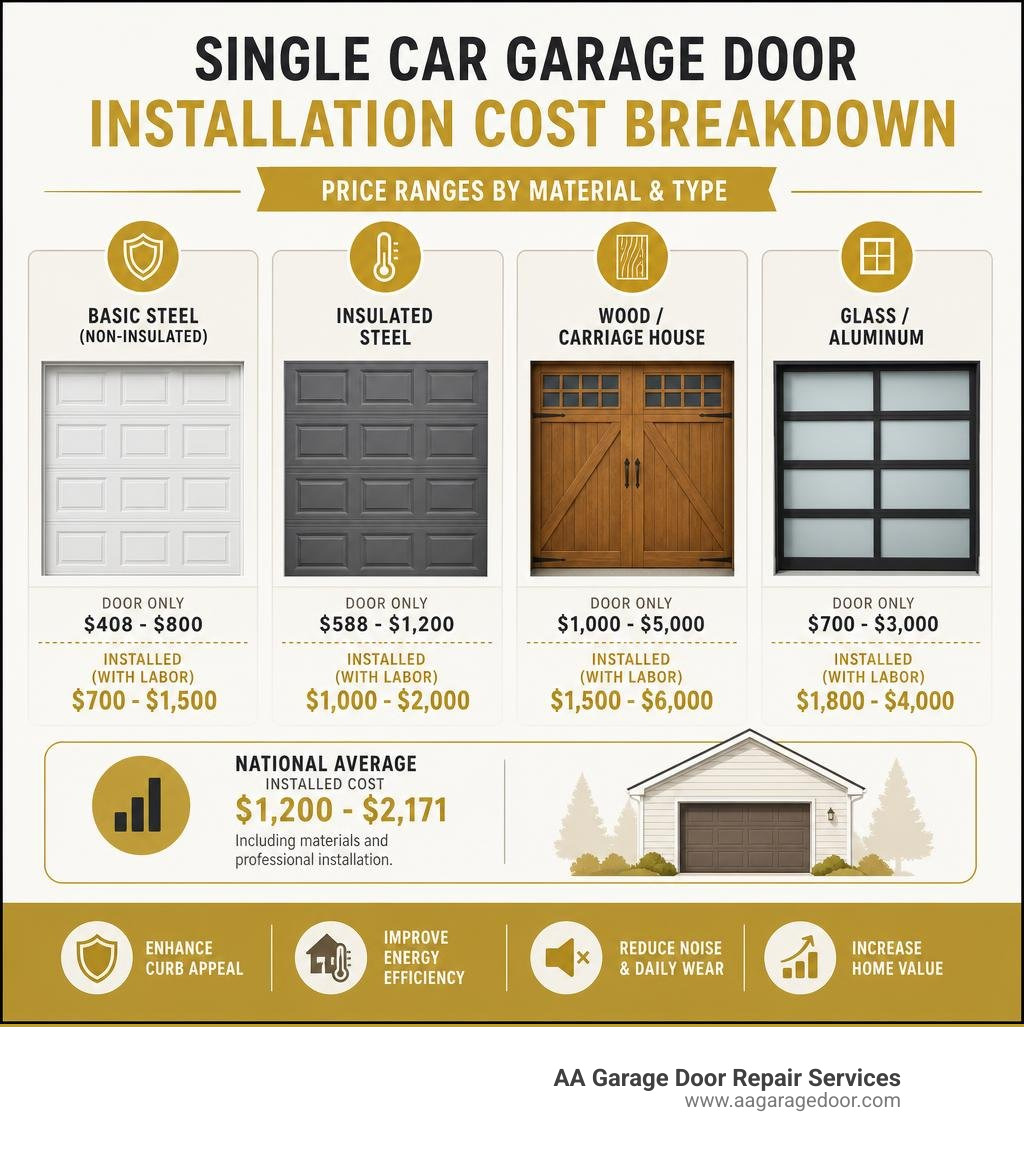
The cost of a single car garage door in 2026 typically falls between $750 and $3,500 installed, depending on material, insulation, style, and labor in your area. If you are planning a home upgrade, partnering with a trusted local specialist like AA Garage Door Repair Services ensures a seamless installation process. Here’s a fast breakdown:
| Door Type | Door Only | Installed (with Labor) |
|---|---|---|
| Basic steel (non-insulated) | $408 – $800 | $700 – $1,500 |
| Insulated steel | $588 – $1,200 | $1,000 – $2,000 |
| Wood / carriage house | $1,000 – $5,000 | $1,500 – $6,000 |
| Glass / aluminum | $700 – $3,000 | $1,800 – $4,000 |
The national average for a single-car garage door replacement lands around $1,200 to $2,171, including materials and professional installation.
Your garage door is the largest moving part of your home — and one of the most visible. When it breaks down, gets dented, or just looks worn out, replacing it becomes both a practical and financial decision. For Twin Cities homeowners, that decision often happens fast, especially in the middle of a Minnesota winter.
This guide breaks down every cost factor so you know exactly what to expect before you call a contractor. For professional garage door replacement in the Twin Cities, getting an accurate quote starts with understanding what drives the price.
I’m David Sands, owner of AA Garage Door LLC, and I’ve been installing and replacing single-car garage doors across Wisconsin and Minnesota since 2001. Over more than two decades, I’ve seen how material choices, insulation levels, and regional labor rates shape the cost of a single car garage door — and I’ll walk you through all of it here.
Understanding the Cost of a Single Car Garage Door in 2026
When budgeting for home upgrades, the first question is always: “What am I actually going to pay?” At AA Garage Door, we believe in absolute transparency. In late 2026, the average cost of a new single-car garage door in our service area—spanning St. Paul and Woodbury, MN, over to Hudson and Baldwin, WI—ranges from $844 to $3,498, with most homeowners landing on an all-inclusive average of $2,171 for a quality, professionally installed door.
Prices have risen steadily over the last five years due to material inflation and labor demand. According to historical industry data, the average cost for a standard replacement has climbed roughly 17.8% since 2022. However, because a garage door makes up to 30% of your home’s front facade, it remains one of the smartest investments you can make. Remodeling studies consistently show that a new garage door delivers a massive return on investment (ROI), often recouping 90% to 100% of its cost at home resale.
To help you visualize how these costs break down, we can look at localized estimates. If you use a tool like the Garage Door Cost Calculator (2026), you will see that your choice of door style, insulation level, and opener configuration moves the price needle more than any other variables.
Below is a detailed pricing table reflecting real-world local costs for single-car garage door projects in the Twin Cities and Western Wisconsin regions:
| Project Scope | Material Cost (Door Only) | Professional Labor | Estimated Total Installed Cost |
|---|---|---|---|
| Basic Single Steel (Non-Insulated, 8×7 or 9×7) | $408 – $650 | $300 – $500 | $708 – $1,150 |
| Insulated Single Steel (Double/Triple Layer, R-9 to R-18) | $588 – $1,500 | $350 – $600 | $938 – $2,100 |
| Premium Carriage House / Faux Wood | $1,200 – $4,000 | $400 – $800 | $1,600 – $4,800 |
| Modern Glass & Aluminum | $1,800 – $5,000 | $500 – $900 | $2,300 – $5,900 |
| Custom Real Wood Single Door | $2,400 – $6,000 | $600 – $1,200 | $3,000 – $7,200 |
How Materials and Sizes Drive Single Garage Door Pricing
Material selection and physical dimensions are the two primary foundations of your overall estimate. Choosing the right combination ensures your door stands up to the heavy snow loads of St. Paul and the freezing winds of Baldwin, without breaking your budget.
How Material Choices Impact the Cost of a Single Car Garage Door
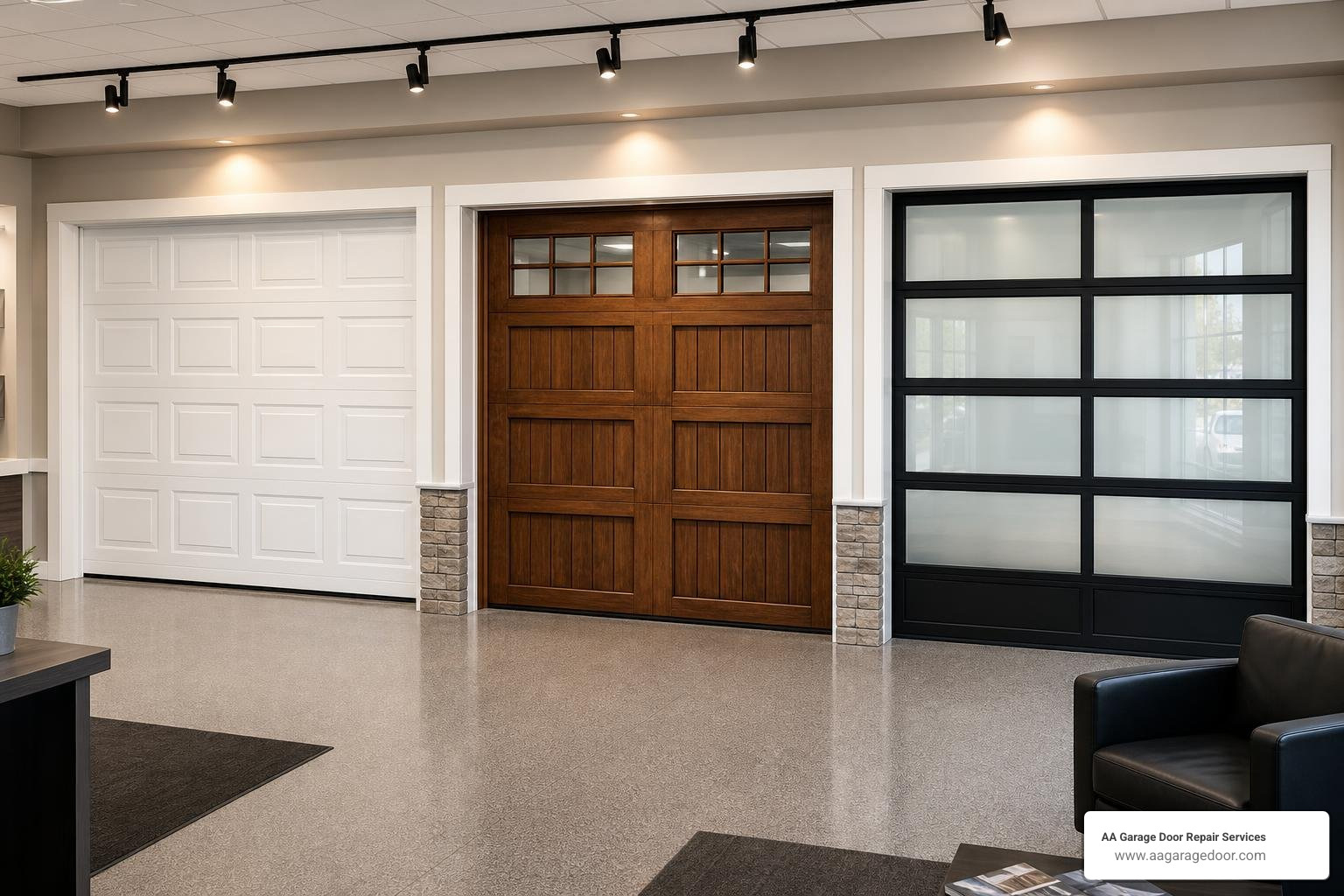
The material you choose dictates not only the upfront cost but also the long-term maintenance requirements and durability of your door. According to the CostWhale Garage Door Replacement Cost Guide, material costs vary widely across the industry:
- Steel ($250 – $4,000): Steel is the undisputed champion of value and durability, accounting for roughly 70% of residential sales. It is highly dent-resistant (especially in double- or triple-layer configurations) and requires virtually zero maintenance. Budget options like the Clopay Classic Steel 8×7 non-insulated door start around $408 retail, while high-end insulated steel models can reach $2,000+.
- Wood ($1,000 – $8,000): Real wood offers unmatched natural beauty and warmth, but it comes with a premium price tag. Additionally, wood doors require regular painting or refinishing every 2 to 3 years to prevent warping, cracking, and rot caused by harsh Midwestern winters.
- Aluminum ($250 – $2,000): Extremely lightweight and naturally resistant to rust and corrosion. Aluminum is often paired with glass panels for a sleek, modern aesthetic, though uninsulated aluminum panels can dent easily under impact.
- Vinyl and Fiberglass ($300 – $4,000): These materials are highly durable, dent-resistant, and won’t rust. However, extreme cold temperatures—like those we experience in Woodbury, MN—can sometimes make cheap vinyl brittle over time.
- Faux Wood / Composite ($300 – $5,000): Composite doors use a steel core clad with molded wood-grain fibers. They give you the gorgeous look of real wood without the heavy maintenance or susceptibility to rot.
How Size and Dimensions Affect the Cost of a Single Car Garage Door
Size is a straightforward cost driver: more material equals a higher price. Standard single-car garage door widths are typically 8 feet, 9 feet, or 10 feet, with heights usually landing at 7 feet or 8 feet.
If you browse the Home Depot Single Door Catalog, you will notice immediate price jumps between these standard increments. For example, a basic Clopay Classic Steel 8 ft x 7 ft non-insulated door costs $408, while upgrading to a 9 ft x 7 ft model of the exact same style costs $458. If your garage requires an 8-foot-tall door to accommodate an SUV or truck with a roof rack, a Clopay 9 ft x 8 ft non-insulated door jumps to a range of $668 to $1,138.
If your home has an older, non-standard rough opening, you may need a custom-sized door or structural reframing. Framing a brand-new opening or modifying an existing header typically adds $800 or more in carpentry labor.
Installation, Labor, and Customization Costs
Buying the door is only half the battle. To ensure safe, smooth operation, professional installation is essential. Let’s look at how labor rates and personalization options affect your bottom line.
Insulated vs. Non-Insulated Single Doors
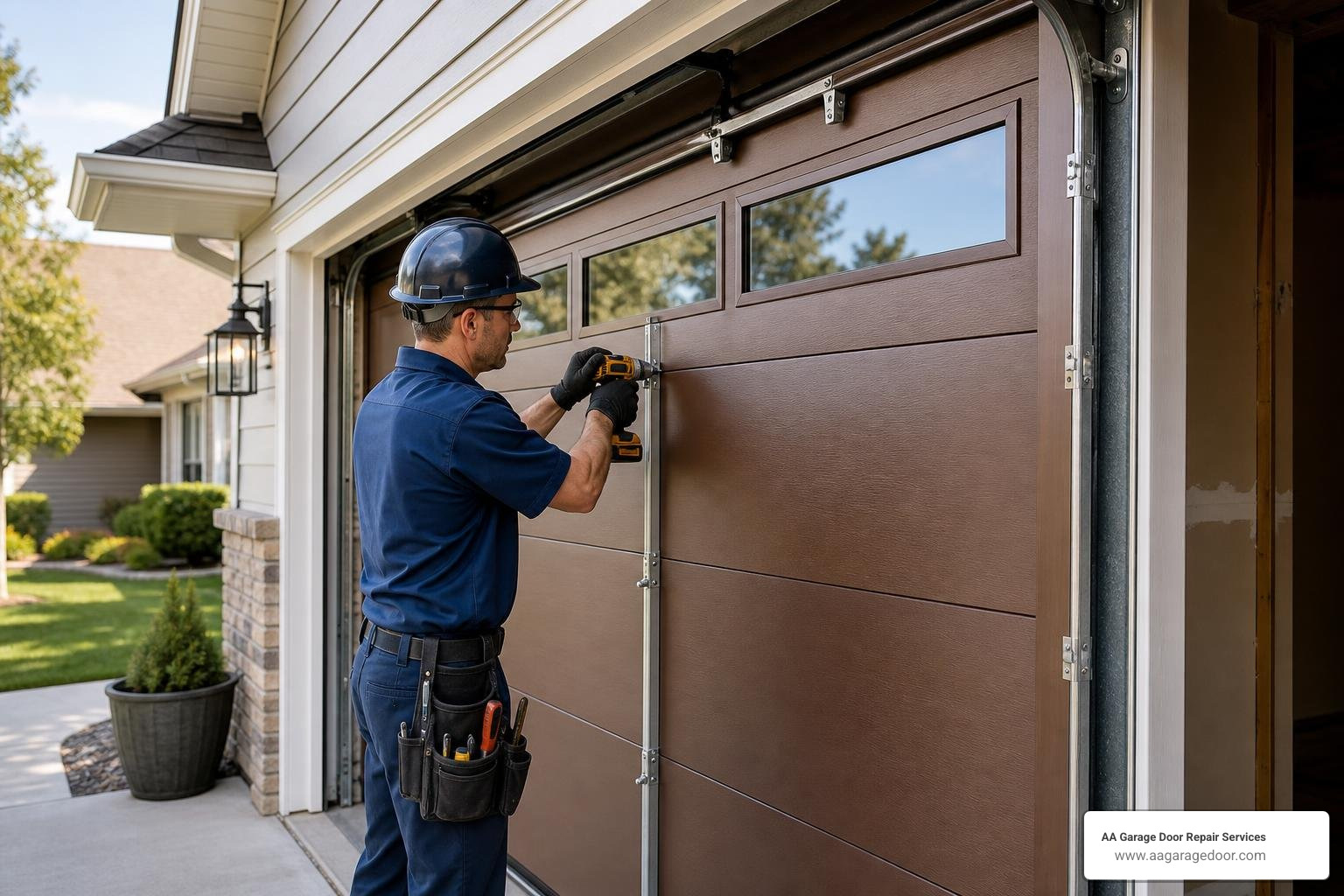
In Minnesota and Western Wisconsin, we strongly advise against buying a non-insulated garage door for any garage attached to a home. Our winters are brutal, and an uninsulated door acts as a giant radiator, transferring freezing air straight into your home.
According to our 2026 garage door prices guide, upgrading from a non-insulated door to an insulated model typically adds $200 to $600 to the retail price. However, this investment pays for itself quickly. An insulated door can reduce energy loss through the garage by 70% to 80%, keeping your garage 20 to 30 degrees warmer in the winter and significantly reducing your heating bills.
Insulation is measured in R-value (thermal resistance). There are two primary types of insulation used in garage doors:
- Polystyrene: Typically used in double-layer doors (steel skin + vinyl-backed polystyrene). It offers R-values ranging from 6 to 9. It is a cost-effective way to get basic thermal protection and noise reduction.
- Polyurethane: Used in triple-layer “sandwich” doors (steel skin + injected polyurethane + steel backing). This provides maximum R-values from 12 to 18+, exceptional structural rigidity, and whisper-quiet operation.

For a deeper dive into thermal performance and structural integrity, check out our comprehensive garage door installation cost guide.
Garage Door Styles and Aesthetics
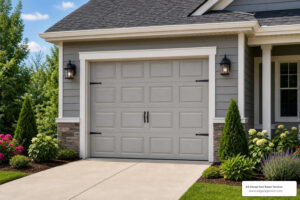
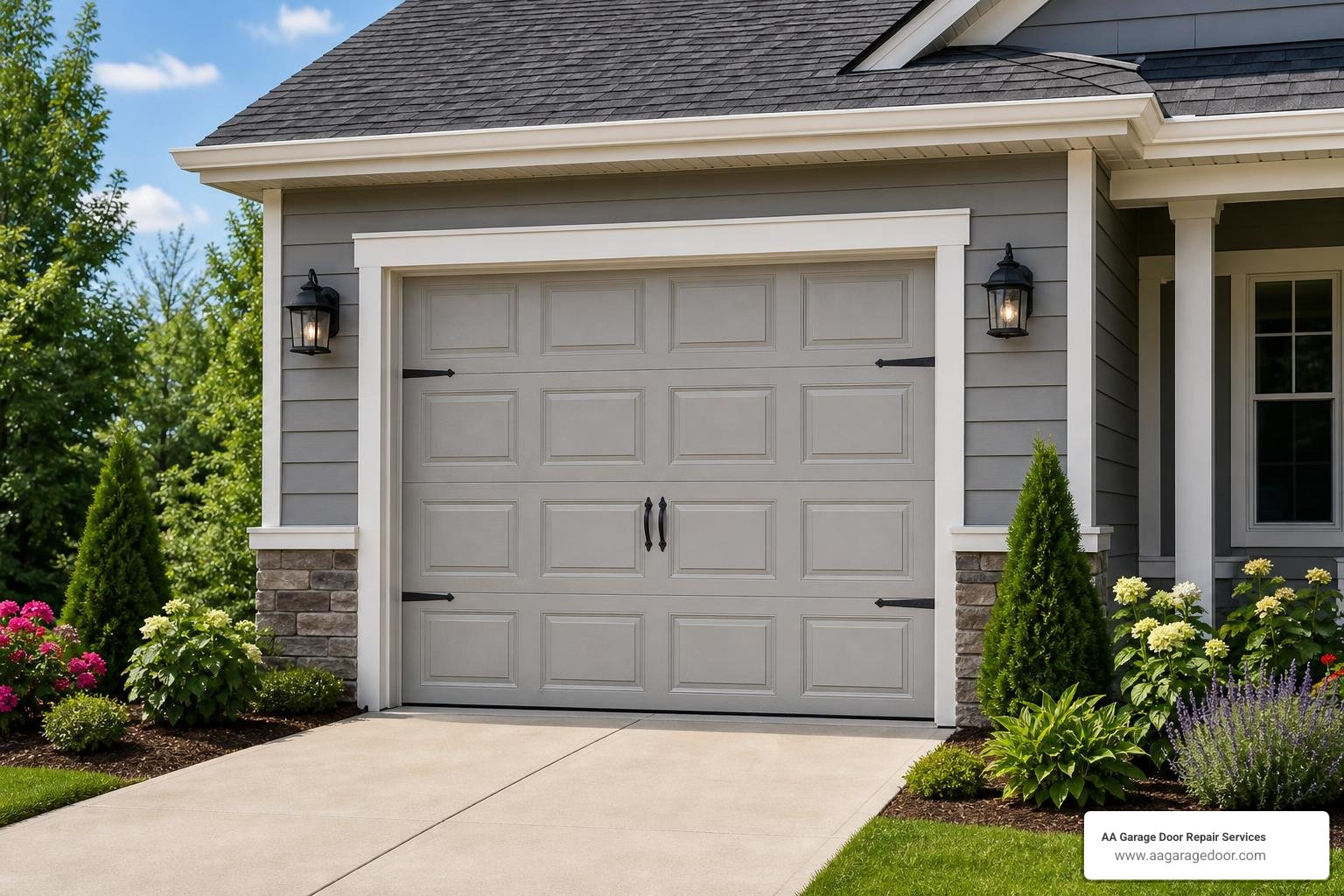
The architectural style of your home should dictate the style of your door. Traditional raised-panel doors are the most budget-friendly, costing $500 to $1,800 installed. If you want to boost your curb appeal, carriage-house doors (which mimic swinging stable doors but roll upward) range from $1,200 to $8,000. Modern full-view glass doors framed in aluminum offer a striking, contemporary look but command premium prices of $1,800 to $8,000+.
Customizations and Window Add-Ons
Adding windows to the top panel of your garage door lets natural light into a dark space and adds instant visual interest. Adding standard decorative windows typically adds $115 to $250 per window panel (up to $1,200 for highly elaborate, insulated glass inserts).
Other customizations to budget for include:
- Decorative Hardware: Magnetic or bolt-on handles and hinges cost $50 to $150.
- Automatic Garage Door Openers: A new opener typically costs $441 to $754 installed. Chain-drive openers are the most affordable ($250–$500), while ultra-quiet belt-drive openers ($350–$700) are highly recommended if you have a bedroom adjacent to or above the garage.
- Smart Upgrades: Wi-Fi-enabled smart openers that allow you to monitor and control your door via smartphone add $100 to $300.
- Battery Backup: In states like California, battery backups are legally mandated. Even in MN and WI, adding a battery backup ($130) is a smart safety upgrade to ensure your door opens during severe winter power outages.
Repair vs. Replacement: Making the Cost-Effective Choice
Before you commit to a full replacement, it is worth evaluating whether a repair can extend the life of your current setup. A quality garage door should last 15 to 30 years, while torsion springs typically last 7 to 14 years (10,000 to 20,000 cycles) and openers last 10 to 15 years.
If your door is making noise or refusing to open, the issue might be a simple component failure. Here is a quick decision matrix:
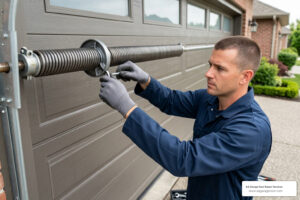
- Repair It: If you have a broken torsion spring ($150 to $400 to replace), a snapped cable ($100 to $250), or a single dented panel ($150 to $400), a repair is highly cost-effective.
- Replace It: If your door has structural damage, multiple rusted or severely dented panels, lacks insulation on an attached garage, or is more than 15–20 years old, replacing the entire system is the smarter long-term financial move.
When you decide to replace, make sure your contractor’s quote is fully itemized. A complete, professional quote should always include the door panels, new tracks, heavy-duty torsion springs, labor, and the eco-friendly disposal and haul-away fee for your old door (typically $50 to $200).
For homeowners in St. Paul and surrounding suburbs, our team at AA Garage Door provides honest assessments to help you make the most budget-conscious choice.
Frequently Asked Questions
How much does a basic single-car garage door cost installed in 2026?
A basic, non-insulated steel single-car garage door (8×7 or 9×7) costs between $700 and $1,500 installed. This price includes the door panels, standard tracks, springs, and professional labor, but excludes a new automatic opener or decorative windows.
Is an insulated garage door worth the extra cost?
Yes, absolutely. If your garage is attached to your home, has a room above it, or is used as a workshop, an insulated door is worth every penny. It can keep your garage 20 to 30 degrees warmer in winter, reduces outdoor noise, and adds significant structural rigidity, making the door much more resistant to dents from basketballs or minor car bumps.
Can I install a single-car garage door myself?
We strongly advise against DIY garage door installation. While swapping out a garage door opener can be a safe weekend project, installing the door itself involves handling heavy, awkward panels (often weighing 150+ pounds) and winding high-tension torsion springs. Torsion springs store massive amounts of mechanical energy and can cause severe injury or death if they slip during installation. Hiring a certified professional ensures your door is perfectly balanced, safe, and fully covered under warranty.
Conclusion
Choosing the right single-car garage door is about balancing upfront costs with long-term performance, energy efficiency, and home security. Whether you are dealing with a frozen door in Hudson, WI, or looking to maximize your home’s curb appeal in Woodbury, MN, investing in a high-quality door pays dividends in convenience and home value.
Since 2001, AA Garage Door Repair Services has provided homeowners across the Twin Cities metro and Western Wisconsin with fast, reliable, and transparent service. We stand by our work with a 100% satisfaction guarantee, offering 24/7 emergency repairs and expert installations.
Ready to find the perfect door for your home? Contact us today to schedule a garage door replacement consultation or get a free estimate and let us help you keep your home warm, safe, and beautiful.