Why Garage Door Repair Matters More Than You Think
Garage door repair is one of the most common — and most urgent — home maintenance needs a property owner will face. Your garage door is the largest moving part in your home. It opens and closes an average of 1,500 times per year. When it fails, it doesn’t just cause inconvenience. It can create a serious security risk and leave your home exposed. To secure your home and ensure smooth daily operations, partnering with a trusted local provider like AA Garage Door is the best way to keep your system functioning safely.
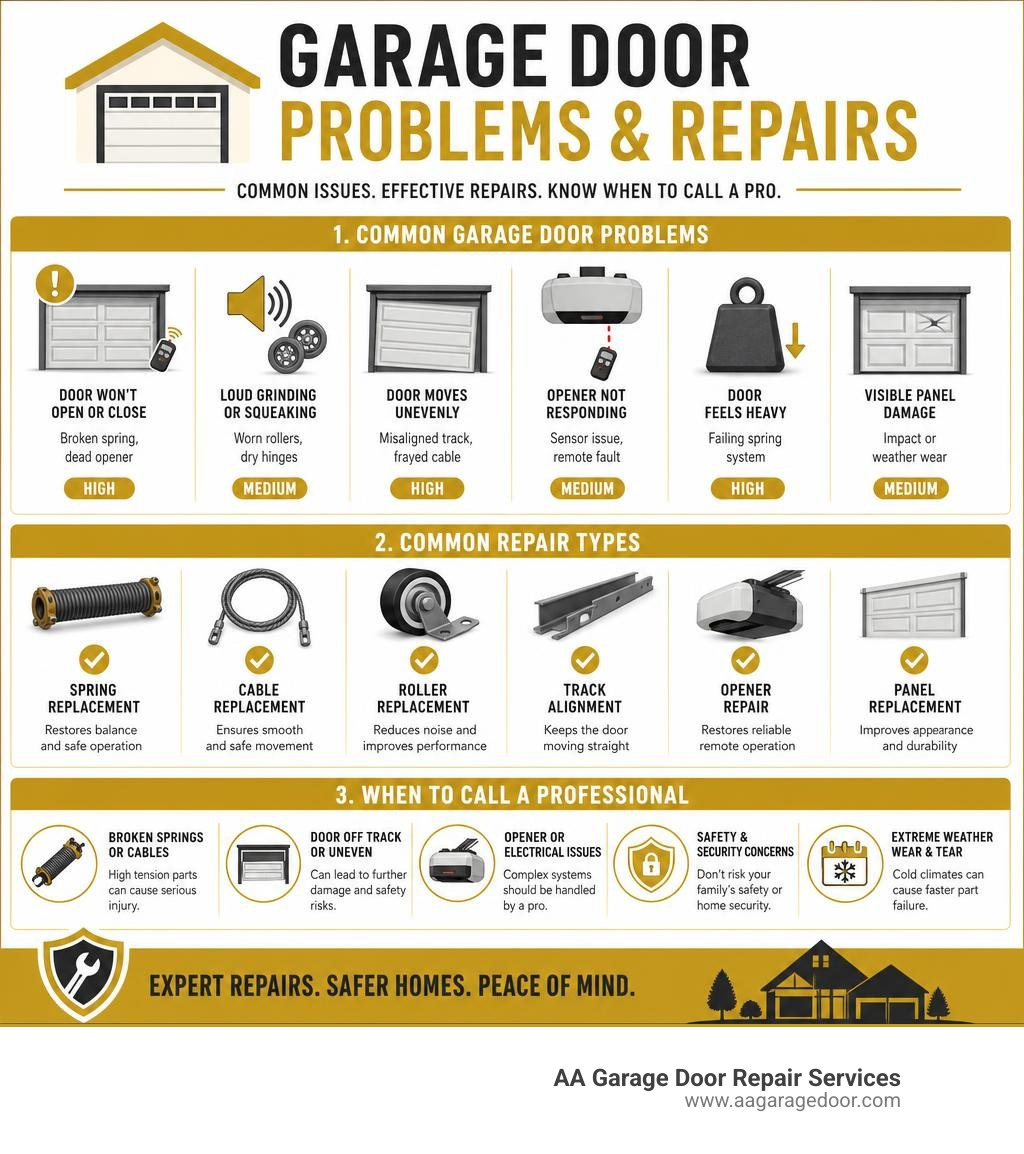
Here are the most common garage door problems homeowners deal with:
| Problem | Common Cause | Urgency |
|---|---|---|
| Door won’t open or close | Broken spring, dead opener | High |
| Loud grinding or squeaking | Worn rollers, dry hinges | Medium |
| Door moves unevenly | Misaligned track, frayed cable | High |
| Opener not responding | Sensor issue, remote fault | Medium |
| Door feels heavy | Failing spring system | High |
| Visible panel damage | Impact or weather wear | Medium |
Most issues are repairable without replacing the full door — but some, like broken springs or frayed cables, require a professional immediately. For professional garage door repair services that cover all of these scenarios, having a trusted local technician on call makes all the difference.
If you’re in the Twin Cities or Western Wisconsin, the cold winters here make garage door components — especially springs and cables — wear out faster than in milder climates. That means what starts as a minor noise can become a full failure on the coldest morning of the year.
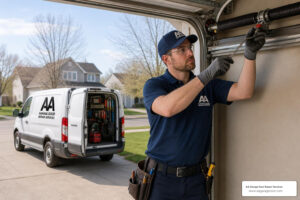
I’m David Sands, owner of AA Garage Door LLC, and I’ve been providing garage door repair services across Minnesota and Wisconsin since 2001. In over 23 years, I’ve seen nearly every type of failure a residential door can have — and I’ll walk you through everything you need to know in this guide. If you need immediate assistance, call us at 612-861-4758.
Common Signs You Need Professional Garage Door Repair
When your garage door starts acting up, it rarely does so in complete silence. It usually drops subtle clues before a catastrophic failure occurs. Recognizing these warning signs early can save you from being trapped inside your garage or facing a costly emergency repair bill. At AA Garage Door Repair Services, we encourage homeowners in St. Paul, Woodbury, Baldwin, and Hudson to keep a close eye and ear on their garage systems.
1. Unusual and Loud Noises
While no garage door is completely silent, sudden changes in the sounds it makes are a clear cry for help.
- Squeaking or Screeching: This typically points to dry rollers, hinges, or bearings that desperately need professional lubrication.
- Grinding Sounds: Grinding often indicates that the metal tracks are misaligned or that the gears inside your garage door opener are stripping.
- Banging or Popping: A loud popping sound while the door is in motion is a classic indicator of a failing or snapped spring.
2. Slow or Hesitant Movement
A healthy garage door should open or close smoothly within roughly 10 to 12 seconds. If your door hesitates, moves at a snail’s pace, or seems to struggle against its own weight, the electric opener is likely straining. This strain is usually caused by an underlying balance issue, meaning the springs are no longer doing their job of neutralizing the door’s weight.
3. Shaking, Vibrating, or Jerking
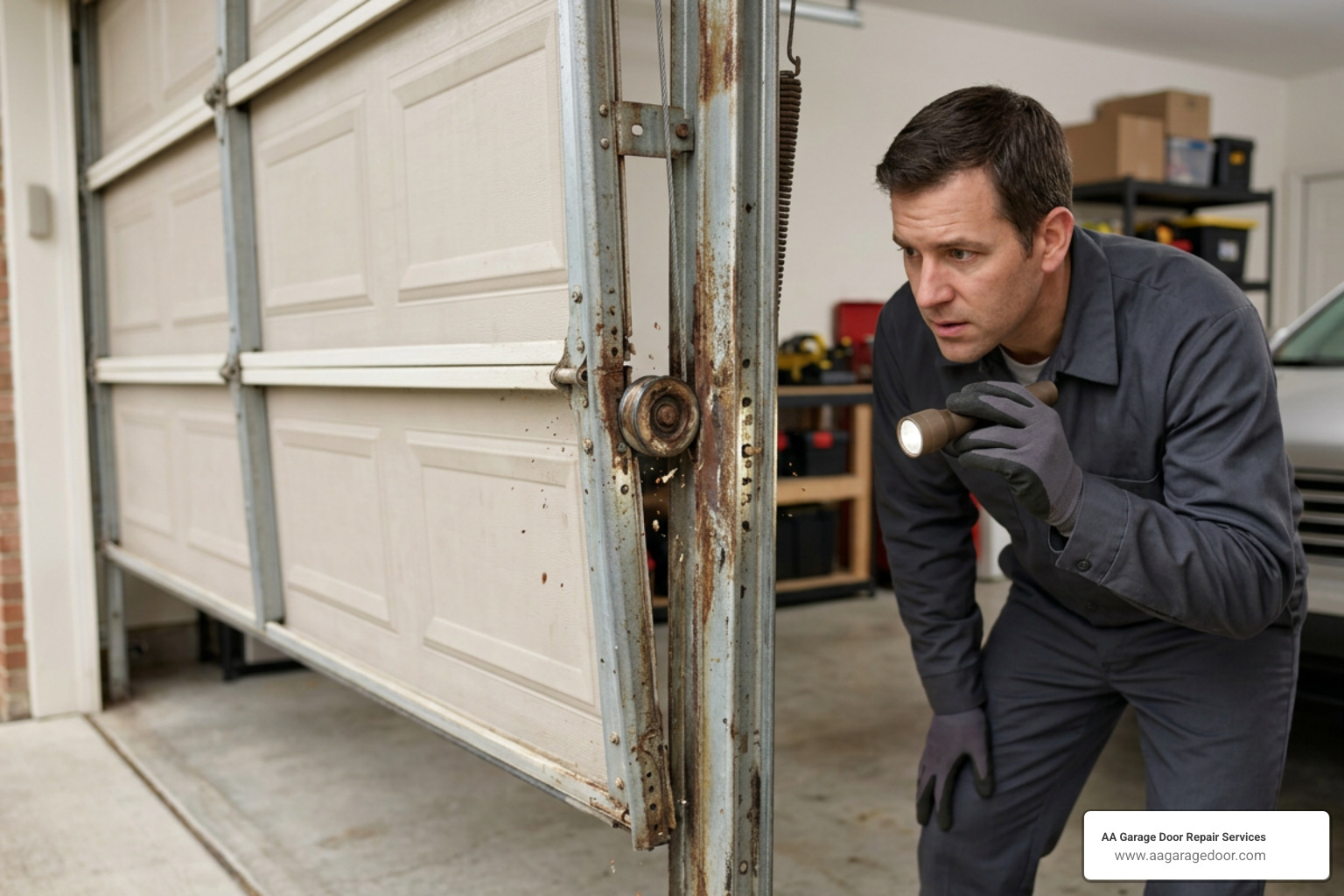
If your garage door shakes like it is riding a roller coaster every time you press the button, you have a mechanical alignment issue. This shaking is commonly caused by loose hinges, worn-out rollers, or a track that has bent out of shape. Ignoring this vibration will eventually loosen the mounting hardware, putting the entire system at risk of falling.
4. Uneven Hanging or Sagging
When closed, does your door leave a gap on one side while resting flush on the other? Or does it look crooked as it travels up the tracks? This uneven alignment is a major safety hazard. It usually means one of your lifting cables has frayed or slipped off its drum, or one of your extension springs has lost its tension. For a deeper look into maintaining these structural elements safely, check out our Essential Guide to Garage Door Repair.
5. The Door Feels Exceptionally Heavy
If you pull the emergency release cord and try to lift your garage door manually, you should be able to do so easily with one hand. If the door feels like a solid block of concrete, your springs have reached the end of their operational lifespan. A heavy door places extreme stress on your opener’s motor, which will quickly burn out if the springs are not replaced.
Troubleshooting Minor Issues vs. Professional Intervention
Not every garage door hiccup requires a technician to rush to your home. Homeowners can safely handle several minor troubleshooting steps themselves before picking up the phone.
- Photo-Eye Sensor Alignment: If your garage door starts to close but immediately reverses and flashes its light, check the safety sensors located near the floor on either side of the door. These sensors project an invisible infrared beam. If they are dirty, blocked by a stray broom, or knocked out of alignment, the door will refuse to close. Wipe the lenses with a soft microfiber cloth and gently adjust them by hand until the indicator lights glow steadily.
- Remote Control Programming: If your wall button works but your handheld remotes do not, the solution is often as simple as replacing the batteries. If new batteries do not work, you can easily reprogram the remote to the opener’s motor head by following the instructions in our guide on How to Fix a Garage Door at Home.
However, if your troubleshooting does not resolve the issue, or if you notice physical damage to the tracks, springs, or cables, it is time to call in the professionals. Attempting to force a malfunctioning door closed can cause severe structural damage to the panels.
Understanding Garage Door Springs, Cables, and Rollers
To understand why your garage door behaves the way it does, you have to look at the mechanical workhorses behind the scenes: the springs, cables, and rollers. These components work in unison to lift and lower hundreds of pounds of steel or wood effortlessly.
Torsion Springs vs. Extension Springs
Garage doors utilize one of two spring systems to balance their weight:
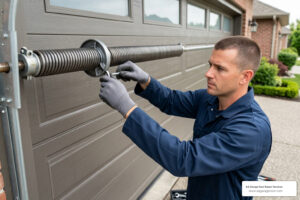
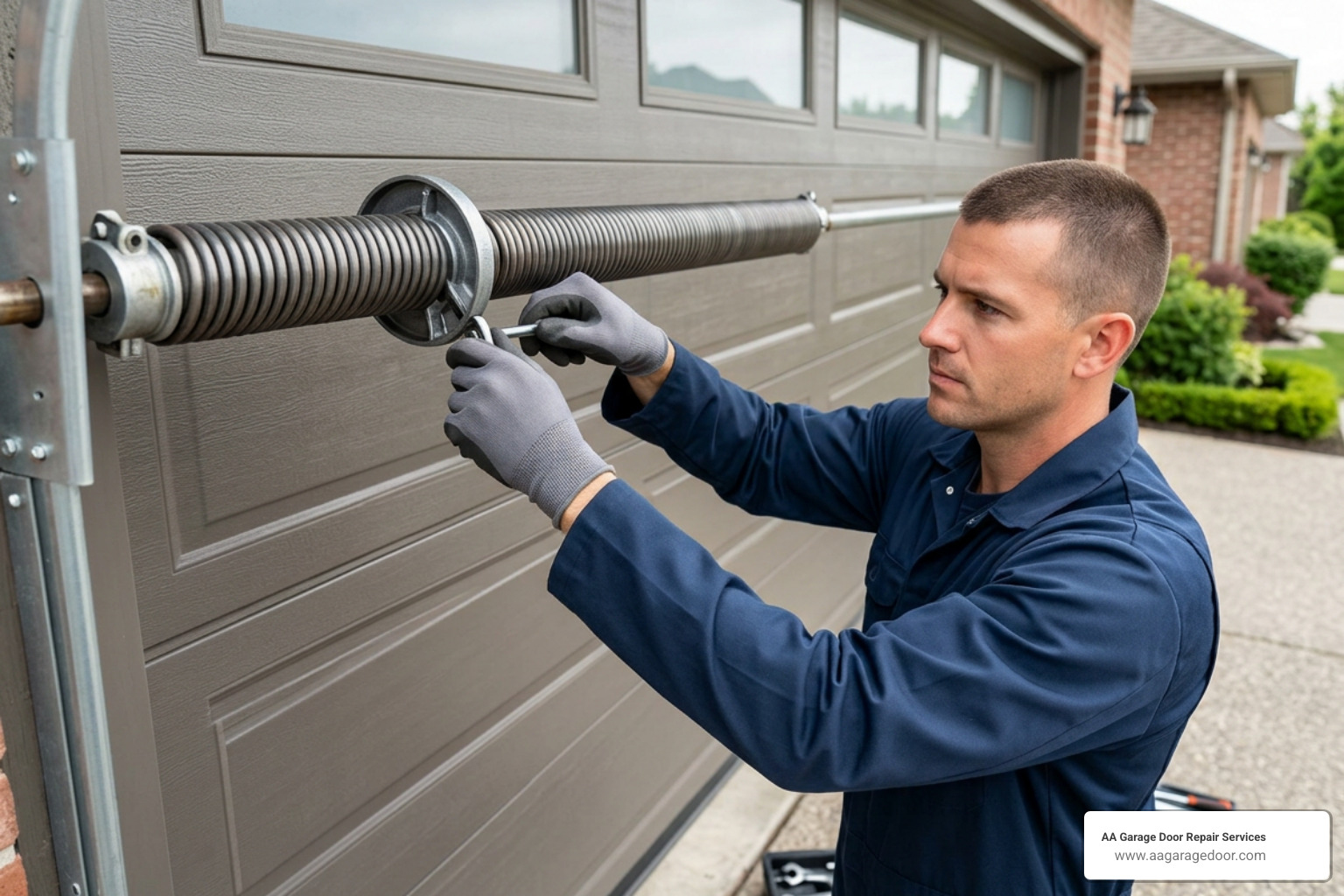
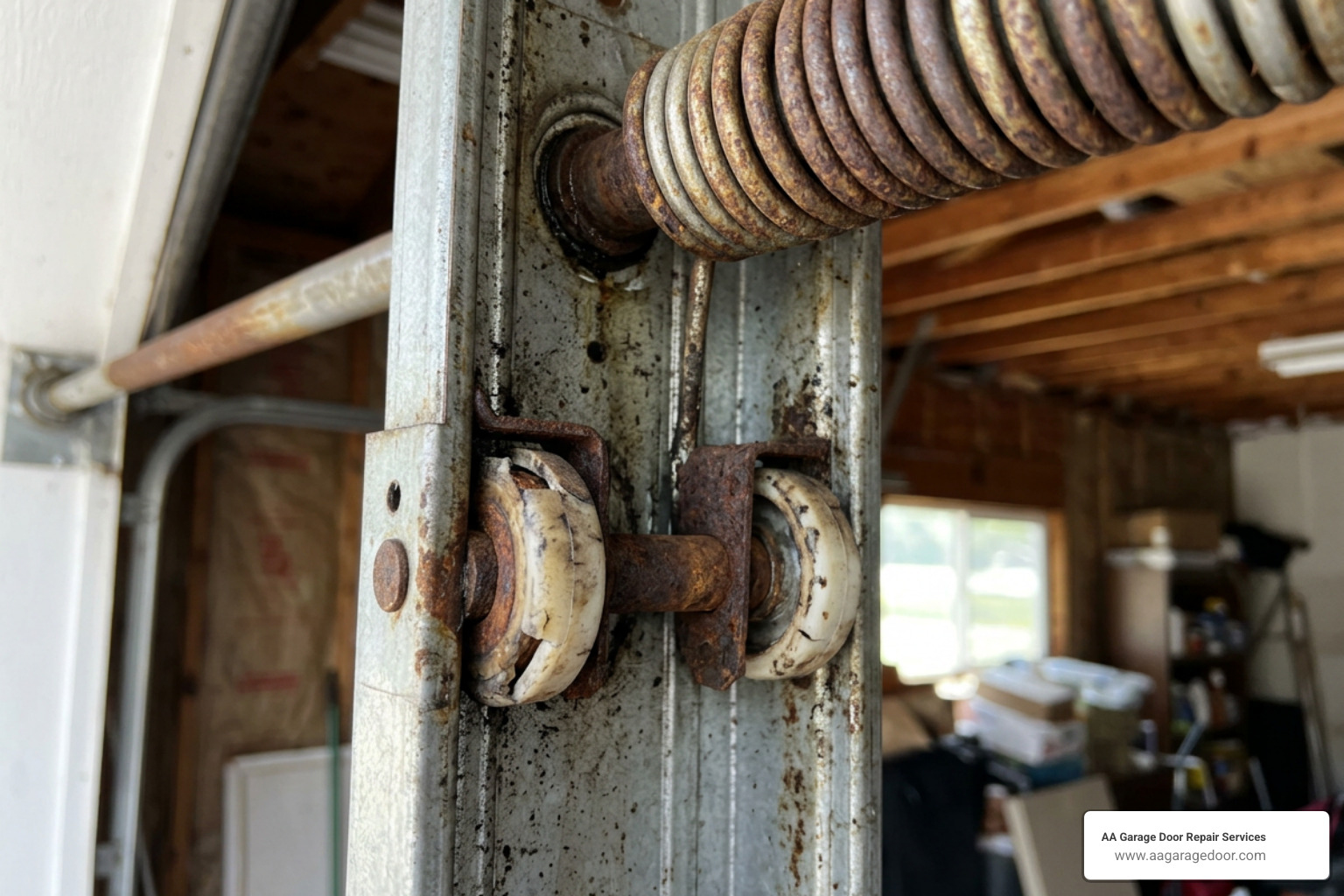
- Torsion Springs: These are mounted on a metal shaft directly above the garage door opening. As the door closes, heavy-duty cables attached to the bottom corners wind around drums, twisting the springs and storing massive amounts of rotational energy (torque). When the door opens, the springs unwind, releasing this energy to lift the door.
- Extension Springs: These are mounted horizontally above the tracks on either side of the door. They stretch out to store energy as the door closes and contract to help lift it. Extension springs are more common on older doors and require safety cables running through their center to catch them if they snap.
Because of our brutal winters in St. Paul and Baldwin, the metal in these springs constantly contracts in the freezing cold and expands when your garage warms up. This thermal stress makes them highly susceptible to snapping during cold snaps. While coastal operations primarily battle salt-air corrosion on hardware, our main enemy in the Midwest is metal fatigue driven by extreme temperature swings.
The Role of Cables and Rollers
- Cables: Your garage door cables are made of high-strength aircraft steel. They transfer the lifting force of the springs directly to the bottom of the door. If a cable becomes frayed, it is a ticking time bomb. When a cable snaps, the door will drop rapidly on one side, bending the tracks and trapping your vehicle.
- Rollers: Rollers sit inside the tracks and allow the door panels to glide up and down smoothly. Older doors often use standard steel rollers, which are incredibly noisy and wear out quickly. Upgrading to high-quality nylon rollers with sealed ball bearings reduces operating noise to a whisper and minimizes wear on your tracks.
Why DIY Garage Door Repair Is Highly Dangerous
With the rise of online video tutorials, many homeowners assume they can tackle a broken garage door spring or cable on a Saturday afternoon. We cannot emphasize this enough: DIY garage door spring repair is extremely dangerous and can result in severe injury or death.
- Extreme Tension and Torque: A typical residential garage door weighs between 150 and 400 pounds. The springs must hold an equal amount of tension to lift it. When adjusting a torsion spring, one slip of a winding bar can release all of that stored energy instantly, spinning the steel bar with enough force to break bones or cause severe head trauma.
- Specialized Tools Required: Professional technicians use dedicated, heat-treated winding bars, locking pliers, and calibration gauges to service springs safely. Attempting to use screwdrivers, pipe wrenches, or other makeshift tools is a recipe for disaster.
- Precision Calibration: A garage door must be perfectly balanced to operate safely. If a spring is wound too tight, the door will fly open dangerously fast and strain the opener. If it is too loose, the door will be incredibly heavy, causing the cables to slip off their drums. Even warm-weather specialists agree that spring replacement and high-tension adjustments must always be left to certified professionals.
Garage Door Opener Repair vs. Replacement
Your garage door opener is the brain of your entire garage system. When it stops responding, you face a common dilemma: should you pay to repair your existing unit, or is it wiser to invest in a brand-new opener?
| Indicator | Best for Opener Repair | Best for Opener Replacement |
|---|---|---|
| Age of Unit | Under 10 years old | Over 10–15 years old |
| Primary Symptom | Squeaking, minor sensor misalignment, worn gears | Smoking motor, cracked housing, intermittent electrical failure |
| Safety Features | Has functioning auto-reverse sensors | Lacks modern photo-eyes or rolling code security |
| Smart Tech | Already has Wi-Fi or can accept a retrofit kit | Want built-in smart control, cameras, and battery backup |
| Noise Level | Acceptable (can be quieted with lubrication) | Extremely loud chain drive that disturbs the household |
If your opener is relatively new, repairing a minor component is highly cost-effective. For example, if your motor is hums but the chain doesn’t move, you likely have a stripped nylon gear. Replacing this gear set is a routine, inexpensive repair. Likewise, if your motor is smoking, it doesn’t always mean the unit is dead; it often indicates a simple, cost-effective capacitor failure or a jammed drive belt that a professional can swap out in under an hour.
However, if your opener was manufactured before 1993, it lacks modern infrared safety sensors and must be replaced immediately to comply with federal safety standards. Industry data indicates that once an opener surpasses 12 to 15 years of age, replacing the entire unit is the most economical choice, as key replacement parts for older models are rapidly being phased out by manufacturers.
The Benefits of Upgrading to a Smart Garage Door Opener
If you decide to replace your old opener, upgrading to a modern smart garage door opener offers massive quality-of-life and security improvements.
- Smartphone Control and Monitoring: No more driving down the highway wondering if you remembered to close the garage door. Smart openers connect directly to your home’s Wi-Fi, allowing you to check the door’s status and open or close it from anywhere in the world using a smartphone app.
- Real-Time Alerts: Receive instant push notifications on your phone whenever your garage door is opened, closed, or left open for an extended period.
- Battery Backup Systems: In places like Woodbury and Hudson, severe summer storms or heavy winter ice can easily knock out power lines. A smart opener equipped with a battery backup ensures you can still park your car safely inside your garage during a blackout.
- Seamless Home Automation: Modern smart openers integrate beautifully with smart home ecosystems like Amazon Alexa, Google Assistant, and Apple HomeKit, allowing you to set automated routines (such as closing the garage door automatically at 10 PM every night).
Financial Expectations and Service Timelines
When your garage door breaks, the last thing you want is a surprise bill. Understanding standard pricing structures and service expectations helps you make informed decisions.
What to Expect: Pricing and Warranties
A reputable garage door repair company should always provide transparent, upfront pricing before any work begins.
- Service Call Fees: Most professional companies charge a flat service call fee (typically ranging from $45 to $149) to cover the technician’s travel, diagnostic time, and safety inspection. At AA Garage Door, we believe in honest transactions, which is why we clearly explain all fees before dispatching a truck.
- Warranty Protection: Never hire a company that does not warranty their work. A quality repair should be backed by a strong warranty. While some national chains offer limited warranties, we back our services with robust parts and labor guarantees to give our Twin Cities and Western Wisconsin neighbors absolute peace of mind. For more detailed information on pricing structures, you can read our guide on How Much Does Garage Door Repair Cost.
How Much Does a Typical Garage Door Repair Cost?
While final costs depend heavily on the size and material of your door, here are the average price ranges for standard residential repairs:
- Torsion Spring Replacement: Replacing a single broken torsion spring generally costs between $150 and $350. However, if you have a double-car garage door, we highly recommend replacing both springs at the same time. Springs are designed for the same number of open-and-close cycles; if one has snapped, the other is guaranteed to fail shortly after. Replacing them as a pair usually costs between $250 and $450, saving you a second service call fee.
- Opener Repair: Minor repairs such as replacing safety sensors, gear kits, or wall stations typically range from $100 to $250.
- Cable and Roller Replacement: Swapping out frayed cables or upgrading your noisy metal rollers to quiet sealed nylon rollers usually runs between $150 and $300.
- Panel Replacement: If you accidentally backed your car into the bottom section of your door, you don’t necessarily have to buy a whole new door. Replacing a single damaged panel typically costs between $250 and $700, depending on the door’s model and insulation level. According to national pricing benchmarks, sectional panel replacement is highly cost-effective, provided the manufacturer still produces that specific door model.
Emergency Services and Response Times
A broken garage door isn’t just an inconvenience; it can be a genuine safety and security emergency. If your door is stuck halfway open at night, your home and family are left completely exposed to intruders and the harsh elements.
If your car is trapped inside your garage when you have a medical appointment or need to get to work, you cannot afford to wait days for an appointment. That is why we provide fast, reliable emergency garage door repair services across St. Paul, Woodbury, Baldwin, and Hudson. We keep our service trucks fully stocked with commercial-grade springs, cables, and rollers so we can resolve 95% of common garage emergencies on our very first visit.
Frequently Asked Questions about Garage Door Maintenance
How often should I schedule preventive maintenance for my garage door?
You should schedule a professional preventive maintenance tune-up at least once a year. The best time to do this is in the autumn, right before the freezing winter temperatures arrive.
During a standard tune-up, our technicians will perform a comprehensive safety inspection:
- Tighten All Hardware: Because your door vibrates constantly, hinges and track bolts naturally loosen over time.
- Lubricate Moving Parts: We apply high-grade silicone or lithium-based spray lubricant to the springs, rollers, and hinges to reduce friction and noise.
- Perform a Balance Test: We disconnect the opener and lift the door halfway. If it stays in place, it is perfectly balanced. If it falls or rides up, the springs require calibration.
- Test Safety Reverses: We place a solid object (like a 2×4 piece of wood) flat on the ground under the door to ensure the opener automatically reverses upon contact.
Can a single damaged garage door panel be replaced?
Yes, a single damaged panel can easily be replaced without purchasing an entirely new garage door system. This sectional repair is an excellent way to save money and restore your home’s curb appeal after a minor accident.
However, panel replacement relies heavily on model compatibility. If your garage door is older or has been discontinued by the manufacturer, finding a matching replacement panel can be incredibly difficult. In those cases, upgrading to a modern, energy-efficient insulated door is often the more practical long-term choice.
How do I know if my garage door needs repair or a full replacement?
Deciding whether to repair or replace your garage door comes down to a simple cost-benefit analysis.
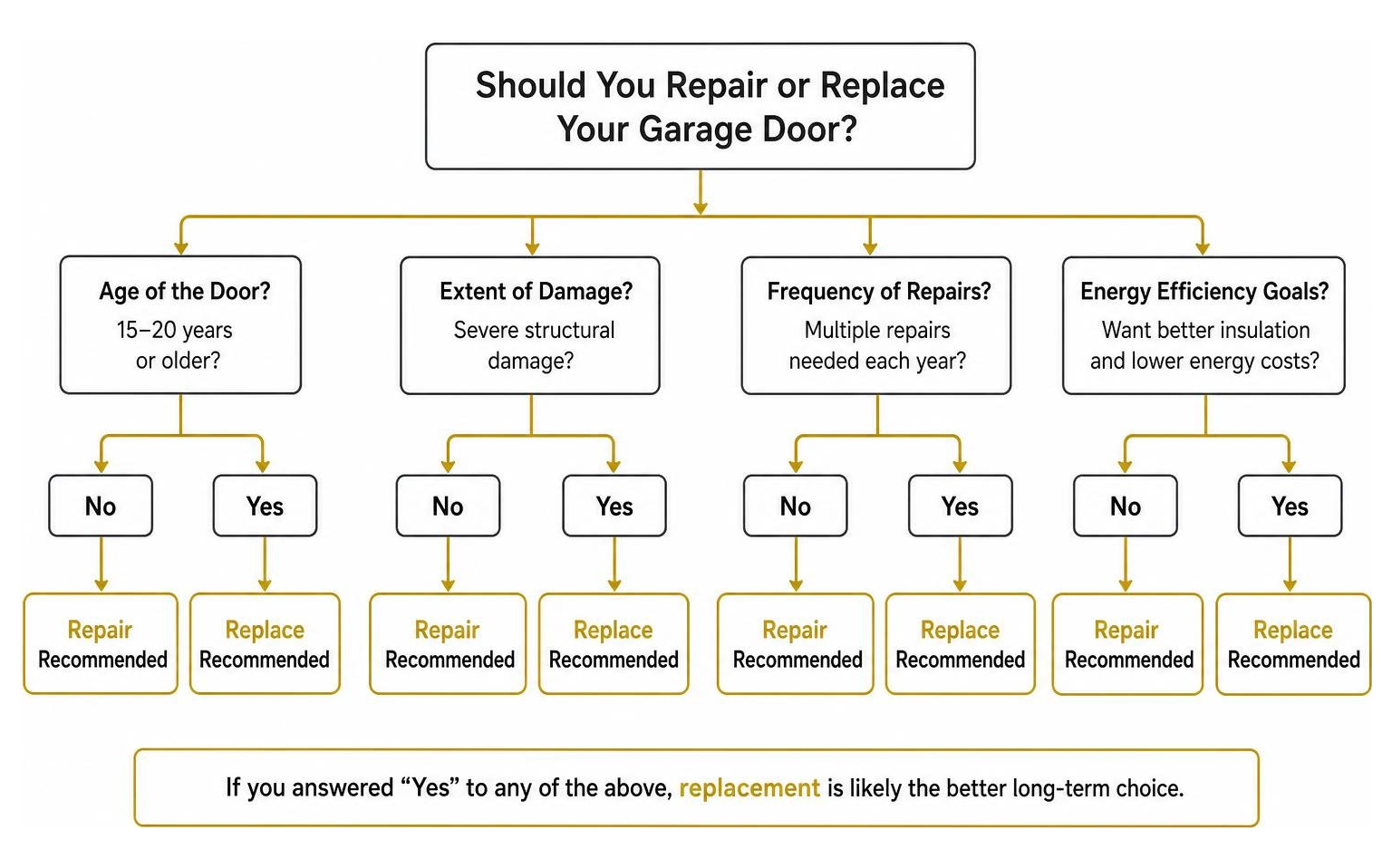
- Age of the Door: The average lifespan of a residential garage door is 15 to 20 years. If your door is approaching this age and starting to require frequent repairs, investing in a new door is more economical than repeatedly patching an old one.
- Extent of Structural Damage: If your door has severe structural damage — such as multiple warped panels, rusted-out steel sections, or a rotted wood frame — a full replacement is necessary to ensure safety.
- Frequency of Repairs: If you find yourself calling a technician multiple times a year for different issues, the system is telling you it has reached the end of its reliable service life.
- Energy Efficiency Goals: Older garage doors lack modern insulation. Upgrading to a modern polyurethane-insulated door can dramatically reduce your heating costs during our freezing Minnesota and Wisconsin winters.
Conclusion
Your garage door is a vital guardian of your home’s security, energy efficiency, and daily convenience. When it malfunctions, ignoring the warning signs can quickly turn a simple, inexpensive fix into a dangerous mechanical failure. Whether you need a quick sensor adjustment, a quiet set of nylon rollers, or an emergency spring replacement, leaving the heavy lifting to trained professionals is the safest and smartest choice.
At AA Garage Door Repair Services, we have been proudly serving our neighbors across the Twin Cities and Western Wisconsin since 2001. We stand firmly behind every job we complete with a satisfaction guarantee, transparent pricing, and unparalleled local expertise.
If you live in St. Paul, Baldwin, Woodbury, Hudson, or the surrounding communities, don’t wait for a minor squeak to become a major breakdown. Explore our options for Garage Door Repair Near Me or contact us today to schedule your service.
Please Schedule Garage Door Repairs online today. We are ready to keep your home safe, secure, and rolling smoothly!