Why Homeowners Trust Insulated Steel Garage Doors for Year-Round Comfort
In cold-climate regions like Minnesota and Western Wisconsin, an insulated steel garage door is one of the highest-impact upgrades for cutting heat loss, improving comfort, and protecting your vehicles and stored items. Because the garage door is often the largest opening in the building envelope, its insulation level directly influences whole-home efficiency. Homeowners who pair a quality insulated door with expert installation from a local Twin Cities garage door specialist consistently report lower utility bills, quieter operation, and better temperature control in adjacent living spaces.
Insulated steel garage doors combine superior strength, thermal efficiency, and lasting durability, making them the top choice for homeowners in cold climates like Minnesota and Wisconsin. These doors reduce energy costs, dampen noise, resist dents, and boost curb appeal—all while standing up to harsh winter conditions.
Key benefits at a glance:
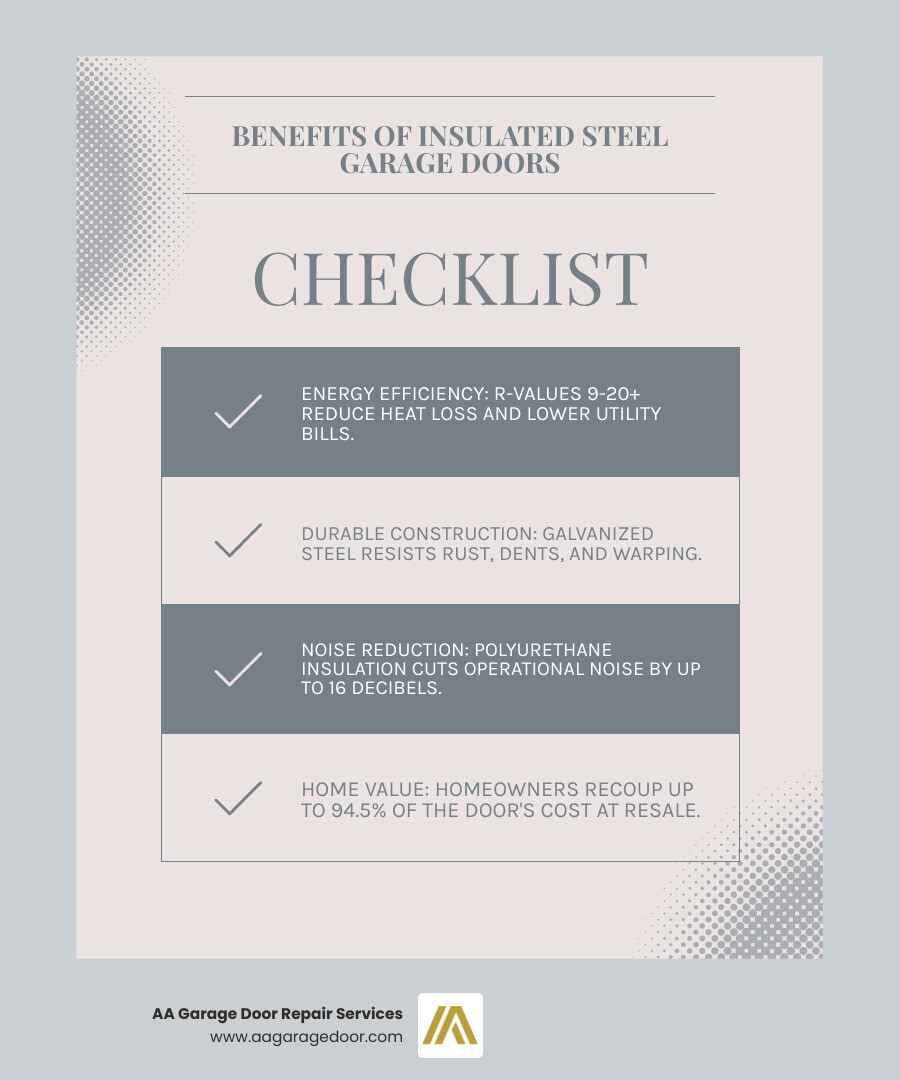
- Energy Efficiency: R-values from 9 to 20+ reduce heat loss and lower utility bills
- Durable Construction: Galvanized steel resists rust, dents, and warping
- Noise Reduction: Polyurethane insulation cuts operational noise by up to 16 decibels
- Home Value: Homeowners recoup up to 94.5% of the door’s cost at resale
- Weather Protection: Multi-layer construction and tight seals block drafts and moisture
When selecting an insulated steel garage door, you’ll choose between:
- Double-Layer Construction – Steel + insulation (polystyrene or polyurethane)
- Triple-Layer Construction – Steel + insulation core + steel interior skin
- Four-Layer Construction – Triple-layer with decorative overlay for improved aesthetics
In regions with freezing winters and scorching summers, an uninsulated garage door acts like an open window in your home’s thermal envelope. It forces your heating and cooling systems to work overtime, drives up energy bills, and leaves your garage—and adjacent living spaces—uncomfortably cold or hot. An insulated steel garage door solves this problem by creating a thermal barrier that stabilizes temperatures, protects vehicles and stored items, and makes your entire home more comfortable.
Beyond energy savings, these doors deliver measurable improvements in noise control. Traditional garage doors can produce sounds measuring 96 decibels during operation, while insulated models like those with Intellicore technology drop that number to just 80 decibels—three times quieter to the human ear. The foam insulation absorbs vibrations, eliminates wind-rattling, and creates a more peaceful environment for bedrooms, home offices, or workshops near the garage.
For homeowners in the Twin Cities, choosing the right insulated steel garage door means understanding R-values, construction layers, and the differences between polystyrene and polyurethane insulation. It also means working with experienced professionals who can guide you to the best door for your climate and budget. For expert guidance on selecting and installing the right door for your home, visit our homepage for expert garage door services.
I’m David Sands, owner of AA Garage Door LLC, and over the past 23 years I’ve helped thousands of Twin Cities homeowners select and install insulated steel garage doors that deliver lasting comfort and value. As an authorized Clopay and LiftMaster dealer, I’ve seen how the right door transforms a home’s energy efficiency and curb appeal.
Why an Insulated Steel Garage Door is a Smart Investment for Cold Climates
In regions like St. Paul, Minneapolis, Hudson WI, and Baldwin WI, where winter temperatures can plummet to as low as 7 degrees Fahrenheit, your garage door plays a critical role in your home’s overall thermal performance. An insulated steel garage door isn’t just a luxury; it’s a necessity for maintaining a comfortable living environment and protecting your investments.
The primary benefit is energy efficiency. By creating a robust thermal barrier, an insulated door significantly reduces heat transfer between your garage and the outside world. This means less heat escapes from your home into an attached garage during the winter, and less cold air infiltrates, directly translating to lower utility bills. If your garage is attached to your home, an insulated door acts as a buffer, preventing extreme garage temperatures from impacting adjacent living spaces. This stable environment also protects your vehicle’s battery life and fluids, prolonging the life of your car and other stored items.
Beyond energy savings, an insulated steel garage door offers a suite of other advantages:
- Increased Comfort: Whether you use your garage as a workshop, gym, or simply a pathway to your home, a stable temperature makes it a much more pleasant space. No more shivering while you get into your car on a frosty morning!
- Improved Home Security: The added layers of steel and insulation provide greater rigidity and resistance to forced entry, making your home more secure.
- High Return on Investment: Homeowners can recoup an impressive 94.5% of their garage door’s value at resale. Insulated garage doors are in high demand due to their energy-saving benefits, making them a valuable upgrade that boosts your home’s appeal and market value.
The Surprising Benefit of Noise Reduction
Imagine pulling into your driveway after a long day, and your garage door opens with barely a whisper. This isn’t just wishful thinking; it’s a reality with an insulated steel garage door. The dense insulation, particularly polyurethane foam, acts as a powerful sound dampener.
When Clopay® tested the sound levels for insulated versus uninsulated garage doors, the results were striking. Traditional garage doors produced sounds measuring 96 decibels (dB), while Intellicore® doors, which feature dense and uniform insulation, produced sounds measuring just 80 decibels. To the human ear, this means Intellicore® insulated doors are three times quieter than traditional polystyrene insulated garage doors. This significant reduction in noise not only makes your garage door operation smoother but also creates a more peaceful home environment, especially if bedrooms or living areas are adjacent to the garage. We can help you find a quiet door and learn how to make your garage door even quieter.
Durability That Withstands the Elements
Steel is renowned for its strength, and when it comes to garage doors, this translates to exceptional durability and longevity. Our insulated steel garage doors are constructed with multiple layers of galvanized steel, providing a robust barrier against daily wear and tear, as well as the harsh weather conditions we experience in Minnesota and Wisconsin.
The exterior steel is protected by a multi-layer coating system, including hot-dipped galvanizing, a special metal oxide pretreatment, and a baked-on primer and topcoat. This advanced protection ensures resistance against rust and corrosion, keeping your door looking great for years. The insulation itself, particularly polyurethane, is often chemically bonded to the steel sections, adding rigidity and making the door more resistant to dents and impacts. This improved durability means your door maintains its structural integrity and aesthetic appeal longer, even in the face of stray basketballs or minor bumps. A strong, well-constructed door also acts as a more formidable deterrent against potential intruders, enhancing your home’s security. If you’re wondering if this robust material is right for your home, ask yourself, is a steel garage door right for your family?.
Deconstructing the Insulated Steel Garage Door: What’s Inside?
Understanding the inner workings of an insulated steel garage door is key to appreciating its value and choosing the right model. It’s not just a sheet of metal; it’s a carefully engineered system designed for optimal performance.
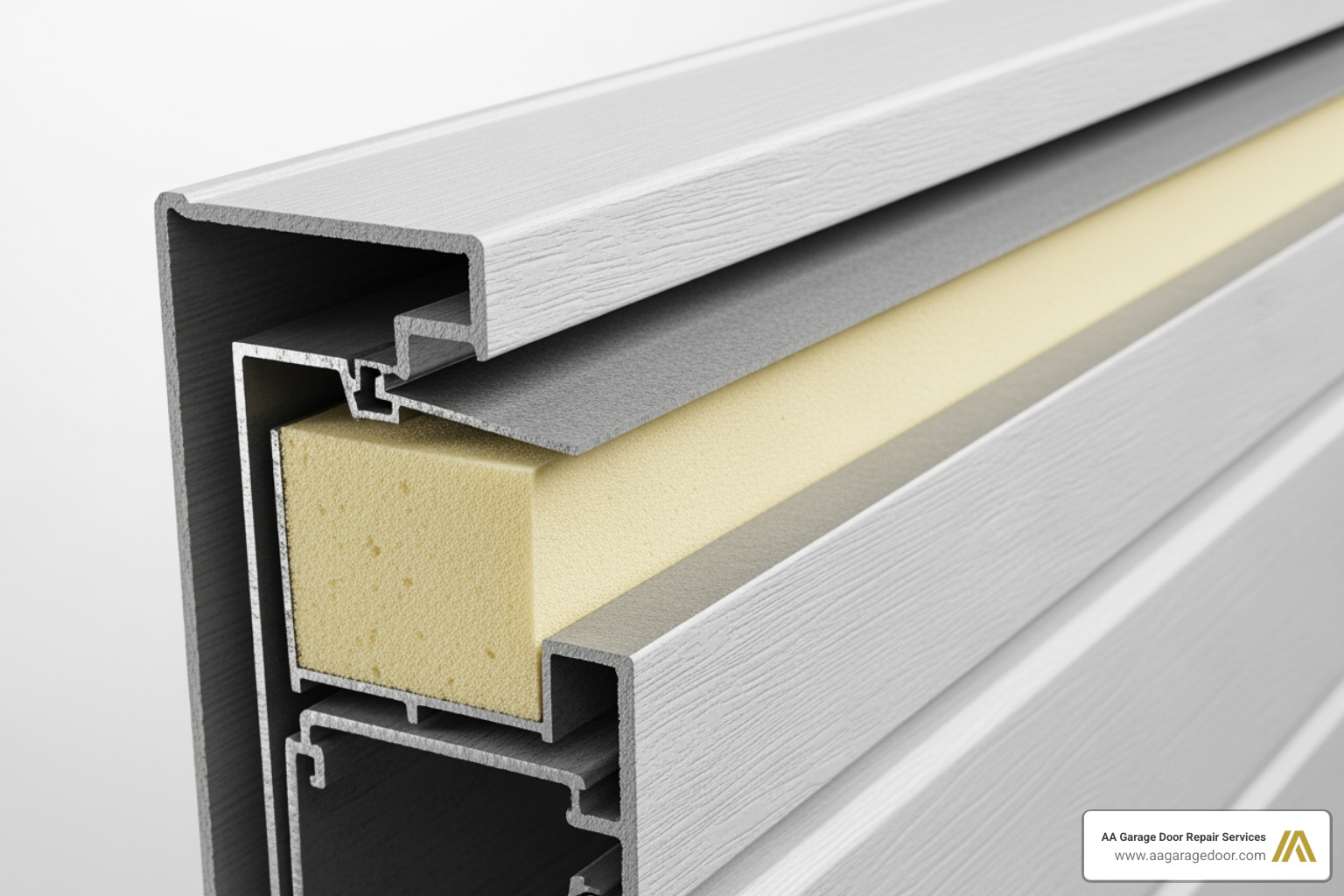
Insulation Types: Polyurethane vs. Polystyrene
When we talk about insulation in garage doors, two main types dominate the market: polyurethane and polystyrene. Each offers distinct advantages:
- Polyurethane Insulation: This is a dense foam that is injected into the door sections during manufacturing, where it expands and chemically bonds to the steel skins. This process creates a strong, monolithic panel that is incredibly rigid and offers superior thermal efficiency. Polyurethane offers a higher R-value per inch than polystyrene due to its denser composition. For instance, the American Door 8300 Series, which uses foamed-in-place polyurethane, achieves an R-value of 12.12. Higher-end models like the Overhead Door Thermacore series boast R-values up to 27.4 with polyurethane. This type of insulation is ideal for maximizing energy savings and durability, especially in extremely cold climates.
- Polystyrene Insulation: This type uses rigid foam panels that are cut to fit within the steel frame of the garage door. While not as dense as polyurethane, polystyrene still provides good thermal performance and sound dampening. It’s often found in mid-range insulated steel garage doors, offering a good balance of cost and effectiveness. For example, Raynor’s EnergyCore EC200 uses expanded polystyrene to achieve an R-value of 10, while the CHI Overhead Doors 4280 series reaches an R-value of 13.36.
Understanding R-Value and U-Factor
When evaluating the thermal performance of an insulated steel garage door, you’ll encounter two important metrics: R-value and U-factor. We want to make sure you understand what they mean for your home.
- R-Value: This measures a material’s thermal resistance, or its capacity to resist heat flow. A higher R-value indicates better insulation. For homeowners in colder regions like the Twin Cities and Western WI, we recommend aiming for a garage door with an R-value of at least 13 for adequate insulation. For particularly severe climates, an R-value of 16 or higher is recommended to ensure maximum comfort and energy savings. A higher R-value means less heat loss in winter and less heat gain in summer, making your garage more stable year-round. You can learn more about R-value from the experts at the U.S. Department of Energy.
- U-Factor: This measures the rate of heat transmission through a material. Unlike R-value, a lower U-factor indicates better thermal performance. For example, Overhead Door’s Thermacore Model 5760 has an impressive U-factor of 0.10, corresponding to an R-value of 17.5. Both R-value and U-factor are independently tested and verified metrics that help us evaluate the true energy efficiency of a garage door.
Construction Layers for Strength and Efficiency
The construction of an insulated steel garage door refers to the number of layers that make up the door panel. More layers generally mean better insulation, increased durability, and a more finished appearance.
- Single-Layer: This is the most basic construction, typically consisting of a single sheet of steel. It offers no insulation and is best suited for detached garages where temperature control is not a concern. While affordable, it provides minimal protection against the elements and noise.
- Double-Layer: These doors feature an exterior steel skin backed by a layer of insulation, often polystyrene, which is then covered by a vinyl or plastic backer. This construction offers a good balance of performance and value, providing moderate insulation and sound dampening. It’s a popular choice for attached garages in moderate climates, helping to reduce energy costs and improve comfort. The Clopay Classic™ Steel door offers this option with solid polystyrene panels.
- Triple-Layer: Often referred to as “sandwich construction,” these doors consist of an exterior steel skin, a dense insulation core (typically polyurethane), and an interior steel skin. This configuration provides superior energy efficiency, exceptional durability, and a finished look from both inside and out. The polyurethane insulation is often bonded to both steel layers, adding significant rigidity and dent resistance. Many premium insulated steel garage doors fall into this category, offering R-values well into the teens and twenties. Amarr describes its triple-layer steel doors as offering superior energy efficiency, exceptionally quiet operation, and extra durability.
- Four-Layer: This construction takes the triple-layer design and adds a decorative overlay, often made of composite or wood, to the exterior. This allows for improved aesthetic options, mimicking the look of traditional carriage house doors or custom wood designs, while retaining the insulation benefits and durability of the steel core. Haas Door’s 600 and 700 series, for example, offer deep embossed wood grain looks on galvanized steel.
Top Insulated Steel Garage Door Models
When we help you choose an insulated steel garage door, we look for models that combine high R-values, robust construction, and reliable brands known for their performance in cold climates. Here are some of the leading models and types we often recommend:
For Maximum Efficiency: Leading Triple-Layer Steel Doors
If energy efficiency is your top priority, especially in our challenging Minnesota and Wisconsin winters, we steer you towards triple-layer construction with high-density polyurethane insulation.
- Clopay Intellicore Insulated Garage Door: Clopay’s Intellicore technology uses a proprietary polyurethane foam that fills the entire door, providing exceptional insulation and strength. These doors boast R-values up to 20.4, making them a powerhouse against the cold. Their sound-absorbing properties are also a huge plus.
- Overhead Door Thermacore Series: Known for their premium construction, Thermacore models like the 5760 offer steel-polyurethane-steel construction with thermal breaks and between-section seals. The Model 5760 has an R-value of 17.5 (U-factor of 0.10), while other Thermacore models can reach R-values up to 27.4, providing industry-leading thermal performance.
- Wayne Dalton Model 8000 Series: These doors are recognized for their robust construction and impressive insulation. The Model 8000 offers R-values up to 18.4, providing excellent thermal protection and durability.
- Haas Door 700 Series: With a 1-3/4” thick construction and environmentally compliant polyurethane foam, the 700 Series achieves an impressive U-factor of 0.093, offering more than six times the insulating value of wood or non-insulated doors. This translates to a very high R-value, making it an excellent choice for energy efficiency.
For Balanced Performance and Value: Trusted Industry Models
For homeowners seeking a great balance of insulation, durability, and aesthetic options without reaching the absolute highest R-values, these models offer compelling value:
- Amarr Heritage Garage Door: The Amarr Heritage line offers good insulation with R-values up to 14.5, providing a significant upgrade over uninsulated doors. These doors are known for their classic designs and reliable performance.
- CHI Overhead Doors 4280 Series: This series provides a solid R-value of up to 13.36, making it a strong contender for effective insulation in cold climates. CHI doors are well-regarded for their craftsmanship and variety of styles.
- Northwest Door Insulated Steel Garage Doors: Northwest Door offers a range of insulated steel options, with R-values up to 18, providing excellent thermal performance and a durable build.
- Haas Door 600 Series: Slightly less thick than the 700 Series at 1-3/8”, the 600 Series still boasts a very respectable U-factor of 0.106, meaning it delivers more than five times the insulating value of non-insulated doors. It uses environmentally compliant polyurethane foam and offers a wide range of aesthetic choices.
- Raynor EnergyCore EC200: This model features expanded polystyrene insulation, achieving an R-value of 10. While a commercial door, its robust construction and insulation make it suitable for residential applications where a balance of performance and value is desired.
- American Door 8300 Series: With foamed-in-place polyurethane insulation, this series offers an R-value of 12.12. It combines strength, thermal efficiency, and an attractive wood-like appearance.
- Model 3251 Insulated Ribbed Steel Doors: This commercial door, with its polystyrene insulation, provides an R-value of 8.00. While a lower R-value, it’s a durable option for commercial or heavy-duty residential use in specific scenarios.
Key Features to Consider When Choosing Your Insulated Steel Garage Door
Beyond the R-value and insulation type, a few other factors are crucial when selecting the perfect insulated steel garage door for your home in St. Paul, Woodbury, Hudson, or Baldwin. We always consider these points to ensure you get a door that meets your needs and exceeds your expectations.
Aesthetics: Matching Your Door to Your Home’s Style
Your garage door is a significant part of your home’s facade, often accounting for up to 40% of its visible exterior. We believe it should complement your home’s architectural style and boost its curb appeal.
Insulated steel garage doors offer an incredible array of aesthetic options:
- Panel Designs: Choose from traditional Raised Panel, neat Recessed Panel, sleek Flush Panel, or contemporary Plank designs. Brands like Clopay and Haas offer numerous panel options.
- Colors and Finishes: Beyond standard painted finishes, many manufacturers provide premium colors, matte options (like Clopay’s Lustra™ matte), and incredibly realistic wood-grain finishes. Haas Door, for example, offers various wood grain options such as Cedar Plank, English Oak Plank, and American Walnut Plank, some with a 12-year finish warranty. You can even find custom color matching with major paint brands like Sherwin Williams.
- Window Options: Add natural light and visual interest with various window styles. Options include clear, frosted, decorative glass, or insulated glass for improved thermal performance. You can even find unique features like Haas Door’s translucent mirror glass. Explore custom garage door options to find the perfect look.
Weather Sealing and Thermal Breaks
Even the highest R-value insulation won’t perform optimally without proper weather sealing. This is where the details truly matter. We look for insulated steel garage doors that incorporate:
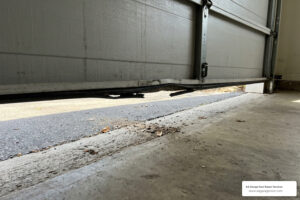
- Bottom Seals: A heavy bottom weather seal that flexes to fit the contour of your garage floor is essential for blocking drafts, water, and debris. These are often made of durable vinyl or EPDM rubber.
- Perimeter Seals: High-quality weatherstripping along the sides and top of the door frame creates a tight seal when the door is closed, preventing air infiltration.
- Between-Section Seals: For sectional doors, seals between each panel are crucial. Many premium insulated steel garage doors use tongue-and-groove construction with rigid vinyl caps or thermal breaks between sections to minimize metal-to-metal contact and prevent temperature transfer. This “full thermal break” is a key feature in doors like the Haas 600 and 700 Series, ensuring that cold from the outside doesn’t conduct through the door’s structure. Effective weather sealing is crucial for preventing drafts and heat loss.
Warranties, Wind Load, and Maintenance
Your insulated steel garage door is a long-term investment, and understanding its warranty, structural capabilities, and maintenance needs is vital.
- Warranties: Always review the warranty details carefully. Look for comprehensive coverage on the door sections (especially against rust-through and delamination of insulation), the finish, and hardware. Many leading brands offer limited lifetime warranties on door sections and substantial warranties (10-12 years) on finishes. For example, Haas Door offers a Lifetime Rust-Through & Delamination Warranty and a 10-year finish warranty (12 years for plank options) on their 700 Series.
- Wind Load Options: For homes in areas prone to high winds, wind load-rated doors are essential. These doors feature reinforced construction to withstand specific wind pressures, ensuring compliance with local building codes and enhancing safety. Manufacturers like Haas and Overhead Door offer various wind load options to meet regional requirements.
- Maintenance: One of the great advantages of insulated steel garage doors is their relatively low maintenance. The durable baked-on finishes mean you won’t need to paint them regularly. However, routine maintenance is still crucial for longevity. We recommend annual inspections, lubricating moving parts, and checking weather seals. This helps prevent minor issues from becoming major problems. In colder regions like ours, diligent maintenance is even more important to combat the effects of freezing temperatures and ice. We can help you with regular garage door maintenance and address common questions like, do garage doors need more maintenance in colder regions?.
Frequently Asked Questions about Insulated Steel Garage Doors
How much more does an insulated steel garage door cost?
The cost of an insulated steel garage door typically ranges from 20-50% more than a non-insulated model. This price difference depends on several factors, including the door’s size, its R-value (higher R-values generally cost more), the brand, the type of insulation (polyurethane usually costs more than polystyrene), and the aesthetic features you choose. While the initial investment is higher, the long-term energy savings and increased home resale value often offset this cost. For a precise estimate custom to your home, we recommend checking our garage door installation cost guide or contacting us for a personalized quote.
Can I insulate my existing steel garage door?
Yes, it is possible to add insulation to an existing steel garage door using DIY kits that typically involve polystyrene panels. These kits can offer some improvement in thermal performance and noise reduction. However, it’s important to manage expectations. A DIY insulated door will not match the structural integrity, energy efficiency, or finished appearance of a factory-insulated triple-layer insulated steel garage door. Factory-insulated doors feature insulation that is chemically bonded to the steel skins, creating a rigid, seamless unit with superior R-values and durability. For optimal performance, especially in our cold climate, we always recommend a professionally installed, factory-insulated door.
How long do insulated steel garage doors last?
With proper installation and diligent maintenance, a high-quality insulated steel garage door can easily last 20 to 30 years, and often even longer. The inherent durability of steel, combined with the added rigidity from the insulation, contributes to a long lifespan. Regular maintenance, such as lubricating moving parts, checking weather seals, and addressing any minor repairs promptly, will help ensure your door continues to operate smoothly and efficiently for decades. Our team at AA Garage Door is always here to provide the necessary maintenance services to extend the life of your door.
Stay Warm and Secure with a Professional Installation
An insulated steel garage door is a significant upgrade for any home, especially in the challenging climates of Minnesota and Western Wisconsin. It improves energy efficiency, provides superior durability, reduces noise, and boosts your home’s curb appeal. The key is to select a door with the right combination of insulation, construction, and features for your specific needs and budget. Homeowners who combine a high-quality door with professional installation from a reputable local company achieve the most consistent long-term performance.
Choosing the right door is only half the battle. Professional installation by a trusted local company ensures your door operates safely, efficiently, and qualifies for its full warranty. For over 20 years, AA Garage Door has been the go-to expert for homeowners in the Twin Cities area, including St. Paul, Minneapolis, Woodbury, Hudson WI, and Baldwin WI. Our team can help you select and install the perfect insulated steel garage door to keep your home comfortable and secure all year round.
Ready to upgrade? Explore our insulated garage door installation services to get started.