Why Quick Roll Up Door Fix Solutions Save Your Business
Roll up door fix issues can shut down your business operations faster than you’d expect. A malfunctioning commercial door compromises security, disrupts workflows, and poses a safety risk. For businesses in the Twin Cities, getting a fast, reliable garage door repair is non-negotiable. Whether your door won’t open, makes grinding noises, or gets stuck halfway, these problems demand immediate attention.
Common roll up door problems include:
- Door won’t open/close: Check the power supply and circuit breakers first.
- Loud grinding noises: This often points to worn bearings or a lack of lubrication.
- Door moves slowly: The tracks may need cleaning and the moving parts may need lubrication.
- Stuck halfway: Look for obstructions in the tracks or misaligned sensors.
- Off-track door: Stop using the door immediately as this requires professional repair.
- Broken springs: This is a safety hazard; call professionals right away.
While basic troubleshooting can resolve some issues, problems like broken springs, motor failures, and structural damage require expert intervention. As the owner of AA Garage Door LLC, I’ve seen how proper roll up door fix techniques save businesses thousands in replacement costs. My team handles everything from emergency repairs to preventive maintenance, ensuring your commercial doors operate safely and reliably.
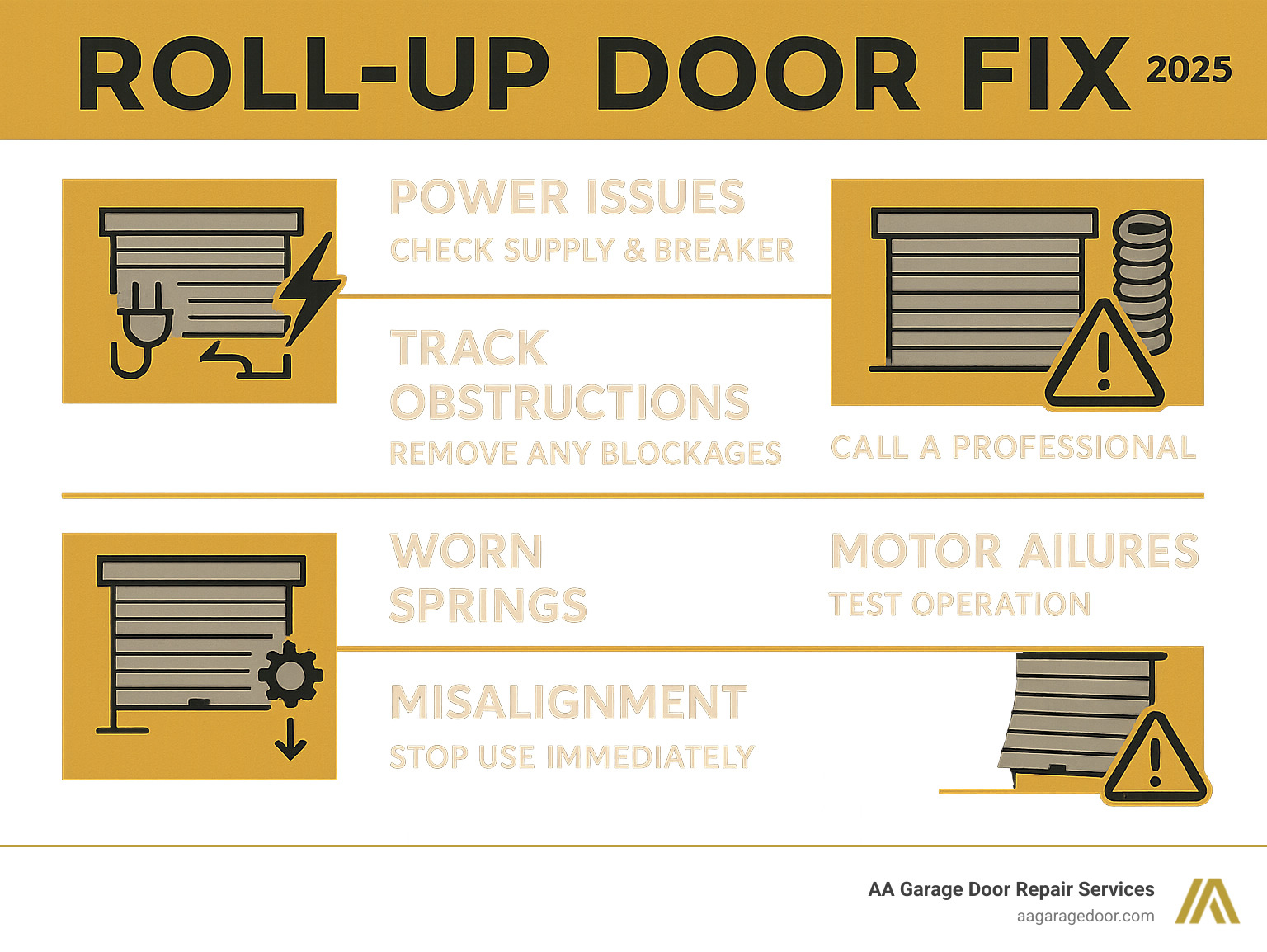
Common Roll-Up Door Problems & When to Call for Help
When your commercial roll-up door acts up, it can feel like your business is under siege. Knowing whether you can handle a problem or need to call in professionals is key. After years of roll up door fix emergencies across St. Paul and the Twin Cities, we’ve seen it all.
- Power Problems: Before assuming the worst, check for simple issues like a tripped circuit breaker or dead remote batteries.
- Slow or Jerky Movement: A door that stutters or hesitates usually needs lubrication or has worn-out rollers.
- Unusual Noises: While some noise is normal, grinding from the motor, squealing from dry parts, or banging from misaligned components are red flags.
- Off-Track Doors: If the panels jump out of their guide rails, the door becomes a serious safety hazard. Never try to force it back into place.
- Visible Damage: Dents and warped slats might seem cosmetic, but they can jam your door and compromise security.
| Problem | DIY Safe? | Professional Needed? |
|---|---|---|
| Door Won’t Open | Check power, batteries | Motor failure, broken springs |
| Loud Noises | Basic lubrication | Grinding motor sounds |
| Stuck Door | Clear debris, clean tracks | Off-track, structural damage |
Signs You Need a Professional Immediately
Some problems demand immediate professional help. If your door slams shut unexpectedly, you’re likely dealing with broken or failing springs, which is extremely dangerous. Persistent grinding motor noises suggest internal motor problems that require specialized tools.
Frayed or broken cables and visible gaps in torsion springs are non-negotiable emergencies. These components are under enormous tension, and their failure can be catastrophic. Similarly, if your door is visibly crooked or off-track, stop using it immediately. Don’t try to muscle it back into position.
If your DIY attempts repeatedly fail, it’s a clear sign that an underlying issue needs professional diagnosis. Your safety and business operations depend on knowing when to step back and call for help. Some fixes aren’t worth the risk.
DIY Troubleshooting: Basic Steps Before You Call
Before calling for a professional roll up door fix, some basic detective work can often solve the problem, saving you time and money. Think of it as checking if a computer is plugged in before calling tech support.

The DIY Roll Up Door Fix: What You Can Safely Handle
Power Supply: Check your circuit breaker first. In a commercial setting, shared circuits can easily trip. Also, ensure the opener is securely plugged in and try replacing the remote control batteries.
Obstructions: Visually inspect the door’s tracks for debris like dirt, small stones, or packaging material. Also, check the safety sensors near the bottom of the tracks. Sometimes they just need a gentle cleaning or a slight adjustment to restore alignment.
Lubrication: Stiff, noisy rollers and hinges can often be fixed with a silicone-based lubricant (never use grease or oil, as they attract dirt). Apply it to rollers, hinges, and springs every few months to keep the door operating smoothly. The tracks also benefit from cleaning and a light silicone spray.
Hardware: Daily vibrations can loosen nuts and bolts. Gently tighten any loose hardware on brackets and hinges with basic tools, but be careful not to overtighten.
Emergency Release: Familiarize yourself with the emergency release cord. Test it occasionally to ensure you can operate the door manually during a power outage and know how to re-engage it.
For your toolkit, keep work gloves, silicone-based lubricant, clean rags, a screwdriver set, a wrench set, and a small brush for track cleaning. If these steps don’t solve the issue, it’s time to call in the professionals.
The Professional Roll Up Door Fix: Diagnosis and Repair
When DIY efforts fail or safety is a concern, it’s time for a professional. Technicians follow a methodical process, using experience and specialized tools to diagnose the root cause of the problem, much like a doctor diagnosing an illness.

A professional’s diagnostic process involves a trained eye for subtle issues you might miss, like a slight wobble or a change in motor pitch. They use tools like multimeters for electrical issues, laser alignment tools for precision, and winding bars for safely handling high-tension torsion springs.
A Step-by-Step Guide to Your Professional Roll Up Door Fix
A professional roll up door fix begins with a comprehensive diagnosis to find the root cause, not just treat symptoms. The process typically involves:
- Securing the Door: The technician will lock the door in place and disconnect power before starting any work.
- Managing Spring Tension: Using specialized winding bars, they safely release and adjust spring tension. Proper balance is critical for the door’s operation and longevity. For more details, the process of spring tension adjustments is quite complex.
- Replacing Worn Components: Worn-out springs, frayed cables, and damaged rollers are replaced with parts matched to your door’s specifications. A key sign of wear is black dust around bearing plates, which indicates metal grinding on metal.
- Re-tracking and Aligning: An off-track door is carefully guided back into its rails, and any underlying track damage is addressed to prevent recurrence.
- Testing Motor and Limits: The motor is tested for faults, and the limit switches, which tell the opener when to stop, are recalibrated to ensure the door opens and closes fully.
- Final Safety Inspection: A final check of safety sensors, emergency releases, and all hardware ensures the door is operating safely before the job is complete.
Attempting these complex repairs without training risks serious injury and can lead to more significant damage.
The Best Fix is Prevention: Essential Maintenance for Longevity
The best roll up door fix is the one you never have to make. Proactive care is your secret weapon for extending your door’s lifespan and avoiding costly, business-disrupting surprises.

Benefits of a Preventive Maintenance Program
A well-maintained door increases its lifespan, reduces downtime, improves safety, and lowers long-term repair costs. With consistent care, a commercial roll-up door can last 10 to 15 years, with some components like torsion springs rated for up to 50,000 cycles. Neglect, however, can slash that lifespan to less than 5 years, especially in harsh climates. This leads to a higher risk of failure, more expensive repairs, and significant safety hazards. For more expert guidance, see this guide on Preventative Maintenance for Rolling Steel Doors (Roll-Up Doors).
Your Essential Maintenance Checklist
Follow this simple maintenance schedule:
Monthly:
- Visually inspect cables, rollers, and hardware for wear, rust, or loose parts.
- Test the door’s balance. Disengage the opener and lift the door halfway; it should stay put. If it drifts, the springs need professional adjustment.
- Test safety features like the auto-reverse and the emergency release.
- Wipe down tracks to remove debris.
Quarterly:
- Lubricate all moving parts (rollers, hinges, springs, bearings) with a silicone-based spray.
- Thoroughly clean the tracks and apply a light coat of silicone lubricant.
Annually:
- Schedule a professional inspection and tune-up. A technician will perform comprehensive checks, adjust spring tension, tighten hardware, and inspect electrical components to catch potential issues early. For fire-rated doors, annual drop testing is often required by code.
Deeper Dive: Understanding Key Roll-Up Door Components & Issues
Understanding your roll-up door’s mechanics helps you spot problems early. When one component fails, it can throw the entire system off balance.
Misalignment: Often caused by improper installation, vehicle impacts, or worn parts, misalignment makes the door rub against its tracks, causing uneven wear and operational problems. Proper setup is crucial, as detailed in these considerations for stress-free sheet door installation.
Spring Tension: This must be perfectly balanced. If springs are too tight, the door will resist closing. If too loose, it will be heavy and may slam shut. Imbalance strains the motor and causes premature wear on other parts.
Worn Part Signs: Be alert for telltale signs. Black dust around bearing plates indicates metal grinding. Frayed cables have visible broken strands. Cracked plastic rollers cause jerky, noisy movement. A sagging door often points to worn springs or cables.
Safety Features: The safety edge on the bottom of the door detects obstructions and reverses its direction. The emergency release cord allows you to disengage the motor during a power failure.
Fixing Cosmetic Damage: Dents and Scratches
For your business’s image, cosmetic damage matters. First, assess if a dent or scratch is purely cosmetic or if it impedes the door’s function. For minor dents, one person can hold a steel pipe against the dent from inside while another provides counter-pressure with a board on the outside, followed by careful tapping with a hammer. For touch-up paint, always order from the manufacturer to ensure proper adhesion and avoid voiding your warranty. Clean and prep the area before applying thin coats of paint.
Frequently Asked Questions about Roll Up Door Fixes
As a family-owned business serving the Twin Cities since 2001, we’ve heard nearly every question about roll up door fix issues. Here are the most common ones.
How often should a commercial roll-up door be serviced?
For high-traffic doors cycling dozens of times a day, we recommend professional servicing at least annually. For lighter use, every two years may suffice. However, your staff should perform monthly visual inspections and lubrication regardless of professional service frequency. This proactive approach catches minor issues before they become emergencies.
Can I fix a broken roll-up door spring myself?
Absolutely not. We cannot stress this enough: never attempt to repair or replace a broken roll-up door spring yourself. Torsion springs are under extreme tension and can cause severe injury or death if handled improperly. This task requires specialized tools, training, and safety equipment. Always leave spring work to trained and insured professionals.
What is the typical lifespan of a commercial roll-up door?
With regular maintenance, a quality commercial roll-up door can last 10 to 15 years or more. Key factors are usage frequency, component quality, and maintenance consistency. Torsion springs are typically rated for 20,000 to 50,000 cycles. Neglecting maintenance can slash the door’s lifespan to less than 5 years. The harsh weather in areas like St. Paul makes regular upkeep even more critical to prevent premature failure and costly replacements.
Secure Your Business with Expert Roll Up Door Repair
A faulty roll-up door is more than an inconvenience; it’s a risk to your security, safety, and daily operations. It can leave inventory vulnerable, create hazards for staff, and bring your business to a halt. While basic troubleshooting can handle minor issues, complex problems like high-tension springs, off-track doors, and motor failures require professional expertise. Attempting these repairs yourself is dangerous.
Regular preventative maintenance is your best defense against unexpected breakdowns. The investment in routine care pays for itself through extended equipment life and uninterrupted operations.
At AA Garage Door, we’ve been the trusted choice for businesses throughout the Twin Cities area since 2001. We understand that when your door is down, you can’t afford to wait. That’s why we offer fast, reliable 24/7 emergency service.
Don’t let a broken door disrupt your business. Whether you need routine maintenance or an emergency repair, our experienced technicians are ready to get your door back in operation quickly and safely. Contact us today for a free estimate or to schedule service.