Why New Garage Door Installation Matters for Twin Cities Homeowners
A new garage door installation is one of the smartest investments for enhancing your home’s security, energy efficiency, and curb appeal. For homeowners seeking expert service, AA Garage Door provides comprehensive solutions custom to the unique needs of the Twin Cities region. A new door not only transforms your property’s appearance but also increases its value, with a recent Cost vs. Value Report showing a return on investment that can exceed 100%.
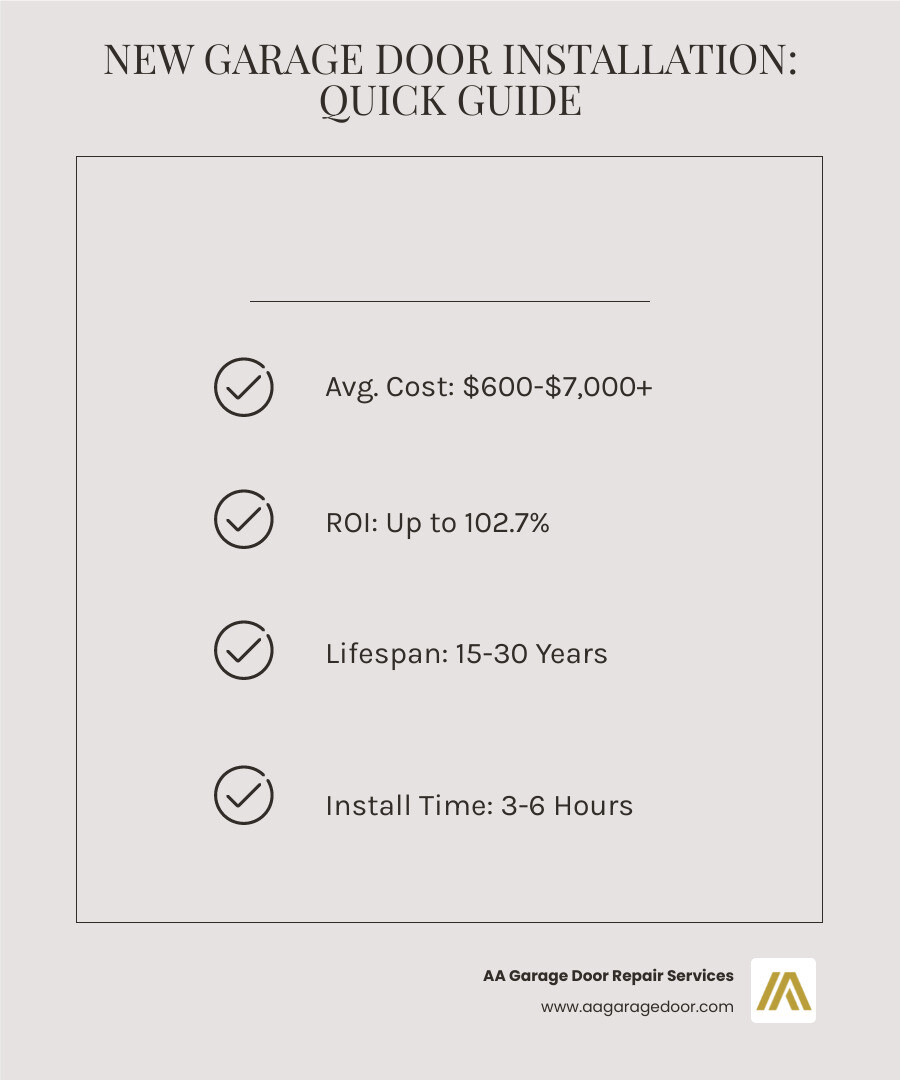
Quick Guide to New Garage Door Installation:
- Average Cost: $600-$7,000+, depending on material and style
- Installation Time: 3-6 hours for standard doors
- Expected Lifespan: 15-30 years with proper maintenance
- ROI: Up to 102.7%
- Best Choice: Professional installation over DIY for safety and warranty
However, installing a garage door is not a DIY project. These doors weigh hundreds of pounds and feature high-tension springs that can cause serious injury or death if mishandled. For homeowners in the Twin Cities metro dealing with harsh Minnesota winters, correct installation is critical to prevent air leaks and operational failures. Professional garage door replacement services are essential for safety, performance, and peace of mind.
I’m David Sands, Owner of AA Garage Door LLC. Since 2001, our family-operated company has completed thousands of new garage door installations across Wisconsin and Minnesota, helping homeowners find the perfect door with transparent pricing and 24/7 emergency service.
Is It Time for a Replacement? Key Signs to Look For
Deciding between repair and replacement can be difficult, but a new garage door is often the smarter long-term investment for improved efficiency and peace of mind. What seems like a minor issue can signal a larger problem, and repeated repair costs can quickly exceed the price of a full replacement.
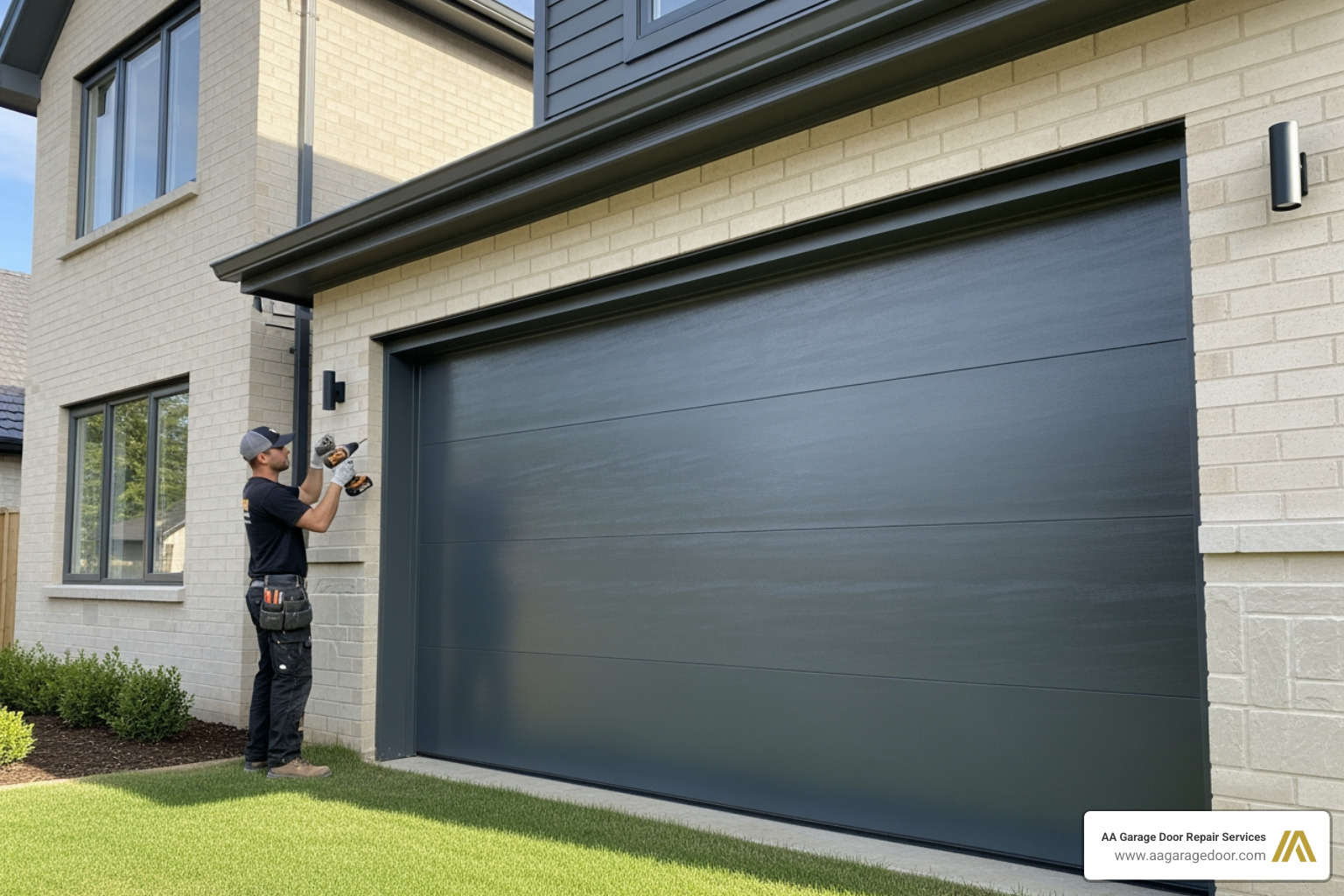
Here are key signs that it’s time to replace your garage door:
- Visible Damage: Significant rust, warping, or cracked panels compromise the door’s structural integrity and curb appeal. This damage can lead to operational failure and indicates the door is ready for retirement.
- Frequent Breakdowns: If you are constantly calling for repairs on components like springs, openers, or rollers, the cumulative cost and inconvenience often justify a new, reliable door.
- Excessive Noise: Loud grinding or scraping noises during operation signal serious mechanical wear on rollers, springs, or the opener. While lubrication helps, persistent noise indicates impending failure.
- Outdated Safety Features: Older doors may lack modern auto-reverse sensors (photoelectric eyes), which are essential for protecting your family, pets, and property from accidental closure.
- Poor Energy Efficiency: A non-insulated door, especially in Minnesota and Wisconsin, causes significant energy loss. Upgrading to an insulated model can lower utility bills and make your home more comfortable. Learn more about when to consider garage door repair vs. replacement.
Choosing the Perfect Garage Door for Your Home
Selecting the right garage door requires balancing aesthetics, durability, maintenance, and budget. A new door can instantly transform your home’s look while improving security and energy efficiency.
Understanding Garage Door Materials
The material is a primary factor in your door’s appearance, durability, and cost, especially for the weather in St. Paul and Western WI.
- Steel: The most popular choice, steel doors are durable, low-maintenance, and affordable ($600-$2,000 installed). Insulated steel is ideal for Minnesota winters.
- Wood: Offers unparalleled natural beauty and insulation but comes at a premium price and requires regular maintenance to prevent warping.
- Aluminum: Lightweight and rust-resistant, but less durable and more prone to dents than steel.
- Composite (Faux Wood): Delivers the look of wood without the high upkeep, balancing style and practicality at a higher price than steel.
- Fiberglass: Resists denting and rust but can become brittle in very cold climates if not specifically designed for it.
- Vinyl: A budget-friendly, durable, and low-maintenance option that won’t rust or dent, though color choices are often limited.
For more advice, see our 10 Tips for Choosing the Right Garage Door Material.
Exploring Different Garage Door Styles
The style of your garage door defines your home’s exterior character.
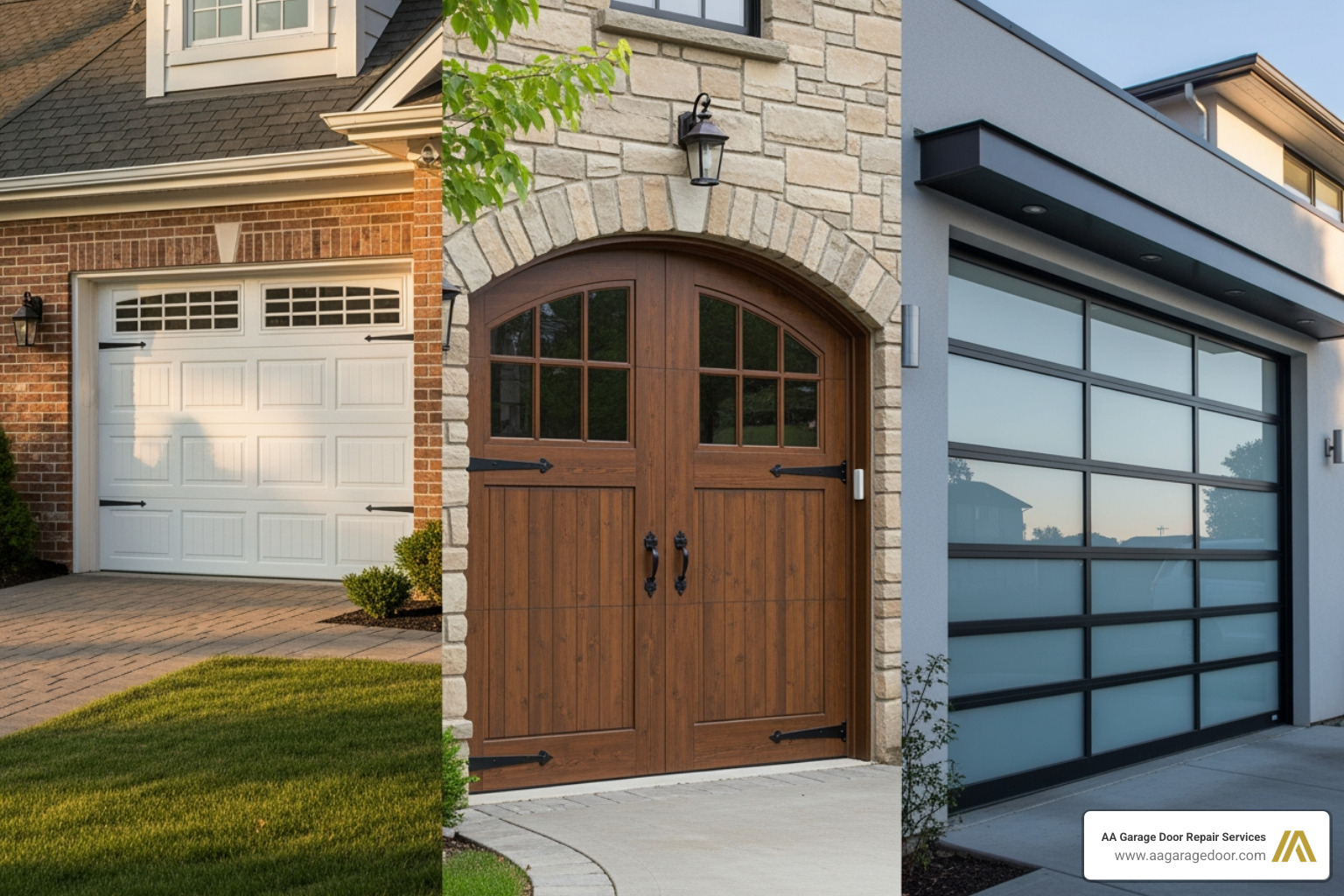
- Sectional Doors: The most common and versatile residential style, made of hinged panels that roll up along ceiling tracks. They are often the most affordable choice ($300-$800 for basic installation).
- Carriage House Doors: Evoke old-fashioned charm but operate like modern sectional doors, adding classic elegance. This premium style costs $1,000 to $10,000.
- Roll-Up Doors: Typically used in commercial settings, these doors coil into a compact roll, making them durable but more expensive for residential use ($500-$1,500).
- Modern/Contemporary: Feature clean lines and materials like glass and aluminum for a sleek, minimalist look.
Learn more with our guide on 10 Things You Need to Know About Garage Door Styles.
Sizing and Insulation
Correct sizing is crucial for function, and insulation is a smart investment for our climate.
- Sizing: Standard single-car doors are 8-9 ft wide, while double-car doors are 16 ft wide. Custom sizes are available. A one-car door installation averages $500-$2,500, while a two-car door averages $750-$4,500.
- Insulation (R-Value): An insulated door regulates garage temperature, reducing energy bills. The R-value measures thermal resistance—a higher value means better insulation. We strongly recommend insulated doors for Minnesota and Wisconsin homeowners. For more details, read our Insulated Garage Doors: Value Guide.
The Complete Cost Breakdown for a New Garage Door Installation
Understanding the cost of a new garage door installation is key for budgeting. The total price ranges from approximately $600 for a basic steel door to over $7,000 for a high-end custom model. We believe in transparent pricing so you know exactly what to expect.
Key Factors Influencing Price
The cost of a garage door installation in areas like St. Paul, MN, is determined by these factors:
- Material: Steel and aluminum are the most affordable ($600-$2,000), while premium materials like fiberglass, vinyl, or wood cost more, with installations potentially reaching $4,000 or higher.
- Size: Larger doors cost more. A single-car door installation averages $500-$2,500, while a two-car door averages $750-$4,500. The largest doors for three-car garages can cost $1,500 to $7,000+.
- Style & Customization: A traditional panel door is the most budget-friendly ($300-$800 for installation), while intricate designs, windows, or premium styles like carriage house doors ($1,000-$10,000) increase the cost.
- Labor: Professional labor adds $300-$500 to the cost but covers expertise, safety, and warranty. Complex installations requiring track modifications will cost more than a standard replacement.
For a detailed breakdown, visit our Garage Door Installation Cost guide.
Additional Costs to Consider
When planning your budget, factor in these potential expenses:
- Old Door Removal: Most professional quotes include removing and disposing of your old door, which typically adds $100-$200 to the project.
- New Garage Door Opener: Upgrading to a new opener can add $300-$700. We recommend assessing your opener’s condition when replacing the door. Learn more in our Garage Door Opener Installation Cost Guide.
- Permits: Depending on your municipality, a permit may be required for a new garage door installation. This is usually a small fee, and your installer can guide you through the process.
The Installation Process: DIY vs. Hiring a Professional
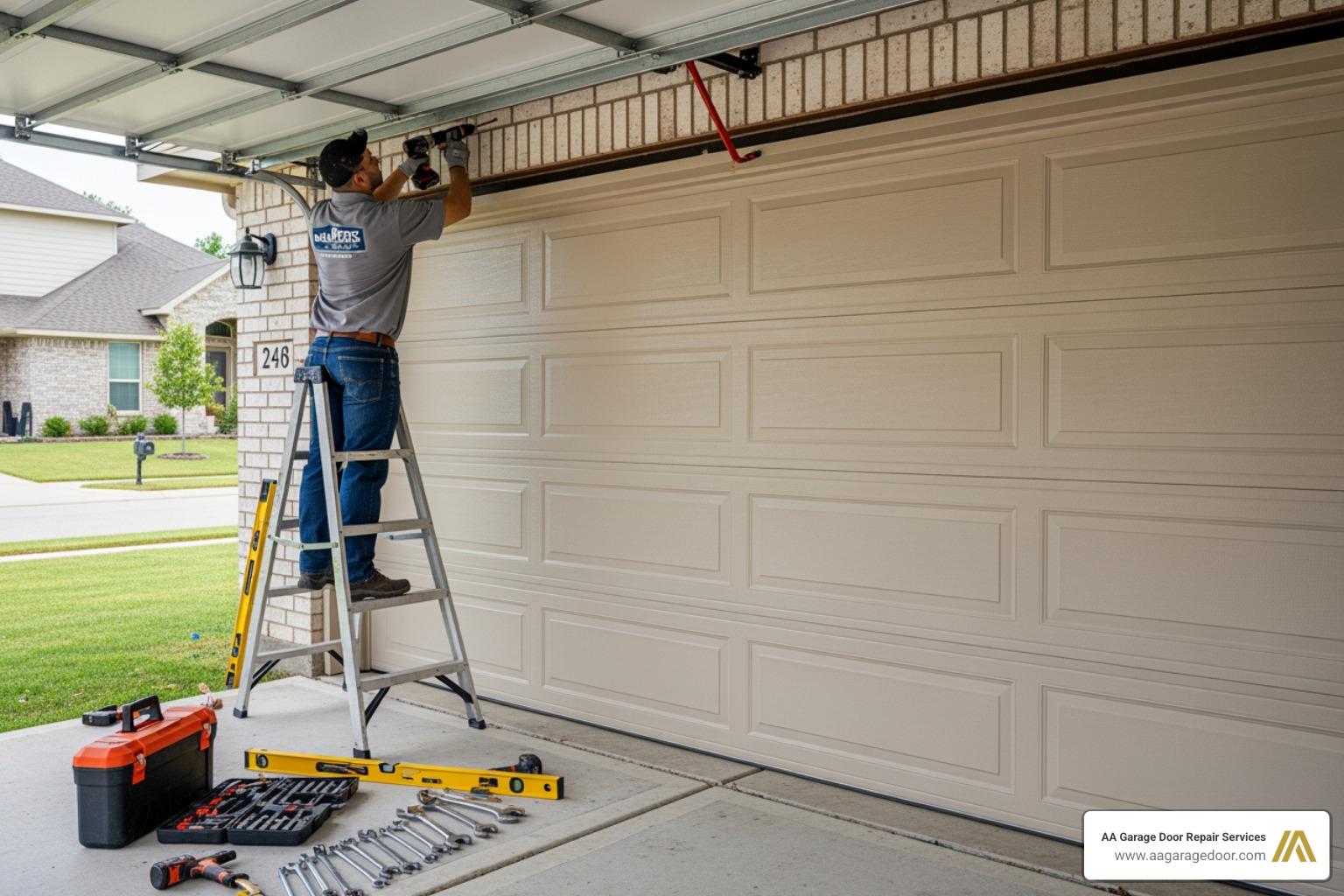
While many homeowners enjoy DIY projects, new garage door installation is a complex and dangerous task best left to trained professionals. Garage doors are extremely heavy, and their high-tension springs can cause serious injury or death if handled improperly.
The Case for Professional New Garage Door Installation
Hiring a professional ensures the job is done safely, correctly, and efficiently. Choosing a reputable company like AA Garage Door is an investment in peace of mind.
- Safety: Our top priority. Professionals have the specialized training and tools (like winding bars) to handle high-tension torsion springs safely, preventing potentially fatal accidents.
- Expertise: Certified technicians can steer unexpected challenges, ensure perfect alignment and balance, and guarantee smooth, quiet operation. This precision prevents premature wear and future repairs.
- Efficiency: A professional team can complete a standard installation in 3 to 6 hours, far faster than a typical DIY attempt, minimizing disruption to your day.
- Warranty: Professional installation protects your manufacturer’s warranty, which is often voided by DIY work. Reputable installers also provide a labor guarantee on their work.
For guidance on choosing the right team, see our article on how to Select the Right Garage Door Repair Service for Safety and Reliability.
Understanding the Professional Installation Steps
A professional new garage door installation follows a precise, multi-step process:
- Careful removal and disposal of the old door and tracks: We safely dismantle the old system and dispose of all materials.
- Preparation of the opening: We inspect the framing and ensure the area is ready for the new tracks.
- Assembly of the new garage door panels: Panels, hinges, and rollers are attached according to manufacturer specifications.
- Installation of the tracks: Vertical, horizontal, and curved tracks are precisely mounted for smooth travel.
- Placement of the door panels into the tracks: Each section is carefully guided into the tracks and secured.
- Installation of the spring system: Torsion or extension springs are installed and carefully wound to the correct tension—a critical step requiring expertise.
- Attachment of the lift cables: Cables are routed and attached, connecting the door to the spring system.
- Installation of the garage door opener: The motor, rail, safety sensors, and wall controls are installed.
- Final testing and adjustments: We test the door’s balance, travel limits, and safety features to ensure optimal, safe operation.
Risks of a DIY New Garage Door Installation
Attempting this project yourself can lead to disastrous consequences.
- Torsion Spring Danger: This is the single biggest risk. These springs are under extreme tension and can release with explosive force, causing severe injury or death.
- Incorrect Installation: An improperly balanced door can get stuck, fall unexpectedly, or cause premature wear on parts, voiding warranties.
- Voided Warranty: Many manufacturers void the product warranty if the door is not installed by a certified technician.
- Heavy Panels: Maneuvering heavy panels alone can lead to injury or damage to the panels and your property.
Post-Installation: Maintenance and Longevity
A new garage door installation is a major investment, and proper maintenance is key to ensuring it lasts for its expected 15- to 30-year lifespan. Regular care prevents minor issues from becoming major repairs, especially with Minnesota’s climate.
Essential Maintenance for Your New Door
Performing these simple checks twice a year will keep your door running smoothly and extend its life.
- Visual Inspection: Look for worn rollers, frayed cables, loose hardware, and bent tracks. Check panels for cracks and weather seals for tears.
- Lubrication: Apply a garage door-specific lubricant (not WD-40) to all moving parts, including hinges, rollers, and springs, to reduce friction and prevent rust.
- Test Safety Features: Test the auto-reverse mechanism by placing a roll of paper towels in the door’s path; it should reverse on contact. Test the photoelectric eyes by waving your foot through the beam; the door should immediately reverse.
- Check Balance: Disconnect the opener and lift the door halfway. It should stay in place. If it moves, the springs need professional adjustment—a job for experts due to the high tension involved.
Regular maintenance is the best way to catch small issues before they escalate. For more tips, read our Pro Tips for Maintaining and Repairing Your Garage Door.
Frequently Asked Questions about New Garage Door Installation
We receive many questions about new garage door installation. Here are answers to the most common inquiries from homeowners in St. Paul, the Twin Cities, and Western WI:
How long does a typical garage door installation take?
A standard professional installation, including removal of the old door, typically takes 3 to 6 hours. Custom doors or complex jobs requiring new framing may take a full day. We provide an estimated timeline during your consultation.
Can I reuse my old tracks when installing a new garage door?
We strongly advise against reusing old tracks. It is best practice to use the new tracks that come with your new door. Each door is engineered to work with its specific hardware for optimal performance, safety, and warranty coverage. Using old tracks can lead to improper function and create significant safety hazards.
What kind of warranty is offered with professional installation?
A professional new garage door installation includes two warranties:
- Manufacturer’s Warranty: This covers the door panels and hardware against defects, with terms varying by brand and material (often 10 years to lifetime).
- Labor Warranty: Reputable companies like ours provide a labor warranty (typically one year) covering the installation work itself. If an issue arises from the installation, we will correct it at no cost.
How does the location of my home affect the cost of garage door installation?
Your location within the Twin Cities metro or Western WI can affect the cost due to varying labor rates and local permit requirements. While material costs are consistent, labor rates can fluctuate based on regional economic factors. Our quotes are customized to your specific location to ensure accuracy.
Conclusion: Transform Your Home with a Trusted Installation Partner
A new garage door installation is a powerful upgrade that improves your home’s curb appeal, security, and value, often with a return on investment exceeding 100%. Due to the complexity and safety risks, partnering with a trusted professional is essential for a flawless, safe, and long-lasting result.
For homeowners in St. Paul, the Twin Cities, and Western Wisconsin, AA Garage Door Services offers expert installation backed by 24/7 availability, transparent pricing, and local expertise since 2001. Don’t risk a DIY disaster; let our experienced team handle your project with the professionalism you deserve.
Ready to upgrade your home? Explore our garage door replacement services or call us at (651) 702-1420 for a free estimate today.