Why Understanding 12×14 Insulated Garage Door Price Matters
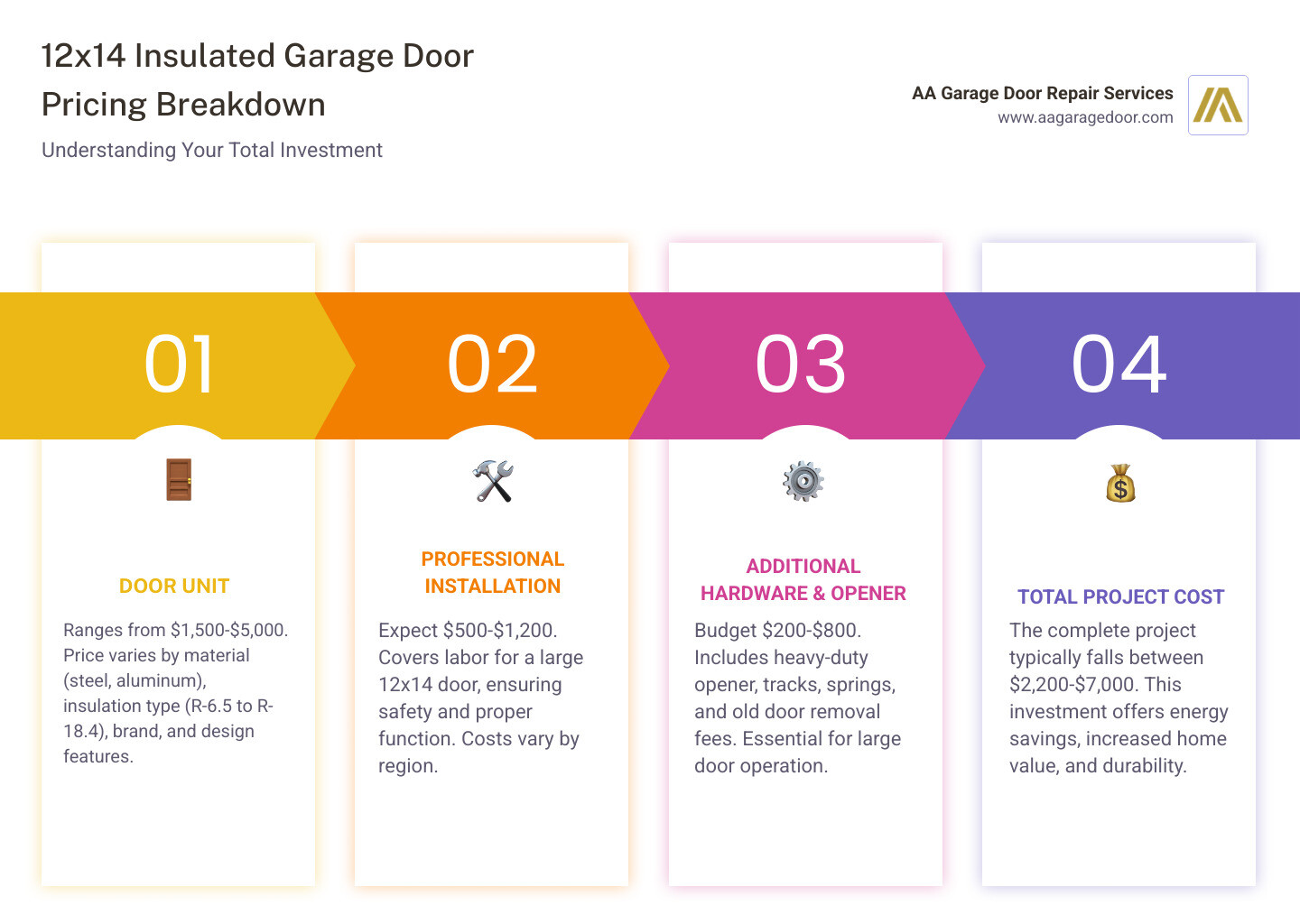
The 12×14 insulated garage door price typically ranges from $1,500 to $5,000 for the door itself, with several key factors driving the final cost. For homeowners comparing options, the most accurate pricing insights come from local specialists such as AA Garage Door Repair Services, whose trusted garage door experts in the Twin Cities can provide real-world quotes based on material, insulation level, and usage. Because a 12×14 door is often used on shops, RV bays, and oversized garages, it demands commercial-grade components even in residential settings.
| Cost Component | Price Range | Key Factors |
|---|---|---|
| Door Only | $1,500 – $5,000 | Material, insulation type, brand, features |
| Professional Installation | $500 – $1,200 | Labor rates, complexity, region |
| Additional Hardware | $200 – $800 | Opener, tracks, springs, removal |
| Total Project Cost | $2,200 – $7,000 | Combined door, installation, and extras |
Material and insulation choices have the biggest impact on price. Commercial-grade models like the Duro Steel Amarr 2412 Series for a 12×14 door are priced at $4,775.98, while basic residential models start closer to $1,500. The difference between non-insulated and insulated doors can add $500 to $1,500 to your total cost, but the energy savings and comfort benefits often justify the investment, especially in cold climates.
This is a significant purchase. A 12×14 door is 168 square feet of opening—larger than many single-car doors—so the material, insulation, and installation quality are paramount. If your current door is broken, outdated, or drafty, understanding what drives the price helps you budget correctly and avoid surprises. You’re not just buying a door; you’re investing in energy efficiency, noise reduction, and long-term durability. For attached garages or heated workshops, the right insulated garage door can reduce heating costs and protect your vehicle and stored items from harsh Minnesota winters.
I’m David Sands, owner of AA Garage Door Repair Services, and I’ve been helping residential customers across the Twin Cities metro understand and steer the 12×14 insulated garage door price landscape for over 23 years. As an authorized Clopay and LiftMaster dealer, I’ve guided hundreds of property owners through the selection, installation, and long-term maintenance of large insulated doors, ensuring they get the best value for their investment.
12×14 insulated garage door price terms to remember:
What is the Average 12×14 Insulated Garage Door Price?
The average 12×14 insulated garage door price falls within a broad spectrum, primarily because this size often bridges the gap between large residential and smaller commercial applications. The price for the door itself, without installation, typically falls within the $1,500 to $5,000 range. This significant range is due to a multitude of factors, from the materials used to the brand reputation and specific features chosen.
For context, commercial-grade doors, which are designed for heavier use and often boast higher durability and insulation values, naturally command a higher price. For instance, a Duro Steel Amarr 2412 Series 12′ X 14′ Commercial INSULATED Overhead Garage Door is listed at $4,775.98. This particular model, a robust commercial door, sits at the higher end of our average range, indicating its quality and intended application. In contrast, residential insulated doors, while still offering excellent performance, might start at a lower price point, typically around $1,500 for a more basic model.
The decision to choose an insulated door over a non-insulated one also impacts the initial investment. While a non-insulated 12×14 door might save you some money upfront, the difference can be substantial. Generally, an insulated 12×14 garage door will cost between $500 to $1,500 more than its non-insulated counterpart. This additional cost, however, is often justified by the long-term benefits in terms of energy savings, comfort, and durability, especially for our customers in the chilly climates of St. Paul, the Twin Cities, and Western Wisconsin. It’s an investment that pays dividends over time.

For more detailed information on the benefits and types of insulated doors, check out our complete guide to insulated garage doors.
Key Factors That Drive the 12×14 Insulated Garage Door Price
Several primary variables determine the final cost of a 12×14 insulated garage door. Because a 12×14 door represents a large surface area of 168 square feet, the choices of material and insulation have a significant impact on both the initial price and long-term energy savings.
How Material Choice Impacts the 12×14 Insulated Garage Door Price
The material of a 12×14 insulated garage door is a pivotal factor in its overall cost, durability, and aesthetic appeal. Each material offers a unique balance of these characteristics, influencing not just the upfront 12×14 insulated garage door price but also its longevity and maintenance requirements.
Steel Garage Doors: These are the most common and often the most cost-effective option for insulated doors. Steel doors offer excellent durability and a wide range of aesthetic choices through various finishes and panel designs. The gauge of the steel is crucial; a lower gauge number (e.g., 24-gauge) indicates thicker, more robust steel, which is more resistant to dents and offers better security. For heavy-duty applications, some commercial doors even use 12-gauge steel, which is approximately 0.1046 inches thick, offering superior dent resistance and structural integrity compared to a 14-gauge door (about 0.0747 inches thick). While a 12-gauge steel door provides exceptional strength, it will also increase the 12×14 insulated garage door price. Most residential steel doors are 24-gauge or 25-gauge.
Aluminum Doors: Lighter than steel, aluminum doors are known for their modern aesthetic, often featuring full-vision glass panels. While the material itself can be more expensive than steel, aluminum doors are resistant to rust, making them a good choice in certain environments. However, they can be more prone to denting than steel, especially thinner aluminum.
Wood and Composite Doors: For those seeking a classic, natural look, wood or composite doors are excellent choices. Real wood doors offer best beauty but require more maintenance and are typically the most expensive option. Composite doors, made from recycled wood fibers and plastics, mimic the look of natural wood without the intense maintenance, offering a more durable and often insulated alternative at a mid-to-high price point.
The choice of material isn’t just about price; it’s about matching the door to your home’s style, your budget, and the demands of our Minnesota climate. A durable material will stand up better to harsh winters and daily use.
To help you make an informed decision, we’ve put together 10 tips for choosing the right garage door material.
How Insulation Type Affects the 12×14 Insulated Garage Door Price
The type and thickness of insulation are primary drivers of the 12×14 insulated garage door price and its performance. Insulation is measured by its R-value, which indicates its thermal resistance—the higher the R-value, the better the insulation.
Polystyrene Insulation: This is a common and often more budget-friendly insulation option. Polystyrene comes in rigid foam panels that are fitted between the steel layers of the garage door. It provides good insulation, with R-values typically ranging from R-6 to R-9. Polystyrene-insulated doors can be 2 inches thick, offering an R-value of 6.64 to 9.05 depending on the specific construction. While effective, polystyrene is not as dense as polyurethane and can sometimes settle over time.
Polyurethane Insulation: Considered a premium insulation, polyurethane foam is injected into the door panels, where it expands to fill the entire cavity. This creates a stronger, more rigid door and offers superior thermal performance for its thickness. Polyurethane-insulated doors typically have higher R-values, ranging from R-12 to R-18.4, and are often 1 3/8 inches to 2 inches thick. For example, some commercial models offer R-16 insulation with a 1 3/4″ thickness. This denser insulation not only provides better thermal efficiency but also adds significant structural rigidity to the door, making it more resistant to impacts and wear.
R-Value Explained: A higher R-value directly translates to better energy efficiency. In cold climates like St. Paul and Western Wisconsin, where winter temperatures can drop to as low as 7 degrees Fahrenheit, a high R-value is crucial for keeping your garage warmer and reducing heat loss from your home, especially if your garage is attached or used as a workshop.
Beyond energy savings, insulation offers a significant benefit in noise reduction. An insulated garage door absorbs vibrations, making its operation much quieter than an uninsulated door. Clopay’s Intellicore® technology, for instance, uses a proprietary polyurethane foam that results in incredibly quiet operation. Studies show an Intellicore® overhead door produces just 80 decibels (dB), compared to an uninsulated door’s 96 dB. This difference is perceived as three times quieter to the human ear, a welcome feature for any homeowner.
For a deeper dive into the value of insulation, refer to our Insulated Garage Doors Value Guide. The improved energy efficiency and quieter operation offered by higher R-value insulation significantly justify the increased 12×14 insulated garage door price.
Brand and Design Influence on Cost
The chosen brand and design elements are significant factors that influence the final 12×14 insulated garage door price. Established brands often command a higher price but typically deliver superior quality, better warranties, and a wider range of customization options.
Major Brands: Reputable manufacturers like Amarr, Clopay, Ideal Door, and Wayne Dalton are well-known in the industry. They invest in research and development, ensuring their doors are durable, energy-efficient, and aesthetically pleasing. For example, Ideal Door offers commercial insulated garage doors with R-values up to 16.2. While the initial investment might be higher for these brands, their reliability and performance often lead to long-term savings and satisfaction. We, at AA Garage Door Repair Services, partner with these leading brands to ensure our customers receive the best products on the market.
Panel Designs: The style of the door panels contributes to both its curb appeal and its cost.
- Flush Panels: These are flat, minimalist panels, often the most economical choice. They offer a clean, modern look.
- Grooved Panels: These feature horizontal lines or grooves, adding a subtle texture and visual interest.
- Raised Panels: This classic design mimics traditional wood carriage house doors, with rectangular sections that are slightly raised. Raised panel styles are what most people envision for a traditional garage door, showcasing depth and symmetrical patterns.
- Carriage House Style: These doors evoke the look of old-fashioned swing-out doors but operate with modern overhead convenience. They often feature decorative hinges and handles, adding a rustic or historic charm. This style can significantly increase the 12×14 insulated garage door price due to their intricate design and detailed craftsmanship.
Window Inserts: Adding windows to your 12×14 insulated garage door can brighten your garage space, especially if it’s used as a workshop, and improve its aesthetic. However, windows also add to the cost. Options range from basic square windows to decorative, architectural, or even insulated glass, each with its own price point.
Decorative Hardware: Embellishments like decorative handles, hinges, and other accents can lift the door’s appearance but will also increase the overall 12×14 insulated garage door price. These are purely aesthetic choices that allow for personalization.
For more inspiration on how different designs can transform your home, explore our 10 things you need to know about garage door styles.
Unpacking the “Extras”: Additional Costs to Budget For
The price of the door itself is only part of the equation. Professional installation, a new opener, and other components are crucial for a complete and functional system. Factoring in these elements from the start gives a more realistic 12×14 insulated garage door price and prevents mid-project surprises for property owners in and around St. Paul and the Twin Cities.
Professional Installation Costs
When considering the 12×14 insulated garage door price, it is essential to factor in professional installation. Due to the door’s significant weight and the complexity of its spring systems, professional installation is not just a recommendation but a matter of safety and performance. A 12×14 door is heavy and involves high-tension components that are dangerous if mishandled.
Typical Installation Cost Range: For a large door like a 12×14, professional installation typically ranges from $500 to $1,200. This cost covers the labor, specialized tools, and expertise required to safely and correctly install the door, tracks, springs, and other hardware. The complexity of the installation, the condition of the existing opening, and any necessary modifications can influence this price.
DIY vs. Professional: A DIY approach is strongly discouraged for large, insulated garage doors. The safety risks associated with torsion springs and the sheer weight of the door are significant. Improper installation can lead to malfunctions, damage to the door or property, and serious injury. Furthermore, most manufacturers’ warranties require professional installation to remain valid.
Labor Rates by Region: Installation costs can vary slightly based on local labor rates. In our service areas of St. Paul, the Twin Cities, and Western Wisconsin, we offer competitive and transparent pricing for our expert installation services. Our team is highly trained and experienced in handling large commercial and residential doors, ensuring a safe and efficient installation every time.
For a detailed breakdown of what goes into installation costs, please visit our page on garage door installation cost. We proudly serve the St. Paul area and surrounding communities.
Garage Door Openers, Hardware, and Removal
Beyond the door and its installation, there are other essential components and services that contribute to the overall 12×14 insulated garage door price.
Opener for Large Doors: A 12×14 insulated garage door requires a robust opener. Standard residential openers might not have the power or durability to handle such a large and heavy door effectively. We recommend heavy-duty models, often with a 3/4 HP or 1 HP motor, to ensure smooth and reliable operation.
- Belt Drive vs. Chain Drive: Belt-drive openers are quieter and smoother, making them ideal for attached garages or homes with living spaces above the garage. Chain-drive openers are generally more economical and durable, suitable for detached garages or commercial applications where noise is less of a concern. The choice will impact the cost, with belt drives typically being more expensive.
Heavy-Duty Tracks and Springs: The sheer size and weight of a 12×14 insulated garage door necessitate heavy-duty tracks and springs. These components are crucial for the door’s balance and longevity. Investing in high-quality, appropriately sized tracks and torsion springs (often commercial-grade) is essential for safe and reliable operation and will be included in the overall hardware cost.
Old Door Removal Fees: If you’re replacing an existing garage door, you’ll also need to budget for the removal and disposal of the old door. This service is typically provided by your installer and can add to the total cost. We handle the environmentally responsible disposal of old doors, saving you the hassle.
To understand all the potential costs involved in upgrading your garage door system, read our guide on how much a new garage door costs.
The Long-Term Payoff: Is an Insulated Door Worth It?
An insulated garage door is more than just a barrier; it’s an upgrade that provides tangible benefits in energy savings, comfort, and home value. In climates with cold winters, like Minnesota where temperatures can drop to as low as 7 degrees Fahrenheit, the value is even more pronounced. We often tell our customers that the slightly higher 12×14 insulated garage door price upfront is an investment that pays for itself over time.
Energy Savings and Comfort
The most immediate and noticeable benefit of an insulated 12×14 garage door is its impact on energy consumption and indoor comfort.
Reduced Heat Transfer: Insulation acts as a thermal barrier, significantly reducing the transfer of heat between your garage and the outdoors. In winter, this means less heat escapes from your garage, and in summer, less heat penetrates it. This directly translates to lower energy bills for heating and cooling your home, especially if your garage is attached.
Lower Energy Bills: For homes with attached garages, an insulated garage door can dramatically reduce the workload on your home’s HVAC system. This is because the garage acts as a buffer zone, preventing extreme outdoor temperatures from directly affecting the adjacent living spaces. This leads to noticeable savings on your utility bills throughout the year.
Attached Garage Benefits: If your garage shares a wall with your living space, or if there’s a room above the garage, an insulated door is almost a necessity. It prevents cold drafts from seeping into your home and keeps the temperatures in adjacent rooms more stable and comfortable.
Workshop Comfort: Many homeowners in the Twin Cities and Western Wisconsin use their garages as workshops, hobby spaces, or even home gyms. An insulated door makes these spaces far more comfortable year-round, allowing you to enjoy your activities without battling extreme temperatures. It also protects sensitive tools and equipment from temperature fluctuations.
Protection for Vehicles and Stored Items: Beyond human comfort, an insulated garage protects your car’s battery, fluids, and tire pressure from extreme cold, potentially extending its lifespan and improving starting performance. It also safeguards stored items like paint, chemicals, and sensitive electronics from freezing or overheating, preventing damage.
For a comprehensive look at how insulation benefits your garage and home, consult our Insulated Garage Doors Complete Guide.
Increased Home Value and Durability
Investing in an insulated 12×14 garage door offers benefits that extend far beyond immediate energy savings, significantly impacting your home’s long-term value and the door’s lifespan.
Curb Appeal and Resale Value: A new, attractive insulated garage door instantly boosts your home’s curb appeal. It’s one of the first things potential buyers see, and a well-maintained, energy-efficient door signals a well-cared-for home. Homeowners recoup an impressive 94.5% of their garage door’s value at resale, making it one of the best home improvement investments you can make. The demand for insulated garage doors is high due to their energy efficiency, further enhancing their value proposition.
Increased Door Rigidity and Dent Resistance: The insulation, particularly polyurethane foam, adds significant structural integrity to the door panels. This makes the door much more rigid and less prone to denting from minor impacts, such as a stray basketball or a car door ding. This improved durability means your door will look better and last longer, reducing the need for repairs or premature replacement.
Quieter Operation: As mentioned earlier, insulation significantly reduces operational noise. This isn’t just about comfort; it also indicates a smoother, more stable door mechanism, which can contribute to less wear and tear on the moving parts over time.
Choosing an insulated door is a smart financial decision that improves your home’s aesthetics, functional performance, and market value. It’s an upgrade that truly stands the test of time, proving the worth of the initial 12×14 insulated garage door price.
Considering a full replacement? Our guide on the price of garage door replacement offers more insights.
Frequently Asked Questions about 12×14 Insulated Garage Doors
What is a good R-value for a 12×14 insulated garage door?
A good R-value depends on your climate and how you use your garage. For a detached, unheated garage in a milder climate, an R-value of 6-9 might be sufficient. However, for an attached garage or a heated workshop in a cold climate like Minnesota or Western Wisconsin, where winter temperatures can plummet, aiming for an R-value of 12 to 18.4 will provide significant energy savings and comfort. Higher R-values offer better thermal resistance, leading to more stable garage temperatures and lower utility bills.
How much more does an insulated 12×14 garage door cost than a non-insulated one?
An insulated 12×14 garage door typically costs between $500 to $1,500 more than its non-insulated counterpart. The exact price difference is determined by the insulation type (polystyrene vs. polyurethane), its thickness, and the door’s brand and construction. While this is an additional upfront cost, the long-term benefits in energy savings, comfort, and durability often outweigh the initial investment.
Where can I find the best pricing for a 12×14 insulated garage door?
The best way to secure optimal pricing for a 12×14 insulated garage door is by obtaining quotes from local, professional garage door companies. While large retail stores list generic options, a dedicated dealer provides a wider selection of high-quality brands, expert installation, and crucial local warranty support. Specialized dealers have access to a broader range of commercial-grade doors and can offer custom solutions that big-box retailers cannot. Furthermore, an expert can provide custom advice on the best door for your specific needs and local climate.
Get a Precise Quote for Your 12×14 Insulated Garage Door
Understanding the factors that influence the 12×14 insulated garage door price is the key to making a smart purchase. From the durability of steel to the high efficiency of polyurethane insulation, every choice affects the final cost and long-term value. For a precise, transparent quote custom to your specific needs in the Twin Cities or Western Wisconsin, trust the experts. AA Garage Door Repair Services has been providing reliable garage door installation and service since 2001. Request a free estimate online to find the perfect insulated door for your home.