When a Minnesota cold snap hits, garage doors fail in a few predictable ways. The bottom seal freezes to the slab, the door stops and reverses, a spring snaps, or the keypad goes dead. Most of these you can handle safely in a few minutes. A broken spring or a frayed cable is different: leave it alone and call a pro. Here is what to do for each one, and how to keep it from happening again.
Quick answers
- Door frozen to the ground: stop pressing the button, free the seal with gentle heat and a plastic scraper, then wipe the rubber with silicone spray.
- Door won’t close in the cold: clear frost off the safety sensors and check the tracks for ice before anything else.
- Loud bang, door won’t lift: that is usually a broken spring. Don’t try to open it. Call for garage door spring repair.
- Keypad or remote stopped working: cold weakens batteries. Swap the battery first.
- Door slow, jerky or noisy: old grease thickens in the cold. Clean and relube the moving parts.
1. Your garage door is frozen to the ground
Snow melts off your car, runs under the door, and freezes the rubber seal to the concrete overnight. If you keep hitting the opener, the motor strains against the ice. That can strip the opener’s gears or tear the seal.
- Stop using the opener. Unplug it if the motor keeps trying to run.
- Warm the frozen strip with a hair dryer or a heat gun on its lowest setting, moving it along the seal.
- Work a plastic putty knife or ice scraper under the rubber as it softens. Avoid metal tools and chisels, which cut the seal.
- Once it is loose, open the door and clear the water, slush and ice from the threshold.
- Wipe the bottom rubber with a silicone-based spray so it won’t stick next time.
Skip the hot water. It works for a minute, then runs to the slab and refreezes, often harder than before. If your seal is cracked or flattened, it will keep letting water in. Our guide to replacing the bottom rubber seal and our list of the best replacement seals walk you through it.
2. The door goes down, then reverses (or won’t close at all)
In cold weather this usually comes down to three things.
- Frosted safety sensors. The two small eyes near the floor can fog or frost over. Wipe both lenses with a dry cloth and make sure their lights are steady.
- Ice or snow in the tracks. Chunks kicked off tires collect at the bottom of the tracks. Clear them out. If a track is bent, see our garage door track repair page.
- Opener settings. A stiff, cold door needs more force, and some openers read that as an obstacle. Our guide on adjusting opener limits covers the basics. If the opener still struggles, book an opener repair before the motor burns out.
3. A loud bang and the door won’t lift: broken spring
Springs carry most of the door’s weight, and steel gets more brittle as it gets colder. An older spring that has been close to failing often gives out on a frigid morning. You’ll usually hear a bang from the garage, and the door will feel very heavy or won’t move.
Don’t try to lift the door by hand or with the opener, and don’t touch the spring. A torsion spring holds enough tension to cause serious injury. Leave the door where it is and call for garage door spring repair. If a lift cable has snapped or come off its drum, that is also a job for a technician. See garage door cable repair.
If your car is stuck inside, AA Garage Door’s St. Paul office is open 24 hours for emergency garage door repair. Call (651) 702-1420.
4. The keypad or remote stopped working
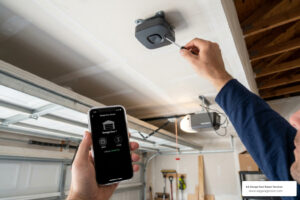
Batteries lose power in the cold, so an outdoor keypad is often the first thing to quit in January. Put in a fresh battery and try again. If the keypad still won’t respond, it may need to be reprogrammed or replaced. Our garage door keypad guide covers the models that hold up in the cold, and our garage door remote services page covers remotes.
5. The door is slow, jerky or noisy
Old grease turns thick and sticky when it is cold, and the door drags. Wipe the old grease off the hinges, rollers and springs, then use a lubricant made for garage doors. Don’t use heavy grease on the tracks; it catches grit and stiffens in the cold. Our garage door lubrication guide shows where each product goes.
Before the deep freeze: a 10-minute checklist
- Look at the bottom seal. Replace it if it is cracked, flat or torn.
- Wipe the seal with silicone spray before the first hard freeze.
- Clean and lubricate hinges, rollers and springs.
- Put a fresh battery in the keypad and remotes.
- Test the auto-reverse: lay a board flat under the door and close it. It should reverse when it touches the board.
- Watch the springs and cables for rust, gaps or fraying. Don’t touch them; note what you see and call it in.
- Keep the threshold clear of snowmelt with a squeegee or a mat.
Before a big cold snap, check the National Weather Service Twin Cities forecast so you can do these steps ahead of time. If you’d rather have a technician look it over, a garage door inspection or a maintenance visit catches worn springs and seals before winter does. If your door is old and the garage stays freezing, it may be time to look at insulated garage doors.
When to call a pro
- You heard a bang, or the door is very heavy or crooked.
- A cable is loose, frayed or off the drum.
- The door came off its track.
- The opener hums but nothing moves, or it keeps reversing after you have cleared the sensors and tracks.
- The door is stuck open and you can’t secure your home.
AA Garage Door serves St. Paul and the Twin Cities from its St. Paul office, open 24 hours, and western Wisconsin from its Baldwin, WI office. See all of our service areas.
Frequently asked questions
How do I open a garage door that is frozen to the ground?
Stop using the opener first. Warm the bottom seal with a hair dryer or a heat gun on low, slide a plastic scraper under the rubber as it softens, and lift the door once the seal is free. Then clear the ice at the threshold and wipe the seal with silicone spray.
Why won’t my garage door close when it’s cold?
The most common causes are frost on the safety sensors, ice or snow in the tracks, and a cold, stiff door that the opener reads as an obstacle. Clean the sensor lenses and the tracks first. If it still reverses, the opener’s force or limits may need adjusting.
Do garage door springs break more often in winter?
Yes, cold makes steel more brittle, so a worn spring is more likely to snap on a frigid day. If you hear a loud bang and the door won’t lift, leave it closed and call for spring repair. Don’t try to lift it.
Can I pour hot water on a frozen garage door?
It’s best not to. The water runs to the slab and refreezes, often worse than before. Gentle heat from a hair dryer and a plastic scraper work better and won’t damage the seal.
Why does my garage door keypad stop working in cold weather?
Cold drains the keypad’s battery, so it often quits on the first frigid mornings. Replace the battery first. If it still doesn’t respond, the keypad may need reprogramming or replacing.
Stuck in the cold? We can help.
If your door is frozen, stuck or won’t lift, call AA Garage Door at (651) 702-1420. Our St. Paul office is open 24 hours. For non-urgent work, request a free estimate.