Why Garage Door Cable Tension Matters
Garage door cable tension is the invisible force that keeps your door operating smoothly and safely every single day. When cables are properly tensioned, your garage door opens and closes without binding or jerking. When they’re not, you’re looking at potential damage, a serious safety hazard, and the need for reliable garage door services. Proper tension prevents uneven movement, which can damage your door, opener, and tracks, ensuring your system functions correctly for years to come.
Quick Answer: How to Check and Adjust Garage Door Cable Tension
- Check for signs of improper tension: uneven door height, gaps under the closed door, loose or frayed cables, or jerky movement
- Disconnect power: unplug the opener and pull the emergency release cord
- Secure the door: clamp it to the tracks with C-clamps to prevent movement
- Adjust the drum: loosen set screws on the cable drum, wind or unwind the cable to adjust tension, then retighten
- Test balance: remove clamps and manually lift the door halfway—it should stay in place
- Call a professional if you see broken cables, rusted components, or feel uncomfortable with any step
Important: Garage door springs store extreme tension and can cause severe injury or death if mishandled. If you’re not experienced with these systems, professional help is always the safer choice.
According to industry research, proper cable tension prevents jumping cables and reduces service callbacks—two of the most common issues garage door technicians encounter. The cables work in sync with your torsion or extension springs to counterbalance the door’s weight, which can easily exceed 150 pounds. When tension is off by even a small amount, one side of the door can ride higher than the other, putting stress on the opener motor and causing premature wear on rollers and tracks.
For homeowners in the Twin Cities dealing with harsh weather and frequent temperature swings, cable tension issues can develop faster due to metal contraction and expansion. Understanding this system is the first step toward effective maintenance. This guide will walk you through everything you need to know about garage door cable tension, from diagnosis to safe adjustment.
I’m David Sands, Owner of AA Garage Door LLC, and over the past 23 years, I’ve seen how critical proper garage door cable tension is to system longevity and safety. Our team has handled thousands of cable adjustments and replacements across Wisconsin and Minnesota, and I’m here to share what we’ve learned to help you maintain a safe, reliable garage door.
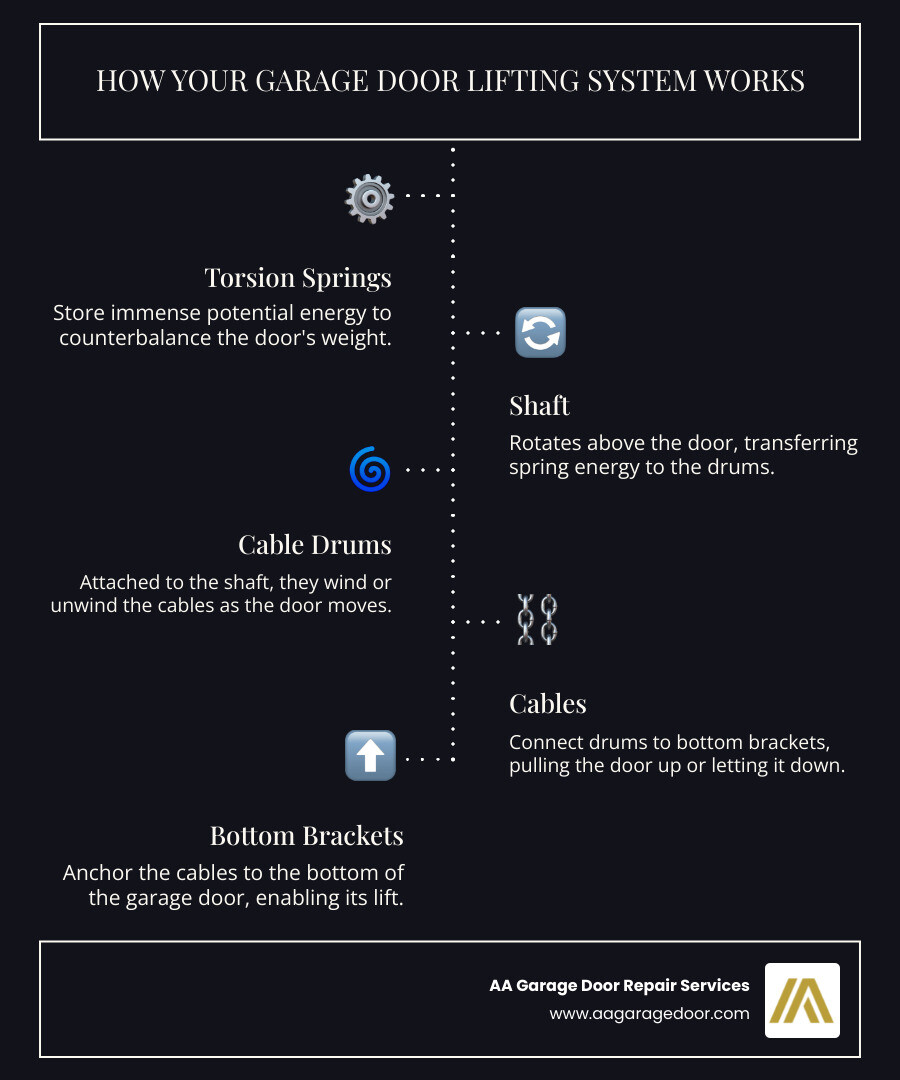
Important garage door cable tension terms:
Why Proper Cable Tension is Crucial for Your Garage Door
Garage door cables are the unsung heroes of your garage door system. They are an integral part of the lifting mechanism, working tirelessly to support and guide the door’s movement. These cables, typically made of strong, braided steel, run from the bottom corners of your garage door up to drums located near the torsion springs (or directly to extension springs on older systems). Their primary function is to transfer the lifting force from the springs to the door, effectively counterbalancing its immense weight.
Proper garage door cable tension is crucial for smooth garage door operation. Without the right tension, the door can become unbalanced, leading to a host of problems from minor annoyances to major safety hazards. When the tension is perfectly calibrated, the door glides effortlessly along its tracks, ensuring a consistent and even lift. This not only makes the door easier to operate but also significantly extends the lifespan of other components, including your garage door opener, rollers, and even the tracks themselves. A well-tensioned system minimizes stress on the opener motor, preventing it from overworking and burning out prematurely.
Beyond operational efficiency, proper garage door cable tension is a paramount safety feature. The cables prevent the door from falling unexpectedly, which could cause serious injury or damage to property. They ensure the door stays aligned within its tracks, preventing dangerous derailments. As we’ve learned from over two decades of experience serving homeowners in St. Paul, Twin Cities, Woodbury, Hudson, Baldwin, and Western WI, maintaining correct cable tension is a proactive step in safeguarding your home and family. It helps prevent “jumping cables” and reduces the need for emergency service calls, saving you time, money, and stress.
What are the Signs of Improper Garage Door Cable Tension?
Identifying issues with garage door cable tension early can save you from more extensive and costly repairs down the line. We often tell our customers that their garage door will “speak” to them when something is wrong, and cable tension problems have distinct voices.
Here are the key signs that your garage door cables might need attention:
- Loose or Slack Cables: This is one of the most obvious indicators. If you notice a cable hanging loosely, or if there’s visible slack in the cable when the door is closed, it’s a clear sign of improper tension. This can happen if the cable has come off the drum or if the spring tension is too weak.
- Frayed or Worn Cables: While not directly a tension issue, frayed or worn cables can lead to tension problems. A cable that is starting to fray is a cable that’s losing its structural integrity and will eventually break, leading to a sudden loss of tension on that side. Regular visual inspections are key here.
- Crooked or Uneven Door: Does your garage door appear slanted or higher on one side than the other when it’s closed or moving? This “tram” issue is a classic symptom of uneven garage door cable tension. It means one cable is pulling more effectively than the other, or one has come off its drum. This can cause the door to scrape the track or leave a gap at the bottom.
- Door Off-Track: If a cable loses tension or breaks, the door can lose its balance and come off its tracks. This is a hazardous situation that requires immediate professional attention.
- Jerky or Erratic Movement: Instead of a smooth, consistent motion, an improperly tensioned door might move in fits and starts, or shake as it operates. This uneven movement puts undue stress on the entire system.
- Grinding or Scraping Noises: While many things can cause garage door noises, grinding or scraping sounds, especially when accompanied by uneven movement, can indicate that cables are rubbing against something they shouldn’t be, or that drums are not spooling correctly due to tension issues.
- A Gap Under the Closed Door: If there’s a noticeable gap between the bottom of your garage door and the garage floor when the door is fully closed, especially if it’s more pronounced on one side, it suggests the door isn’t sealing properly due to uneven tension.
- Door Feels Excessively Heavy to Lift Manually: This indicates that the springs are not providing adequate counterbalance, often due to incorrect cable tension or a spring issue. The cables aren’t effectively transferring the spring’s power to assist the lift.
- Door Stops or Gets Stuck Mid-Way: If your door struggles to open, stalls, or gets stuck halfway, it could be a sign that the cables aren’t providing the consistent lift needed across the entire travel path.
If you observe any of these signs, it’s time to investigate your garage door cable tension. Ignoring these warnings can lead to further damage, safety risks, and potentially a complete garage door system failure.
The Link Between Cables, Springs, and Drums
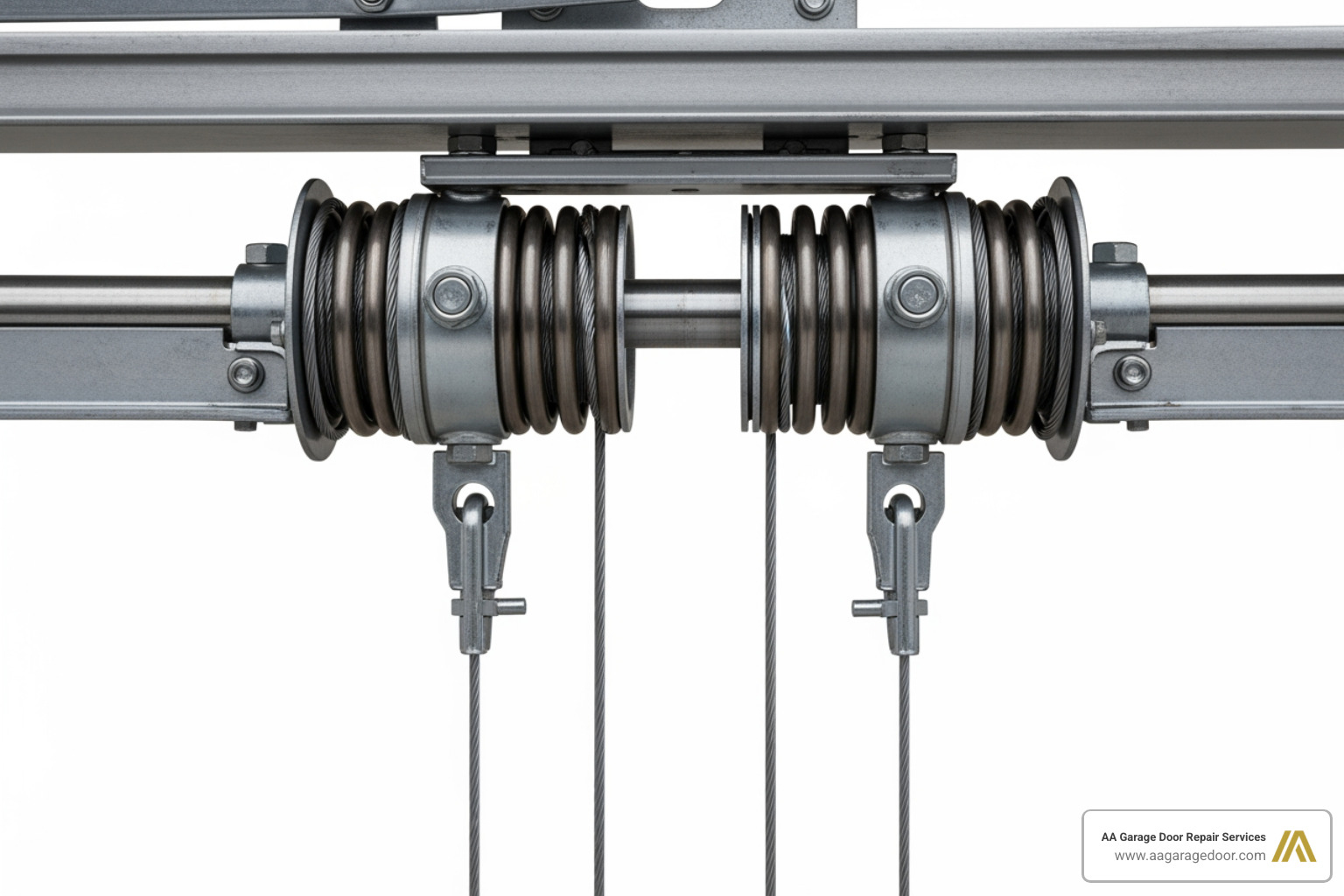
To truly understand garage door cable tension, we must appreciate the intricate dance between the three main components that make up the lifting system: the springs, the cables, and the drums. These elements don’t operate in isolation; they form a cohesive, interdependent system designed to manage the considerable weight of your garage door.
- Torsion Springs: These are the powerhouses of your garage door system. Located on a metal shaft directly above the door opening, torsion springs are wound tightly to store mechanical energy. As the door closes, the springs wind up, storing energy. As the door opens, they unwind, releasing that energy to assist in lifting the door. The amount of tension in these springs is critical to the door’s balance and ease of operation.
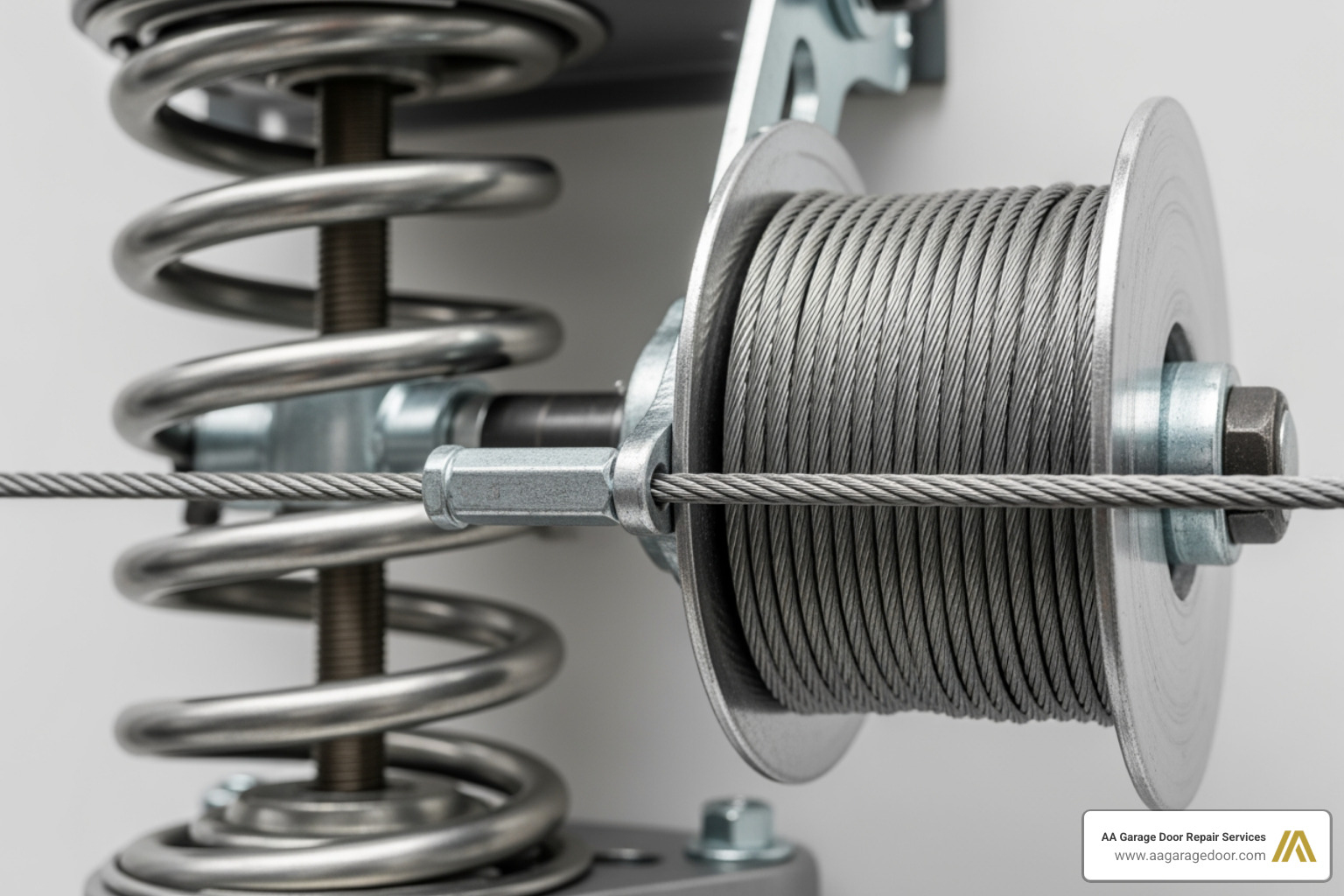
- Cable Drums: Mounted on either end of the torsion spring shaft are the cable drums. These are grooved, cylindrical components around which the lifting cables wrap. When the torsion springs rotate the shaft, the drums turn, either winding the cables to lift the door or unwinding them to lower it. The design of these drums ensures that the cable spools evenly, maintaining consistent tension.
- Lifting Cables: These heavy-duty steel cables connect the bottom corners of your garage door to the cable drums. They are the direct link that transfers the lifting force from the rotating drums (powered by the springs) to the door itself.
- Bottom Brackets: These are sturdy metal brackets located at the very bottom corners of your garage door panels. The lifting cables are securely attached to these brackets.
This system works in perfect harmony: the springs hold the energy, the cables transfer that energy via the drums, and the bottom brackets anchor the cables to the door. If one part fails or is misaligned, it puts immense strain on the others, leading to a cascade of problems. For example, if a cable slips off a drum, that side of the door loses its lifting support, causing the door to become crooked and potentially jamming or derailing. Similarly, if the spring tension is incorrect, the cables won’t be able to lift the door effectively or evenly, leading to the signs of improper tension we discussed earlier. Understanding this relationship is fundamental to diagnosing and addressing any issues with your garage door cable tension.
A Step-by-Step Guide to Adjusting Garage Door Cable Tension
EXTREME DANGER WARNING: Adjusting garage door components, especially torsion springs, is extremely dangerous and can result in serious injury or death. The springs store an incredible amount of kinetic energy, and if mishandled, they can release violently. This guide is for informational purposes only and is intended for those with a strong understanding of mechanical systems and a commitment to safety. We at AA Garage Door LLC strongly advise caution and recommend professional assistance for any work involving garage door springs. Proceed with extreme caution and at your own risk. If you are not 100% confident, call a professional.
Essential Tools for Adjusting Garage Door Cable Tension
Before you begin, ensure you have the right tools on hand. Using improper tools can exacerbate problems or increase the risk of injury.
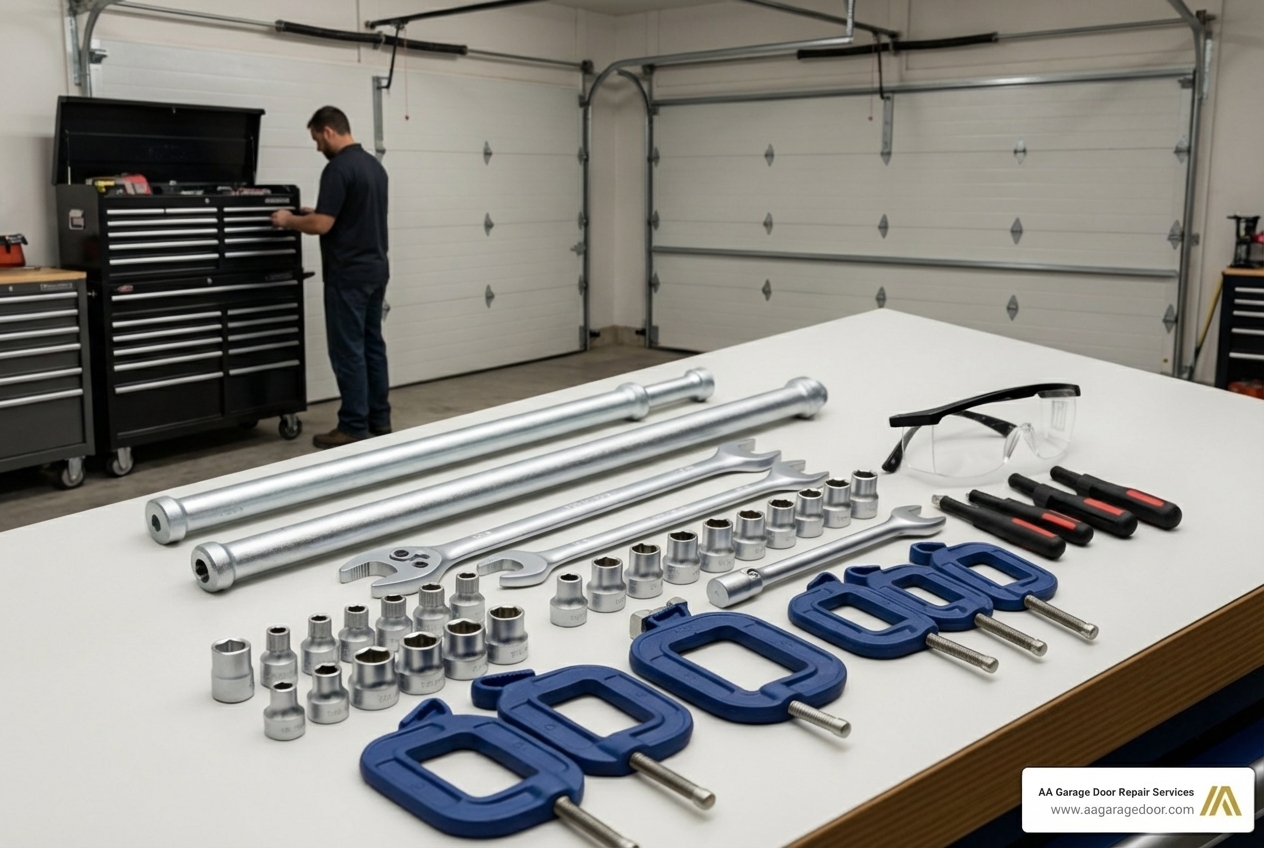
Here’s a list of what we recommend:
- Winding Bars (for torsion springs): These are specialized steel rods designed to safely wind and unwind torsion springs. Never use screwdrivers, crowbars, or other makeshift tools.
- Sturdy Ladder: You’ll need a stable platform to reach the top of your garage door system.
- Socket Wrench or Adjustable Wrench: To loosen and tighten the set screws on the cable drums.
- Two C-Clamps or Locking Pliers (Vice Grips): Essential for securing the garage door in the open position and preventing accidental closure. Heavy-duty ones are preferred.
- Safety Glasses: Eye protection is non-negotiable when working with high-tension components.
- Gloves: To protect your hands from grease, sharp edges, and potential pinches.
- Marker: To mark the cable drums for easier tracking of adjustments.
Safely Adjusting Cables on a Torsion Spring System
Adjusting garage door cable tension requires precision and an unwavering focus on safety. Follow these steps carefully:
- Disconnect Power and Secure the Door: This is the first and most critical step. Unplug your garage door opener from the electrical outlet. Then, pull the red emergency release cord hanging from the trolley to disengage the door from the opener. With the door fully closed, place two C-clamps or locking pliers on the vertical tracks just above the bottom rollers on both sides. This prevents the door from accidentally opening or moving while you work.
- Assess the Unevenness: Open the door manually and observe which side is tighter or looser. If one cable has slack and the door sits on the floor on that side, while the other side has a gap, you know which drum needs adjustment.
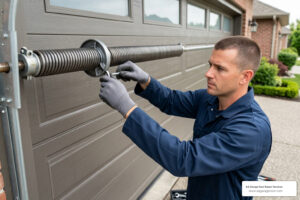
- Loosen Drum Screws: Locate the cable drum on the side of the door that needs tension adjustment. The drums are typically held in place on the torsion bar by a few set screws. Use your socket or adjustable wrench to loosen these screws slightly—just enough so the drum can rotate on the shaft, but not so much that it completely detaches.
- Adjust Cable Tension:
- To Increase Tension (for a loose cable): Gently pull the cable taut and wind a bit more cable onto the drum. Ensure the cable sits snugly in the drum’s grooves and is not overlapping. You might need to rotate the drum counter-clockwise slightly to take up the slack.
- To Decrease Tension (for a cable that’s too tight): Carefully unwind a small amount of cable from the drum. Again, ensure it remains in the grooves. You might rotate the drum clockwise.
- Realigning a Slipped Cable: If a cable has come off the drum entirely, you’ll need to carefully re-seat it. This often requires manually winding the spring a bit more (using winding bars, by a professional) to create enough slack to re-wrap the cable around the drum. Make sure the cable is on the “high part” or outermost groove of the drum.
- Tighten Drum Screws: Once the cable tension appears even on both sides, firmly tighten the set screws on the cable drum. Ensure they are snug to prevent the drum from slipping on the torsion bar.
- Test Balance: Remove the C-clamps from the tracks. With the opener still disengaged, manually lift the garage door halfway up. Release it. A properly balanced door should remain in this position without falling or rising further. If it falls, it’s too heavy (needs more spring tension); if it rises, it’s too light (needs less spring tension).
- Re-engage Opener and Test Operation: Once the door is balanced, re-engage the opener by pulling the red cord again, or by simply running the opener with your remote, which should re-connect it automatically. Plug the opener back in. Operate the door several times, observing its movement. It should open and close smoothly and evenly.
The goal is to achieve equal garage door cable tension on both sides. This ensures true door travel and an even seal with the floor. If you find the door still uneven or are struggling to achieve proper balance, it’s often a sign that the spring tension itself needs adjustment, which is a job best left to professionals due to the inherent dangers.
Troubleshooting and Maintenance
Even with the best intentions, things can sometimes go awry with your garage door. Knowing how to troubleshoot common garage door cable tension problems and performing proactive maintenance can save you a lot of headaches and keep your door running smoothly for years.
Troubleshooting Common Garage Door Cable Tension Problems
- Slipped or Tangled Cable: This is a frequent culprit behind uneven door operation. If a cable has come off the drum, the door will likely be crooked and inoperable. This usually happens if the door encounters an obstruction, if there’s a problem with the spring tension (too little tension can allow the cable to become slack and solve), or if the drum itself has slipped on the torsion bar.
- Action: Do NOT operate the door! The safest solution is to call a professional immediately. Attempting to force the door or re-seat the cable without proper knowledge and tools can be extremely dangerous due to the stored energy in the springs.
- Uneven Tension (“Tram” Issue): When one side of the door rides higher than the other, it’s often referred to as a “tram” problem. As we learned from industry experts, this is usually caused by the pulleys being out of sync, not directly by spring tension. Since the springs act on a single shaft, they affect both pulleys equally. A tram issue typically means a pulley has slipped on the shaft, or one cable has become stretched or damaged over time.
- Action: If you’re comfortable, you can attempt to re-sync the drums. With the door closed and secured, loosen the set screws on the drum of the side that is higher (the side with more tension). Carefully manipulate the drum to unwind a small amount of cable until both sides are level, then retighten the set screws. If a cable appears stretched or damaged, it’s best to replace both cables simultaneously to ensure balanced operation.
- Door Stops or Reverses Unexpectedly: If your door opens a few inches and then stops, or reverses immediately, it could be due to an obstruction, misaligned safety sensors, or sometimes, a severe imbalance caused by cable tension issues. The opener’s safety system might detect excessive resistance and stop or reverse the door.
- Action: First, check for any physical obstructions in the door’s path or tracks. Ensure your safety sensors (the small units near the bottom of the tracks) are clean and perfectly aligned. If these aren’t the issue, the problem could be rooted in the door’s balance, necessitating a garage door cable tension adjustment or spring repair.
Proactive Maintenance to Prevent Cable Issues
An ounce of prevention is worth a pound of cure, especially when it comes to your garage door. Regular, proactive maintenance can significantly extend the life of your cables and prevent most tension-related problems.
Here’s what we recommend for homeowners in St. Paul, Woodbury, Hudson, Baldwin, and the surrounding areas:
- Visually Inspect Cables Monthly: Take a few moments each month to look at your lifting cables. Check for any signs of fraying, kinks, rust, or loose strands. Pay close attention to where they attach to the bottom brackets and wrap around the drums. Early detection of wear can prevent a sudden break.
- Lubricate Moving Parts Semi-Annually: Lubricate the springs, rollers, and hinges with a silicone-based garage door lubricant every six months. This reduces friction and wear, allowing components to move more smoothly. Important: Do NOT lubricate the tracks or the cables themselves, as this can attract dirt and debris, leading to more problems.
- Check Door Balance Twice a Year: This is a crucial test for your entire system, including garage door cable tension. Disconnect your opener (pull the red cord) and manually lift the door halfway up. A properly balanced door should stay put without falling or rising. If it doesn’t, your springs or cable tension need adjustment.
- Ensure Tracks are Clean and Free of Debris: Dirt, dust, leaves, or even small stones in the tracks can impede roller movement and cause the cables to bind or slip. Regularly wipe down the inside of your tracks.
- Check Fasteners and Hardware: Periodically check all nuts, bolts, and screws on your garage door system, including those on the cable drums and bottom brackets. Vibrations from daily operation can cause them to loosen over time. Tighten any that are loose, but be careful not to overtighten.
By incorporating these simple maintenance tasks into your routine, you can keep your garage door system healthy, prolong the life of your cables, and minimize the chances of unexpected garage door cable tension issues.
When to Call a Professional
While this guide provides valuable information for understanding and potentially addressing minor garage door cable tension issues, it’s crucial to know when to call in the experts. Garage door systems are complex and can be incredibly dangerous if mishandled.
Here’s why and when you should always consider calling a professional:
- Broken, Frayed, or Rusted Cables: If you observe a cable that is broken, severely frayed, or heavily rusted, it’s beyond adjustment—it needs replacement. Due to the extreme tension these cables are under, replacing them is a job for a trained technician with specialized tools and expertise. Attempting to replace a cable yourself can lead to severe injury.
- Torsion Spring Involvement: Any adjustment that requires manipulating the torsion springs (the large springs on the shaft above your door) should be handled by a professional. These springs store enormous energy, and improper winding or unwinding can result in sudden, violent release, causing broken bones or worse. We’ve seen the devastating consequences of DIY torsion spring repairs.
- Extension Springs: If your garage door uses extension springs (located along the sides of the horizontal tracks), cable replacement can also be hazardous, as these springs are under constant tension.
- Lack of Confidence or Experience: If you’re uncomfortable with any step, especially those involving high-tension components, or if you simply don’t have the experience with garage door mechanics, don’t risk it. Your safety is paramount.
- Persistent Issues After DIY Attempts: If you’ve tried to adjust the garage door cable tension yourself and the problem persists, or the door remains unbalanced, it often indicates a deeper issue that requires professional diagnosis and repair.
- Specialized Tools Required: Professionals have specific tools like winding bars, specialized wrenches, and tension gauges that ensure the job is done safely and correctly.
- Preventing Further Damage: Incorrect DIY repairs can lead to more significant damage to your garage door system, potentially costing more in the long run than calling a professional initially.
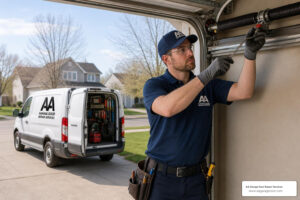
At AA Garage Door LLC, we emphasize safety above all else. Our certified technicians are trained to handle all types of garage door repair, including complex cable and spring adjustments, with precision and care. We offer fast, reliable 24/7 emergency service with transparent pricing and a satisfaction guarantee, backed by local expertise since 2001. For expert assistance, consider a professional garage door repair in Apple Valley or any of our service areas in St. Paul, Woodbury, Hudson, Baldwin, and Western WI.
Conclusion
Understanding and maintaining proper garage door cable tension is the key to a safe, reliable, and long-lasting garage door system. These unassuming cables play a monumental role in the daily operation of your door, working in concert with springs and drums to lift and lower hundreds of pounds with ease. Recognizing the signs of improper tension—from a crooked door to jerky movement—and knowing when to perform basic troubleshooting or proactive maintenance can save you from inconvenient breakdowns and costly repairs.
While minor adjustments can sometimes be a DIY task for the mechanically inclined, the high tension involved, particularly with torsion springs, makes it one of the most dangerous home repairs. Always prioritize safety above all else. If a cable is broken, frayed, or if you feel uncomfortable at any point, the smartest decision is to step back and call a professional.
For peace of mind and guaranteed results, trust the experts at AA Garage Door Repair Services. Our team is available 24/7 at (651) 702-1420 to handle any issue, ensuring your door operates perfectly. We serve homeowners across St. Paul, Twin Cities, Woodbury, Hudson, Baldwin, and Western WI, providing fast, reliable service with transparent pricing. Regular maintenance is key to keeping your system in peak condition and avoiding future repairs.